The Black Pirate (1926)

- Directed by
- Albert Parker
- Genre
- swashbuckler film, silent film, pirate film
- Country
- United States
- Runtime
- 1h 34m
- Rated
- NR
- Rating
- 6.7 of 10 from 61 voters
- Elsewhere
- IMDb

The catalogue in 3D
The film shelves have a room of their own that you can walk around in. The cat behind the counter is the AI Catbot, and they pick real films from the same catalogue when you tell them what you feel like watching. Nothing is for sale, here or in there. Go in from here and this film is already out on the counter, with more like it waiting on the shelf next to it.
How it feels
A nobleman seeks revenge after his father is killed by pirates. He infiltrates their crew while performing daring acrobatic feats.
swashbucklingadventurouscolorfullightheartedenergeticclassicstylizedfast-paced
What happens
The Black Pirate is a 1926 American silent color adventure film directed by Albert Parker, starring Douglas Fairbanks, Billie Dove, Donald Crisp, Sam De Grasse, and Anders Randolf. After the first natural color films appeared in 1922, Douglas Fairbanks envisioned a color pirate film. However, he waited to start production until 1925. Once Technicolor had improved its filming and printing capacity, Fairbanks took financial risks due to the added costs and fragility of the film process. He also hesitated because color was rumored to distract from the narrative and strain viewers' eyes. To address these concerns, Fairbanks avoided Technicolor's saturated tones and instead chose a restricted palette, inspired by Flemish painters and American illustrators who had popularized pirate themes in the early twentieth century. His team spent months testing and refining color control for all on-screen elements, including the studio-created ocean. This focus on visual consistency also led to the simplification of the story, contributing to the film's success. Fairbanks continued to deliver his signature acrobatic stunts. The film achieved international success, notably for its colors, but suffered from the fragility of its two-strip laminated film. This issue prompted Technicolor to abandon the process and develop a more durable single-strip film, which was later used for some prints. The Black Pirate became both a commercial and technical milestone, showcasing Fairbanks's influence, while also exposing the process's limitations. In his subsequent films, Fairbanks considered using Technicolor again but gave up on it for various reasons. In 1928, when Technicolor felt that it had overcome the difficulties encountered with The Black Pirate, it produced The Viking (1928) as a demonstration, for which Fairbanks' film would serve as a hidden model. Other successful films, including The Black Swan (1942) with Tyrone Power, and The Crimson Pirate (1952) with Burt Lancaster would further exploit the link he had imagined between pirates and Technicolor. (from Wikipedia, CC BY-SA)
More like this
 Breed of the Sea (1926)
 Bride of the Storm (1926)
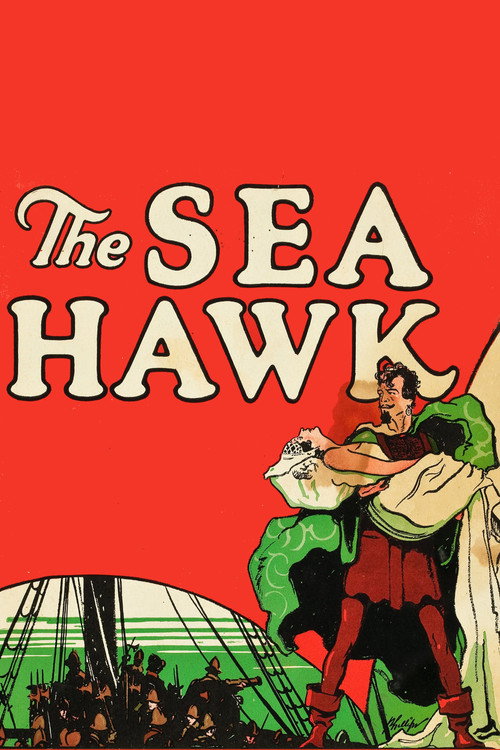 The Sea Hawk (1924)
 Bardelys the Magnificent (1926)
 Prince of Tempters (1926)
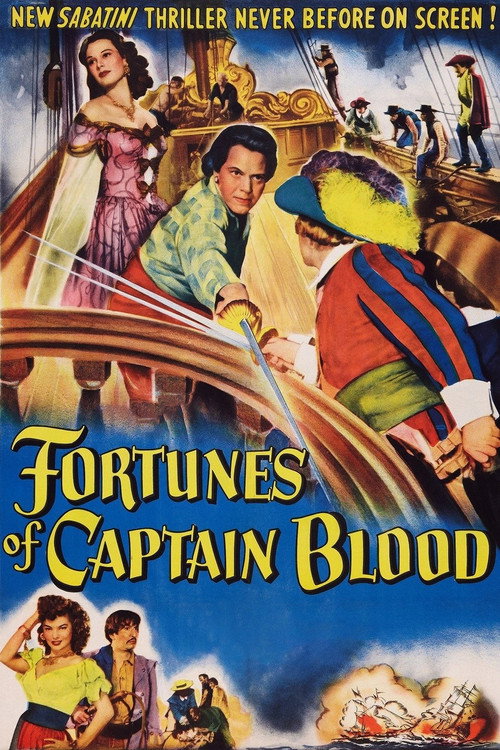 Fortunes of Captain Blood (1950)
 Yankee Buccaneer (1952)
 Le Bossu (1925)
- More like this film, on a shelf you can walk up to.It's the lit case on the top shelf.