Mechanics of the Brain (1926)

- Original title
- Механика головного мозга
- Directed by
- Vsevolod Pudovkin
- Genre
- documentary film, silent film
- Country
- Soviet Union
- Runtime
- 1h 05m
- Rating
- 4.9 of 10 from 11 voters
- Elsewhere
- IMDb

The catalogue in 3D
The film shelves have a room of their own that you can walk around in. The cat behind the counter is the AI Catbot, and they pick real films from the same catalogue when you tell them what you feel like watching. Nothing is for sale, here or in there. Go in from here and this film is already out on the counter, with more like it waiting on the shelf next to it.
How it feels
This Soviet silent film explains Ivan Pavlov's research on classical conditioning. It shows experiments with animals and human subjects to demonstrate how reflexes work.
educationalclinicalslow-pacedobservationaldryhistoricalstarkscientific
What happens
Mechanics of the Brain (Russian: Механика головного мозга, romanized: Myekhanika golovnogo mozga) is a 1926 Soviet documentary film directed by Vsevolod Pudovkin, a popularization of Ivan Pavlov's studies in classical conditioning. The picture is considered the first Russian popular science film. The motion picture is the first independent work of Pudovkin as a director and also marks the start of his collaboration with cinematographer Anatoli Golovnya. Pudovkin joined Mezhrabpom-Rus film studio in 1925 and, as his first job, was assigned to make a popular science film about Ivan Pavlov's work. The filming started in May 1925 and proceeded for more than a year. The many delays were caused by constant shuttling between the Pavlov's laboratory in Leningrad and the film studio in Moscow as well as difficulties with filming conditioned animals who were easily distracted by the lights and sounds of the filming process. The film depicts Pavlov's experiments on both animals and orphans, by a variety of methods, one of which was to implement a device to collect saliva into the orphans cheek. Twenty years later, Pudovkin told an interviewer: The only significance this first film of mine has is that it made me realize that I could work on my own. Up to then such idea seemed absolutely impossible to me, although Kuleshov assured me that I was fully able to... (from Wikipedia, CC BY-SA)
More like this
 Man with a Movie Camera (1929)
 A Sixth Part of the World (1926)
 Kino-Eye (1924)
 Ivan Pavlov (1949)
 The Song on the Rock (1926)
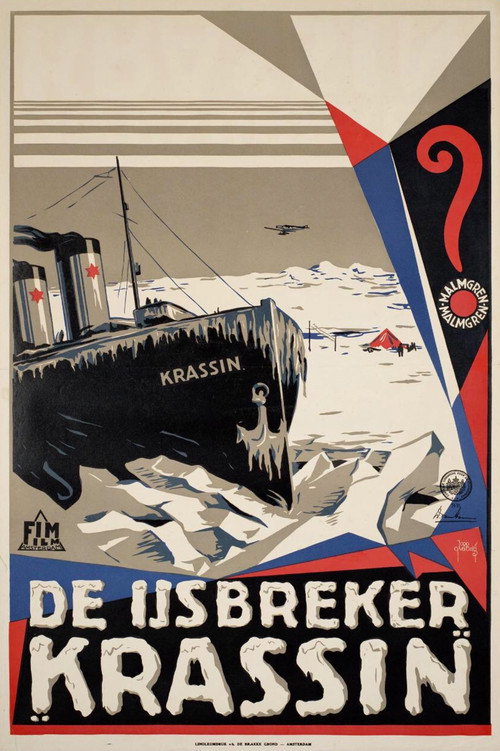 Heroic Deed Among the Ice (1928)
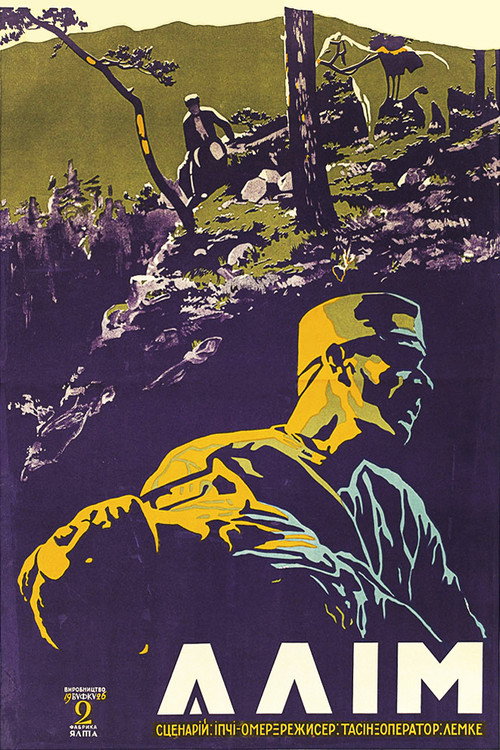 Alim (1926)
 The Wind (1926)
- More like this film, on a shelf you can walk up to.It's the lit case on the top shelf.