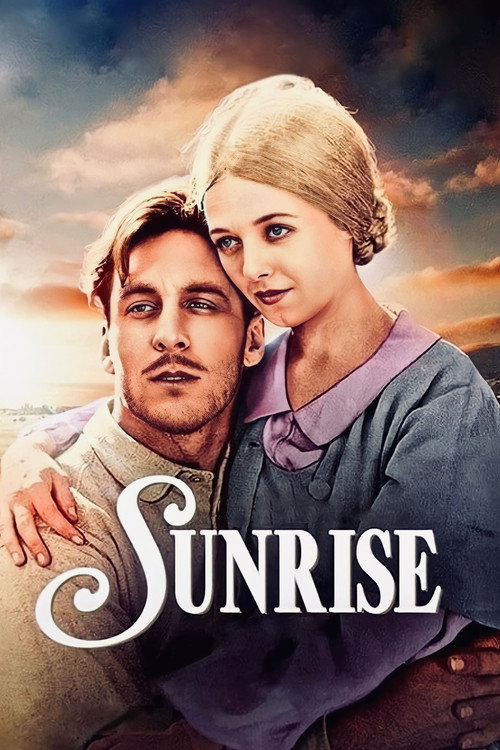
Sunrise: A Song of Two Humans (1927)
- Directed by
- F. W. Murnau
- Genre
- drama film, silent film, romance film
- Country
- United States
- Runtime
- 1h 31m
- Rated
- NR
- Rating
- 7.8 of 10 from 909 voters
- Elsewhere
- IMDb

The catalogue in 3D
The film shelves have a room of their own that you can walk around in. The cat behind the counter is the AI Catbot, and they pick real films from the same catalogue when you tell them what you feel like watching. Nothing is for sale, here or in there. Go in from here and this film is already out on the counter, with more like it waiting on the shelf next to it.
How it feels
A farmer falls under the spell of a vacationing city woman who urges him to kill his wife. He nearly goes through with it but then seeks redemption.
melancholicdreamliketensevisually lushromanticbleakslow-burnemotional
What happens
Sunrise: A Song of Two Humans (also known as Sunrise) is a 1927 American synchronized sound romantic drama directed by German director F. W. Murnau (in his American film debut) and starring George O'Brien, Janet Gaynor, and Margaret Livingston. The film's plot follows a married farmer (O'Brien) who falls for a woman vacationing from the city (Livingston), who tries to convince him to murder his wife (Gaynor) in order to be with her. While the film has no audible dialogue, it was released with a synchronized musical score with sound effects using the Movietone sound-on-film process. The story was adapted by Carl Mayer from the short story "The Excursion to Tilsit", from the 1917 collection with the same title by Hermann Sudermann. Murnau chose to use the then new Fox Movietone sound-on-film system, making Sunrise one of the first feature films with a synchronized musical score and sound effects soundtrack. The film incorporated Charles Gounod's 1872 composition Funeral March of a Marionette, which inspired its use as the theme for the television series Alfred Hitchcock Presents (1955–1965). Frédéric Chopin's A minor prelude also features prominently in orchestral arrangement. In 2016, the Dallas Chamber Symphony commissioned an original film score for Sunrise from composer Joe Kraemer. The score premiered on October 18, 2016, at Moody Performance Hall with Richard McKay conducting. Selections from the score were recorded and released on Caldera Records. Sunrise won the Academy Award for Unique and Artistic Picture at the 1st Academy Awards in 1929. Janet Gaynor won the first Academy Award for Best Actress in a Leading Role for her performance in the film (the award was also for her performances in 1927's 7th Heaven and 1928's Street Angel). The film's legacy has endured, and it is now widely considered a masterpiece and one of the greatest films ever made. Many have called it the greatest film of the silent era. In 1989, Sunrise was one of the first 25 films selected by the U.S. Library of Congress for preservation in the National Film Registry for being "culturally, historically, or aesthetically significant". The Academy Film Archive preserved Sunrise in 2004. The 2007 update of the American Film Institute's list of the 100 greatest American films ranked it number 82, and the British Film Institute's 2022 Sight & Sound critics’ poll named it the eleventh-best film in the history of motion pictures, while the directors’ poll listed it 33rd. Although the original 35mm negative of the original American version of Sunrise was destroyed in the 1937 Fox vault fire, a new negative was created from a surviving print. (from Wikipedia, CC BY-SA)
More like this
 Almost Human (1927)
 Heaven on Earth (1927)
 Wild Geese (1927)
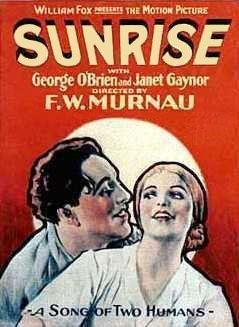 സൺറൈസ്: എ സോംഗ് ഓഫ് ടു ഹ്യൂമൻസ് (1927)
 A Million Bid (1927)
 The Love Mart (1927)
 Singed (1927)
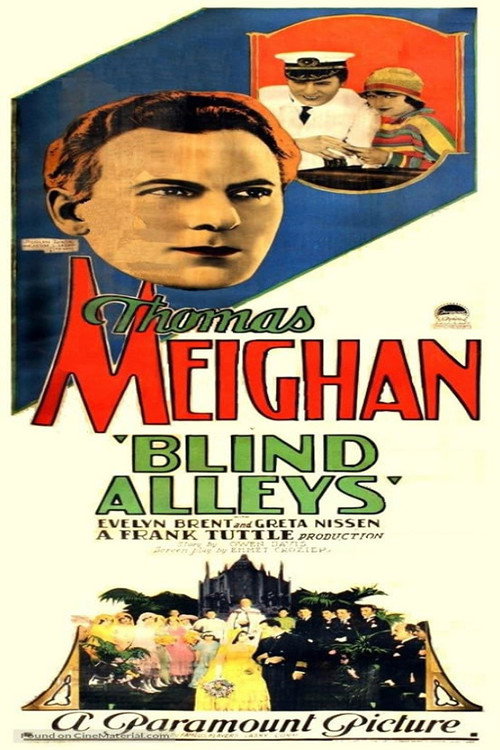 Blind Alleys (1927)
- More like this film, on a shelf you can walk up to.It's the lit case on the top shelf.