Berlin: Symphony of a Metropolis (1927)

- Original title
- Berlin, die Symphonie der Großstadt
- Directed by
- Walter Ruttmann
- Genre
- documentary film, silent film, city symphony film
- Country
- Germany
- Runtime
- 1h 05m
- Rating
- 7.5 of 10 from 128 voters
- Elsewhere
- IMDb

The catalogue in 3D
The film shelves have a room of their own that you can walk around in. The cat behind the counter is the AI Catbot, and they pick real films from the same catalogue when you tell them what you feel like watching. Nothing is for sale, here or in there. Go in from here and this film is already out on the counter, with more like it waiting on the shelf next to it.
How it feels
This silent docudrama follows a day in the life of Berlin. It captures the city from morning to night using edited images of trains, workers, streets and crowds without a traditional story.
observationalrhythmicimpressionisticneutralbriskatmosphericflowing
What happens
Berlin: Symphony of a Metropolis or Berlin: Symphony of a Great City (German: Berlin: Die Sinfonie der Großstadt) is a 1927 German silent film directed by Walter Ruttmann, co-written by Carl Mayer and Karl Freund. Much of the motion in the film, and many of the scene transitions, are built around the motion of trains and streetcars. The film is an example of the 'city symphony' film genre. It portrays the life of a city, mainly through visual impressions in a semi-documentary style, without the narrative content of more mainstream films, though the sequencing of events can imply a kind of loose theme or impression of the city's daily life. Other examples of the genre include Charles Sheeler and Paul Strand's Manhatta (1921), Alberto Cavalcanti's Rien que les heures (1926), Andre Sauvage's Etudes sur Paris (1928), Dziga Vertov's Man with a Movie Camera (1929), Adalberto Kemeny's São Paulo, Sinfonia da Metrópole (1929) and Alexandr Hackenschmied's Bezúčelná procházka (1930). The film represented a break from Ruttmann's earlier "absolute films," with influences from Vertov's earlier films apparent in Ruttmann's approach to with Berlin. The film demonstrates the filmmaker's knowledge of Soviet montage theory, and some socialist political sympathies can be inferred from a few of the edits in the film. Critics, however, have suggested that either Ruttmann avoided a strong position, or that he pursued his aesthetic interests to the extent that they diminished the potential for political content. Ruttmann's own description of the film suggests that his motives were predominantly aesthetic: "Since I began in the cinema, I had the idea of making something out of life, of creating a symphonic film out of the millions of energies that comprise the life of a big city." What is critically interesting about this particular film shot in Berlin, Germany is the time when it was made: several years before any clear National Socialist influence, and well before Joseph Goebbels' Propaganda Ministry took over all German film production, which stalled creativity and forced many filmmakers to leave the country. Today it is often watched as a filmed time capsule, providing a historical filmed record of the city of Berlin in the mid 1920s. Over 30% of central Berlin was leveled by the end of World War II, which dramatically changed the face of Berlin from that depicted in this film forever. Many places and buildings that did not survive the war appear in the film, such as the Anhalter Bahnhof train station, and the Hotel Excelsior located opposite, once the largest hotel in Europe. Composer Edmund Meisel was commissioned to write an orchestral score for its original release. (from Wikipedia, CC BY-SA)
More like this
 Manhatta (1922)
 São Paulo, a Metropolitan Symphony (1929)
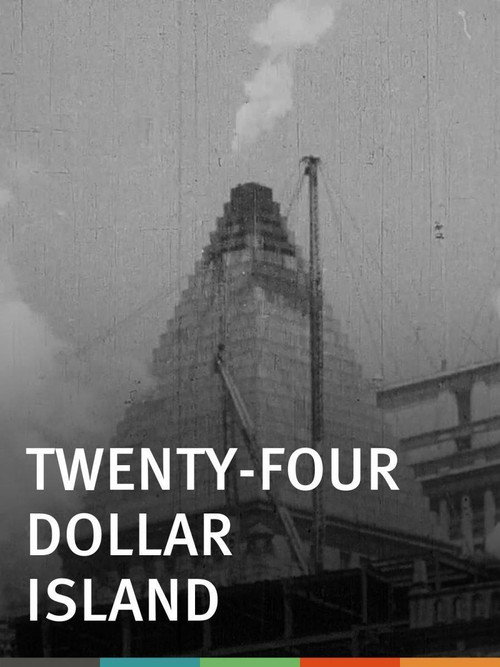 Twenty-Four Dollar Island (1927)
 Melody of the World (1929)
 The Girl from Abroad (1927)
 Endangered Girls (1927)
 Natur und Liebe (1927)
 The Cavalier from Wedding (1927)
- More like this film, on a shelf you can walk up to.It's the lit case on the top shelf.