The Passion of Joan of Arc (1928)

- Original title
- La Passion de Jeanne d'Arc
- Directed by
- Carl Theodor Dreyer
- Genre
- drama film, silent film, trial film
- Country
- France
- Runtime
- 1h 22m
- Rated
- NR
- Rating
- 8.0 of 10 from 1,097 voters
- Elsewhere
- IMDb
The catalogue in 3D
The film shelves have a room of their own that you can walk around in. The cat behind the counter is the AI Catbot, and they pick real films from the same catalogue when you tell them what you feel like watching. Nothing is for sale, here or in there. Go in from here and this film is already out on the counter, with more like it waiting on the shelf next to it.
How it feels
A young woman is put on trial for her religious visions by her English captors. She faces interrogation and pressure to renounce her beliefs as her captors seek to break her spirit.
intenseausterebleakmeditativeemotionalharrowingreverentvisceral
What happens
The Passion of Joan of Arc (French: La Passion de Jeanne d'Arc) is a 1928 French silent historical film based on the actual record of the trial of Joan of Arc. The film was directed by Carl Theodor Dreyer and stars Renée Jeanne Falconetti as Joan. It is widely regarded as a landmark of cinema, especially for its production, Dreyer's direction and Falconetti's performance, which is often listed as one of the finest in cinema history. The film summarizes the time that Joan of Arc was a captive of England, depicting her trial and execution. Danish director Dreyer was invited to make a film in France by the Société Générale des Films and chose to make a film about Joan of Arc due to her renewed popularity in France. Dreyer spent over a year researching Joan of Arc and the transcripts of her trial before writing the script. Dreyer cast stage actress Falconetti as Joan in her only major film role. Falconetti's performance and devotion to the role during filming have become legendary among film scholars. The film was shot on one huge concrete set modeled on medieval architecture in order to realistically portray the Rouen prison. The film is known for its cinematography and use of close-ups. Dreyer did not allow the actors to wear make-up and used lighting designs that made the actors look more grotesque. Prior to its release, the film was controversial due to French nationalists' skepticism about whether a Dane could direct a film about one of France's most revered historical icons. Dreyer's final version of the film was cut down due to pressure from the Archbishop of Paris and government censors. For several decades, it was released and viewed in various re-edited versions that attempted to restore Dreyer's final cut. In 1981, a print of Dreyer's final cut was discovered in Dikemark Hospital, a mental institution just outside Oslo, Norway, and re-released. Despite the objections and cutting of the film by clerical and government authorities, it was a major critical success when first released and has consistently been considered one of the greatest films ever made. It has been praised and referenced by many film directors and musicians. The film was voted number 4 on the prestigious Brussels 12 list at the 1958 World Expo. As a work published in 1928, the film entered the public domain in the United States in 2024. (from Wikipedia, CC BY-SA)
More like this
 Antoinette Sabrier (1928)
 Karina the Dancer (1928)
 The Indictment (1931)
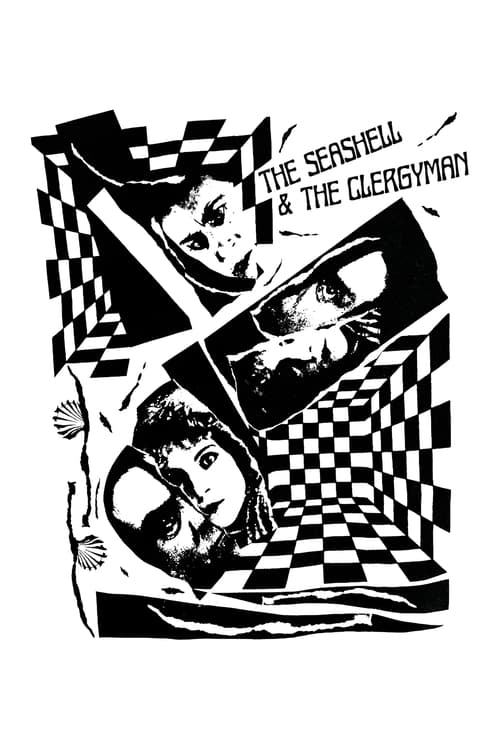 The Seashell and the Clergyman (1928)
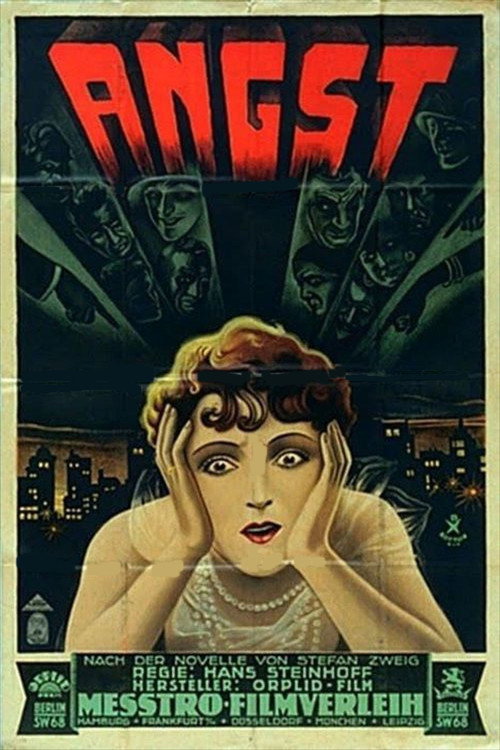 Angst (1928)
 Morgane, the Enchantress (1928)
 Odette (1928)
 Sensations-Prozess (1928)
- More like this film, on a shelf you can walk up to.It's the lit case on the top shelf.