Prisoners (1929)

- Directed by
- William A. Seiter
- Genre
- silent film
- Country
- United States
- Runtime
- 1h 27m
- Rated
- NR
- Rating
- 8.0 of 10 from 1 voters
- Elsewhere
- IMDb

The catalogue in 3D
The film shelves have a room of their own that you can walk around in. The cat behind the counter is the AI Catbot, and they pick real films from the same catalogue when you tell them what you feel like watching. Nothing is for sale, here or in there. Go in from here and this film is already out on the counter, with more like it waiting on the shelf next to it.
How it feels
A silent-era film with some talking sequences. It follows characters in Vienna linked to a nightclub. The story involves romance and conflict.
datedmelodramaticstageysentimentalnoisystiffslowantiquated
What happens
Prisoners is a 1929 American sound part-talkie film produced by Walter Morosco and directed by William Seiter for First National Pictures. In addition to sequences with audible dialogue or talking sequences, the film features a synchronized musical score and sound effects along with English intertitles. According to the film review in Variety, 10 percent of the total running time featured dialogue. The sound was recorded via the Vitaphone sound-on-disc process. The screenplay was written by Forrest Halsey, based on the novel by Ferenc Molnar. Lee Garmes was the cinematographer. The film stars Corinne Griffith, James Ford, Bela Lugosi, Ian Keith, and Otto Matiesen. Lugosi, in his first talkie, played Brottos, the owner of a Vienna nightclub. Lugosi was very happy that his first sound film was set in Hungary (where he was born) and that the story was based on a Ferenc Molnar Hungarian novel. While Lugosi was off filming "Prisoners", he was temporarily replaced in the San Francisco "Dracula" stage play by one Frederick Pymm (who normally played Butterworth, the attendant). The relatively short segment with dialogue (most of the film has intertitles with music) picks up with the climactic trial sequence. Critics stated "Bela Lugosi makes a very European villain", but were disappointed that Griffith's character is sent off to prison at the end of the film while a "cold-blooded murderer (in one of the subplots) is kept from receiving his just punishment". Corinne Griffith (who was married to producer Morosco) later went on to become a movie producer herself, as well as a very successful novelist. (from Wikipedia, CC BY-SA)
More like this
 The Devil's Chaplain (1929)
 Sweet Pepper (1929)
 Words and Music (1929)
 Black Magic (1929)
 The Faker (1929)
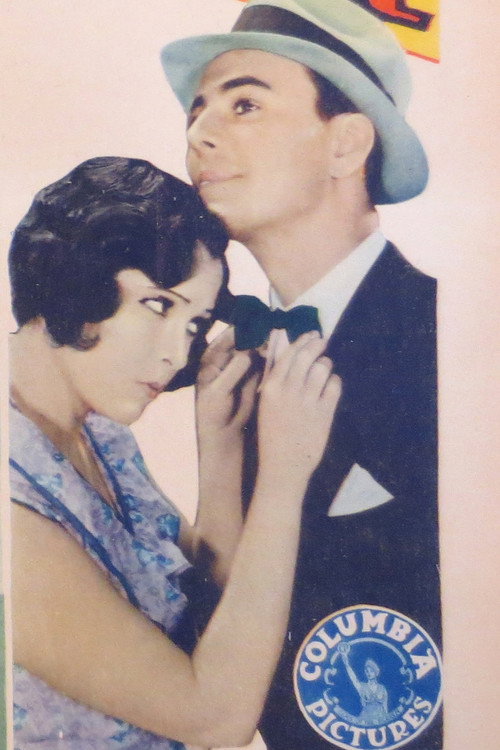 The Bachelor Girl (1929)
 Play Around a Man (1929)
 The Way Through the Night (1929)
- More like this film, on a shelf you can walk up to.It's the lit case on the top shelf.