The General Line (1929)

- Original title
- Старое и новое
- Directed by
- Grigori Aleksandrov, Sergei Eisenstein
- Genre
- drama film, silent film
- Country
- Soviet Union
- Runtime
- 2h 01m
- Rating
- 6.4 of 10 from 47 voters
- Elsewhere
- IMDb

The catalogue in 3D
The film shelves have a room of their own that you can walk around in. The cat behind the counter is the AI Catbot, and they pick real films from the same catalogue when you tell them what you feel like watching. Nothing is for sale, here or in there. Go in from here and this film is already out on the counter, with more like it waiting on the shelf next to it.
How it feels
A rural woman leads her village to adopt modern farming methods. The film promotes collective agriculture through symbolic imagery and rapid editing. It contrasts old peasant traditions with new machinery.
propagandisticoptimisticmontage-drivenearnestdynamicdidacticenergeticidealistichistorical
What happens
The General Line, also known as Old and New (Russian: Старое и новое, romanized: Staroye i novoye), is a 1929 Soviet propaganda film directed by Sergei Eisenstein and Grigori Aleksandrov. The General Line was begun in 1927 as a celebration of the collectivization of agriculture, as championed by old-line Bolshevik Leon Trotsky. Hoping to reach a wide audience, the director forsook his usual practice of emphasizing groups by concentrating on a single rural heroine. Eisenstein briefly abandoned this project to film October: Ten Days That Shook the World, in honour of the 10th anniversary of the Revolution. By the time he was able to return to this film, the Party's attitudes had changed and Trotsky had fallen from grace. As a result, the film was hastily re-edited and sent out in 1929 under a new title, The Old and the New. In later years, archivists restored The General Line to an approximation of Eisenstein's original concept. Much of the director's montage-like imagery—such as using simple props to trace the progress from the agrarian customs of the 19th-century to the more mechanized procedures of the 20th—was common to both versions of the film. (from Wikipedia, CC BY-SA)
More like this
 Man with a Movie Camera (1929)
 The Thaw (1931)
 The Girl from a Far River (1928)
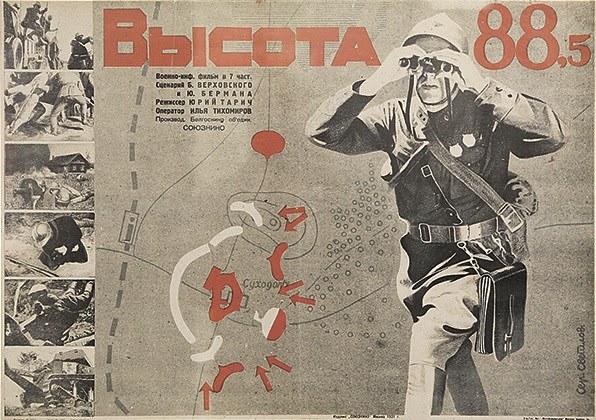 Vysota 88,5 (1932)
 The Spring (1930)
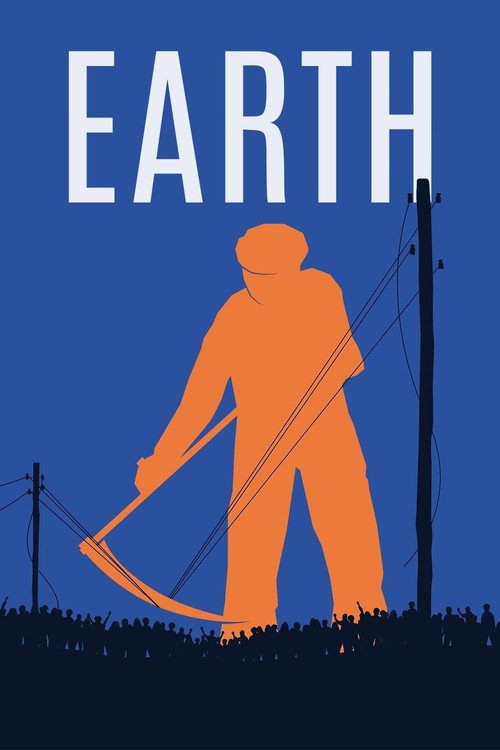 Earth (1930)
 Do zavtra (1929)
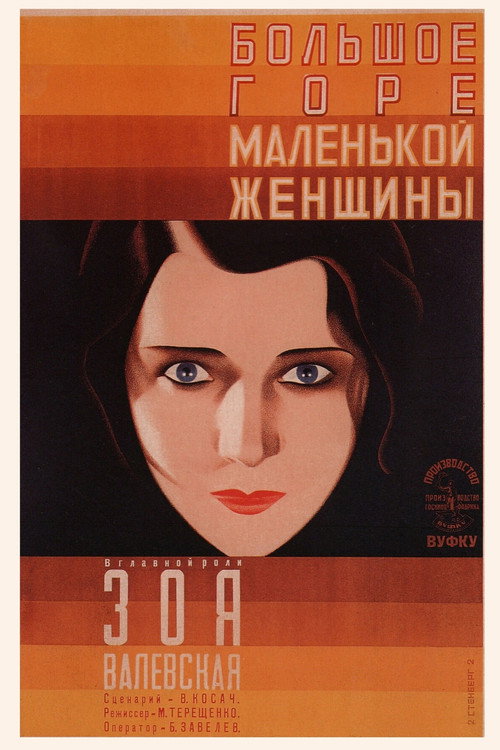 The Big Sorrow of a Small Woman (1929)
- More like this film, on a shelf you can walk up to.It's the lit case on the top shelf.