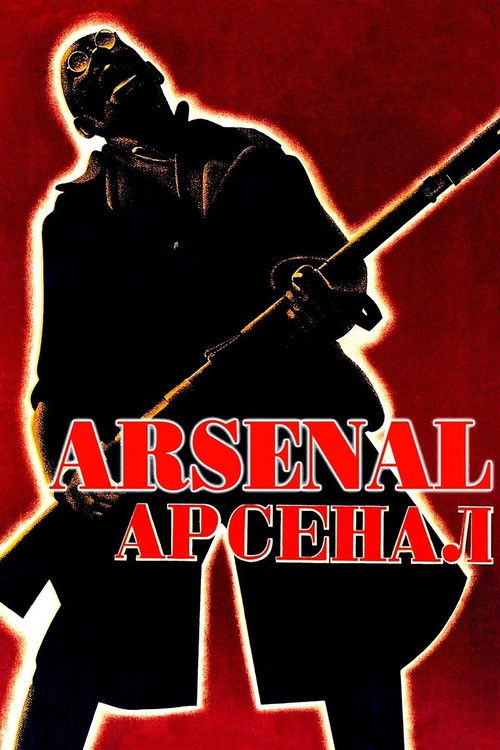
Arsenal (1929)
- Original title
- Арсенал
- Directed by
- Oleksandr Dovzhenko
- Genre
- drama film, silent film, war film
- Country
- Soviet Union
- Runtime
- 1h 32m
- Rated
- TP
- Rating
- 6.7 of 10 from 59 voters
- Elsewhere
- IMDb
The catalogue in 3D
The film shelves have a room of their own that you can walk around in. The cat behind the counter is the AI Catbot, and they pick real films from the same catalogue when you tell them what you feel like watching. Nothing is for sale, here or in there. Go in from here and this film is already out on the counter, with more like it waiting on the shelf next to it.
How it feels
This silent film is about a workers' uprising in Kiev in 1918 during the Russian Civil War. It shows the conflict between the revolutionaries and the government that held power in Ukraine at the time.
symbolicpoeticstylizedrestrainedsolemnexpressivecontemplativehistoric
What happens
Arsenal (Russian: Арсенал; Ukrainian: Арсенал; alternate title: January Uprising in Kiev in 1918) is a 1929 silent Soviet drama film by Alexander Dovzhenko. The film depicts events following the 1917 October Revolution in Russia and the subsequent Russian Civil War, and is a highly symbolic and poetic portrayal of the revolutionary spirit and the struggle for power. The film was shot at Odessa Film Factory of VUFKU by cameraman Danyl Demutskyi and used original sets made by Volodymyr Muller. The expressionist imagery, camera work and original drama were said to take the film far beyond the usual propaganda and made it one of the most important pieces of Ukrainian avant-garde cinema. The film was made in 1928 and released early in 1929. It is the second film in Dovzhenko's "Ukraine Trilogy", the first being Zvenigora (1928) and the third being Earth (1930). The film concerns an episode in the Russian Civil War in 1918 in which the Kiev Arsenal January Uprising of workers aided the besieging Bolshevik army against the Ukrainian People's Republic’s Central Rada council who held legal power in Ukraine at the time. Dovzhenko himself had participated in the conflict, but on the side of Central Rada. (from Wikipedia, CC BY-SA)
More like this
 Downpour (1929)
 The New Babylon (1929)
 Man with a Movie Camera (1929)
 The White Horseman (1929)
 The Blue Express (1929)
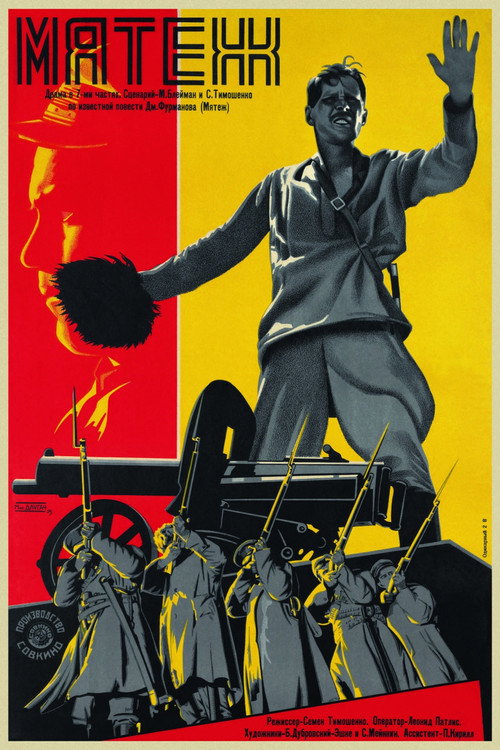 Mutiny (1928 film) (1928)
 Two-Buldi-Two (1929)
 Bread (film) (1929)
- More like this film, on a shelf you can walk up to.It's the lit case on the top shelf.