Birth of Life (1930)

- Original title
- Zarozhdenie zhizni
- Directed by
- Vsevolod Pudovkin
- Country
- Soviet Union
- Runtime
- 6 min

The catalogue in 3D
The film shelves have a room of their own that you can walk around in. The cat behind the counter is the AI Catbot, and they pick real films from the same catalogue when you tell them what you feel like watching. Nothing is for sale, here or in there. Go in from here and this film is already out on the counter, with more like it waiting on the shelf next to it.
How it feels
This short Soviet film uses slow motion and unusual editing to highlight small natural moments like rain falling and grass growing. The director wanted viewers to notice details that would otherwise be missed, creating a symbolic look at new beginnings.
experimentalcontemplativeslow-motionabstractrhythmicsymbolicvisually focusedfragmented
What happens
Zarozhdenie zhizni is een Russische experimentele korte film uit 1930, geregisseerd door Vsevolod Poedovkin. In 1930 raakte filmmaker Vsevolod Poedovkin gefascineerd door het tonen van dingen zoals regen en nat gras op een manier die hun echte gevoel en beweging vastlegde. Hij geloofde dat tijd in film net zo gestuurd kon worden als camerastandpunt, door momenten te vertragen zodat kijkers belangrijke details beter konden zien. Pudovkin noemde dit idee een “close-up in de tijd”, waarbij slow motion kleine handelingen benadrukt die anders onopgemerkt zouden blijven. Hoewel slow motion al bestond, gebruikte hij het op een creatieve manier in de montage door normale snelheid te combineren met zeer trage beelden, vergelijkbaar met het afwisselen van totaalshots en close-ups. Met deze techniek liet hij regen, groeiende planten, droge grond en zelfs omgekeerde explosies zien om symbolisch een nieuw begin weer te geven. Poedovkin vertoonde zijn experimentele film aan veel publiek voordat hij deze integreerde in zijn langere film Plostoy sluchay. De film bracht kijkers in verwarring, zowel in de Sovjet-Unie als in andere landen. Hij werd in 1933 ook vertoond bij de Film Society in Londen, en deze filmrol werd waarschijnlijk in 1942 bewaard door het British Film Institute. In 2024 werd deze filmrol gerestaureerd door het British Film Institute en vertoond op het filmfestival Nitrate Picture Show in het George Eastman Museum. (from Wikipedia, CC BY-SA)
More like this
 Man with a Movie Camera (1929)
 The Sleeping Beauty (1930)
 The Rubicon (1930)
 In Spring (1929)
 Povorot (1930)
 A Simple Case (1930)
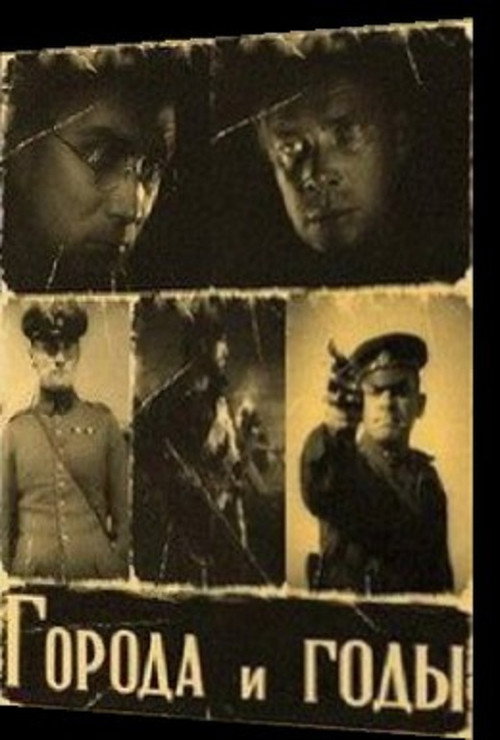 Cities and Years (1930)
 Dawn of Destruction (1965)
- More like this film, on a shelf you can walk up to.It's the lit case on the top shelf.