City Lights (1931)

- Directed by
- Charlie Chaplin
- Genre
- tragicomedy, comedy drama, romantic comedy film
- Country
- United States
- Runtime
- 1h 27m
- Rated
- G
- Rating
- 8.2 of 10 from 2,481 voters
- Elsewhere
- IMDb

The catalogue in 3D
The film shelves have a room of their own that you can walk around in. The cat behind the counter is the AI Catbot, and they pick real films from the same catalogue when you tell them what you feel like watching. Nothing is for sale, here or in there. Go in from here and this film is already out on the counter, with more like it waiting on the shelf next to it.
How it feels
Charlie Chaplin's Tramp falls in love with a blind flower girl and tries to raise money for her surgery. He also deals with a wealthy friend who only remembers him when drunk.
romanticbittersweetlightheartedtouchingfunnypoignantwhimsicalmelancholic
What happens
City Lights is a 1931 American synchronized sound romantic comedy-drama film written, produced, directed by, and starring Charlie Chaplin. While the film has no audible dialog, it was released with a synchronized musical score with sound effects. The story follows the misadventures of Chaplin's Tramp as he falls in love with a blind woman (Virginia Cherrill) and develops a turbulent friendship with an alcoholic millionaire (Harry Myers). Although talking pictures (or films with recorded dialogue) were on the rise when Chaplin started developing the script in 1928, he decided to continue working without dialogue only incorporating sound with the use of a synchronized musical score with sound effects. Filming started in December 27, 1928 and ended in September 1930. City Lights marked the first time Chaplin composed the film score to one of his productions and it was written in six weeks with Arthur Johnston. The main theme, used as a leitmotif for the blind flower girl, is the song "La Violetera" ("Who'll Buy my Violets") from Spanish composer José Padilla. Chaplin lost a lawsuit to Padilla for not crediting him. City Lights was immediately successful upon release on March 7, 1931, with positive reviews and worldwide rentals of more than $4 million. Today, many critics consider it not only the highest accomplishment of Chaplin's career, but one of the greatest films of all time. Chaplin biographer Jeffrey Vance believes "City Lights is not only Charles Chaplin's masterpiece; it is an act of defiance" as it premiered four years into the era of sound films which began with the premiere of The Jazz Singer (1927). In 1949, the critic James Agee called the film's final scene "the greatest single piece of acting ever committed to celluloid". In 1991, the Library of Congress selected City Lights for preservation in the United States National Film Registry as being "culturally, historically, or aesthetically significant". In 2007, the American Film Institute ranked it 11th on its list of the best American films ever made. (from Wikipedia, CC BY-SA)
More like this
 Modern Times (1936)
 The Immigrant (1917)
 The Circus (1928)
 The Vagabond (1916)
 A Dog's Life (1918)
 A Jitney Elopement (1915)
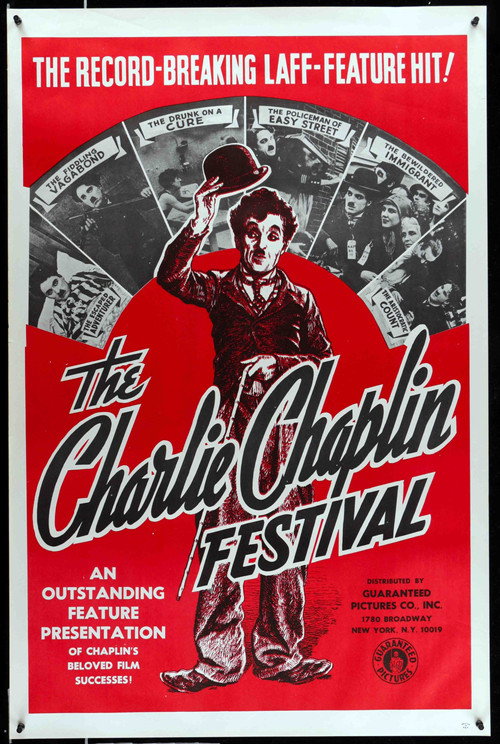 Charlie Chaplin Festival (1946)
 Too Busy to Work (1932)
- More like this film, on a shelf you can walk up to.It's the lit case on the top shelf.