Beau Ideal (1931)

- Directed by
- Herbert Brenon
- Genre
- adventure film, war film
- Country
- United States
- Runtime
- 1h 19m
- Rated
- NR
- Rating
- 4.5 of 10 from 12 voters
- Elsewhere
- IMDb

The catalogue in 3D
The film shelves have a room of their own that you can walk around in. The cat behind the counter is the AI Catbot, and they pick real films from the same catalogue when you tell them what you feel like watching. Nothing is for sale, here or in there. Go in from here and this film is already out on the counter, with more like it waiting on the shelf next to it.
How it feels
A man joins the French Foreign Legion in North Africa. He gets caught up in conflicts and romance.
adventurousaction-packeddramaticdatedstraightforwardexcitingromantic
What happens
Beau Ideal is a 1931 American pre-Code adventure film directed by Herbert Brenon and released by RKO Radio Pictures. The film was based on the 1927 adventure novel Beau Ideal by P. C. Wren, the third novel in a series of five novels based around the same characters. Brenon had directed the first in the series, Beau Geste, which was a very successful silent film in 1926. The screenplay was adapted from Wren's novel by Paul Schofield, who had also written the screenplay for the 1926 Beau Geste, with contributions from Elizabeth Meehan and Marie Halvey. The film starred Ralph Forbes (reprising his role as John Geste from the 1926 Beau Geste), Loretta Young, and Irene Rich. The other lead, Lester Vail, was making his film debut, after he replaced Douglas Fairbanks, Jr., who had originally been selected for a principal role in the film. Exteriors were filmed on locations in Arizona and Mexico, while the interiors were filmed on the RKO lot in Hollywood, and production took approximately five weeks to film. Post production would take place in November and December 1930, before the film was released on January 16, 1931. Unfortunately, the film was neither a critical nor financial success, losing over $300,000 for RKO. In addition, reviews for the film were mixed, with most being not kind to the film. Some modern sources also consider the film to be one of the worst produced by RKO that year. Although the film was not a success, it did introduce two technological advancements to film: the concentrator microphone and the Dunning process. (from Wikipedia, CC BY-SA)
More like this
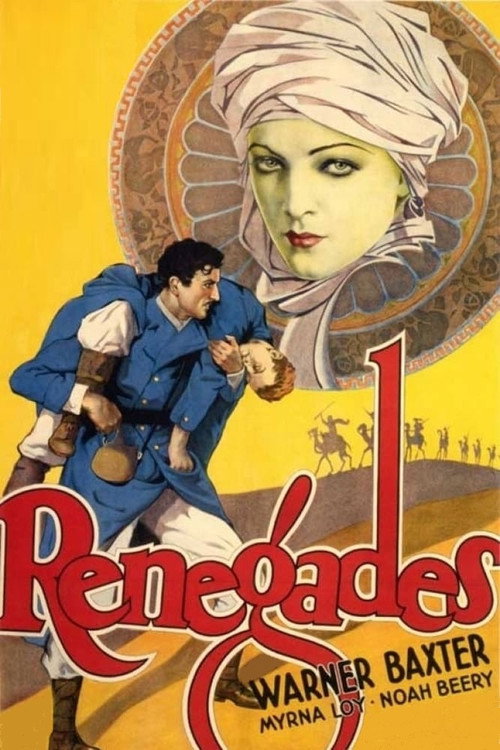 Renegades (1930)
 Women Everywhere (1930)
 We're in the Legion Now! (1936)
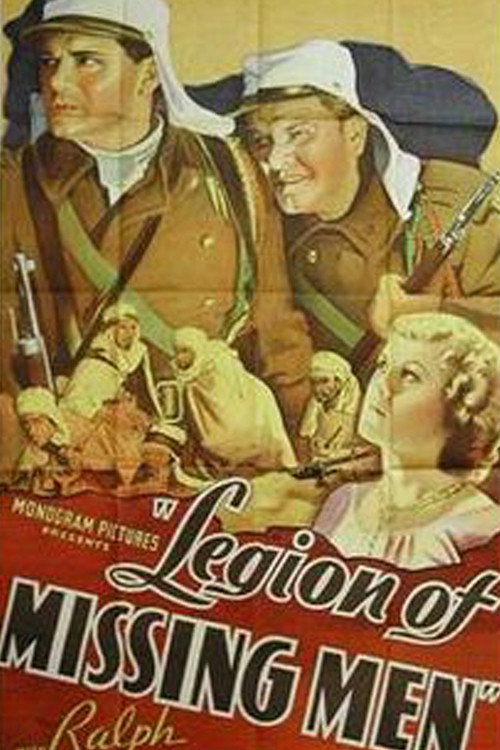 The Legion of Missing Men (1937)
 Desert Legion (1953)
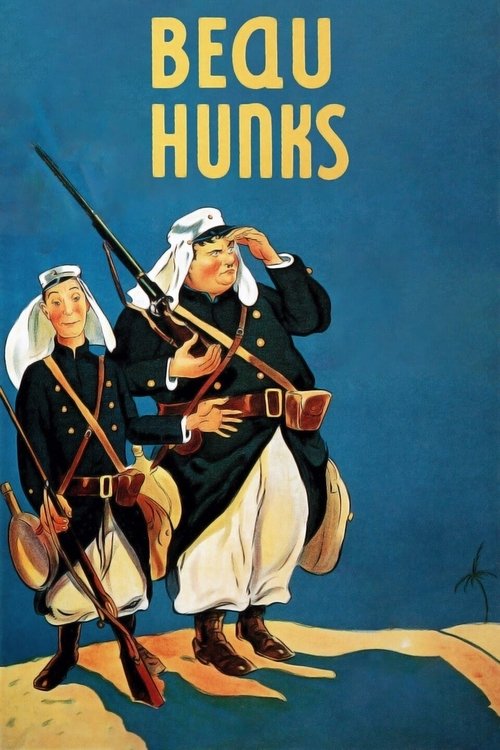 Beau Hunks (1931)
 Under Two Flags (1936)
 Red Morning (1931)
- More like this film, on a shelf you can walk up to.It's the lit case on the top shelf.