The Testament of Dr. Mabuse (1933)

- Original title
- Das Testament des Dr. Mabuse
- Directed by
- Fritz Lang
- Genre
- drama film, horror film, crime film
- Country
- Weimar Republic, Germany, France
- Runtime
- 2h 02m
- Rated
- NR
- Rating
- 7.6 of 10 from 287 voters
- Elsewhere
- IMDb
The catalogue in 3D
The film shelves have a room of their own that you can walk around in. The cat behind the counter is the AI Catbot, and they pick real films from the same catalogue when you tell them what you feel like watching. Nothing is for sale, here or in there. Go in from here and this film is already out on the counter, with more like it waiting on the shelf next to it.
How it feels
A criminal mastermind in an insane asylum writes detailed crime plans from his cell. A police inspector follows clues from a gangster, a traumatized informant, and a professor obsessed with the madman.
tensenoirishcerebralmenacingclaustrophobicpsychologicalslow-burneerie
What happens
The Testament of Dr. Mabuse (German: Das Testament des Dr. Mabuse), also called The Last Will of Dr. Mabuse, is a 1933 German crime-thriller film directed by Fritz Lang. The movie is a sequel to Lang's silent film Dr. Mabuse the Gambler (1922) and features many cast and crew members from Lang's previous films. Dr. Mabuse (Rudolf Klein-Rogge) is in an insane asylum where he is found frantically writing his crime plans. When Mabuse's criminal plans begin to be implemented, Inspector Lohmann (Otto Wernicke) tries to find the solution with clues from gangster Thomas Kent (Gustav Diessl), the institutionalized Hofmeister (Karl Meixner) and Professor Baum (Oscar Beregi Sr.) who becomes obsessed with Dr. Mabuse. The Testament of Dr. Mabuse was based on elements of author Norbert Jacques' unfinished novel Mabuse's Colony. It was Lang's second sound film for Nero-Film and was his final collaboration with screenwriter Thea von Harbou, then his wife. To promote the film to a foreign market, a French-language version of the film was made by Lang with the same sets but different actors with the title Le Testament du Dr. Mabuse. According to Siegfried Kracauer, Lang intended the film to suggest the Mabuse-like qualities of Adolf Hitler, who was on his rise to become Chancellor of Germany while the film was being written. When Hitler came to power, Joseph Goebbels became Minister of Propaganda and banned the film in Germany, suggesting that the film would undermine the audience's confidence in its statesmen. The French-language and German-language versions of the film were released in Europe while several versions of the film were released in the United States. The sequel The Thousand Eyes of Dr. Mabuse (1960) was also directed by Lang. Although it initially received a mixed reception, critics would later review the film favorably, and it has influenced filmmakers Claude Chabrol and Artur Brauner. (from Wikipedia, CC BY-SA)
More like this
 Le testament du Dr. Mabuse (1933)
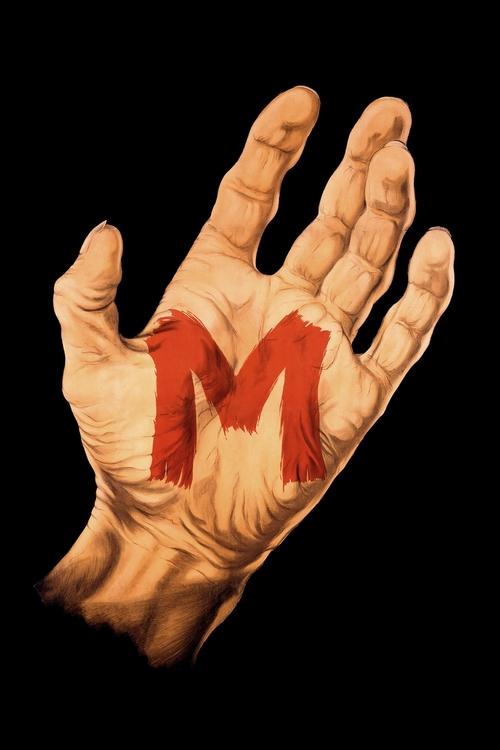 M (1931)
 Cette nuit-là (1933)
 Inquest (1931)
 Crime and Punishment (1923)
 Hände aus dem Dunkel (1933)
 Ship Without a Harbour (1932)
 The House of Mystery (1933)
- More like this film, on a shelf you can walk up to.It's the lit case on the top shelf.