Night Mail (1936)

- Directed by
- Harry Watt, Basil Wright
- Genre
- documentary film
- Country
- United Kingdom
- Runtime
- 24 min
- Rating
- 6.2 of 10 from 38 voters
- Elsewhere
- IMDb
The catalogue in 3D
The film shelves have a room of their own that you can walk around in. The cat behind the counter is the AI Catbot, and they pick real films from the same catalogue when you tell them what you feel like watching. Nothing is for sale, here or in there. Go in from here and this film is already out on the counter, with more like it waiting on the shelf next to it.
How it feels
A short documentary follows the overnight journey of a British postal train from London to Scotland. It shows workers sorting letters and picking up mailbags at high speed.
observationalrhythmicpoeticnostalgicindustriouscalmprecision-focusedelegant
What happens
Night Mail is a 1936 British documentary film directed by Harry Watt and Basil Wright for the General Post Office (GPO) Film Unit. Widely considered a masterpiece of the British Documentary Film Movement, the 24-minute film chronicles the overnight journey of the London, Midland and Scottish Railway's (LMS) postal train as it transports mail from London's Euston station to Scotland. Commissioned by John Grierson to portray a modern, reliable civil service, the production is celebrated for its innovative avant-garde synthesis of image, sound, and editing, culminating in a famous lyrical sequence featuring a rhythmic musical score by Benjamin Britten and spoken-verse commentary by W. H. Auden. The film relies on a naturalistic, poetic depiction of industrial labour, using actual GPO and railway staff to meticulously detail the overnight sorting of letters and the high-speed extraction of roadside mailbags via the train's mechanical apparatus. While Watt oversaw the narrative direction and shot the interior sorting carriage sequences on a simulated studio set, Wright managed the overall production. Sound director Alberto Cavalcanti pioneered the film's complex audio layering, coordinating with Auden to time the cadence of the rhyming verse with the accelerating visual rhythm of the steam locomotive. The film features various LMS Patriot, Royal Scot, and Jubilee Class engines. Premiering on 4 February 1936, Night Mail achieved immediate critical acclaim and commercial success, effectively elevating institutional public relations into an enduring work of art by framing working-class employees as the heroic driving engine of British society. As the definitive and most influential release of the GPO Film Unit, the documentary revolutionised the use of sound editing in British cinema. It left a profound legacy on subsequent generations of non-fiction filmmakers, and its distinctive structural style has since inspired numerous cultural pastiches, commercial advertisements, and an official film sequel in 1987. (from Wikipedia, CC BY-SA)
More like this
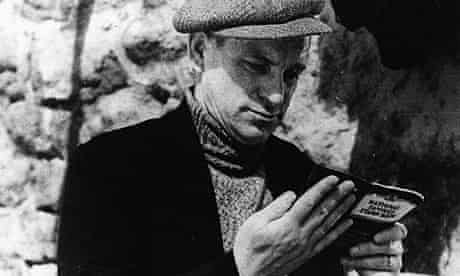 The Saving of Bill Blewitt (1936)
 The Way to the Sea (1936)
 Book Bargain (1936)
 Rail (1967)
 News for the Navy (1938)
 Thirty Million Letters (1963)
 Spare Time (1939)
 North to Wales (1965)
- More like this film, on a shelf you can walk up to.It's the lit case on the top shelf.