Ufa Ton-Woche 471/38/1939 (1939)

- Genre
- newsreel, sound film
- Country
- Nazi Germany

The catalogue in 3D
The film shelves have a room of their own that you can walk around in. The cat behind the counter is the AI Catbot, and they pick real films from the same catalogue when you tell them what you feel like watching. Nothing is for sale, here or in there. Go in from here and this film is already out on the counter, with more like it waiting on the shelf next to it.
How it feels
This 1939 German newsreel covers the early days of the Nazi invasion of Poland. It shows speeches by Nazi leaders and uses distorted images of Polish forces and civilians to justify the German attack. The film also includes antisemitic claims and scenes of Adolf Hitler visiting troops.
propagandisticstridenthistoricalbiasedpoliticalsomberinstructionaldocumentary
What happens
Ufa Ton-Woche 471/38/1939 is a German newsreel released on September 14, 1939. Aired just two weeks after the German attack on Poland, it presents a heavily propagandistic account of the campaign. The newsreel features Hermann Göring addressing Berlin factory workers, urging loyalty to Hitler. The retreating Polish forces are depicted as leaving behind scorched earth, while the so-called "Bloody Sunday of Bromberg" is framed as justification for severe reprisals. Antisemitic propaganda portrays Polish Jews as profiteers and criminals inciting violence against Germans, with claims that their relatives in England and France are pushing for war. The newsreel also shows Polish prisoners in camps and Adolf Hitler visiting his troops, reinforcing the narrative that Poles were deceived into fighting for British interests. Some shots from Ufa Ton-Woche 471 were reused shortly after its release in Fritz Hippler’s Der Feldzug in Polen (The Campaign in Poland) in 1939 and in the antisemitic propaganda film Der ewige Jude (1940). Outside Germany, this footage was first repurposed as early as 1943 by Franciszka and Stefan Themerson in their experimental anti-Nazi short Calling Mr. Smith. After the war, Erwin Leiser incorporated the segment showing Poles from Bromberg being arrested and marched away for execution into his seminal documentary on National Socialism, Mein Kampf (1960), within a section addressing Partisans during the attack on Poland. Today, these images are regarded as some of the most widely recognized visual representations of the Holocaust. (from Wikipedia, CC BY-SA)
More like this
 Feldzug in Polen (1940)
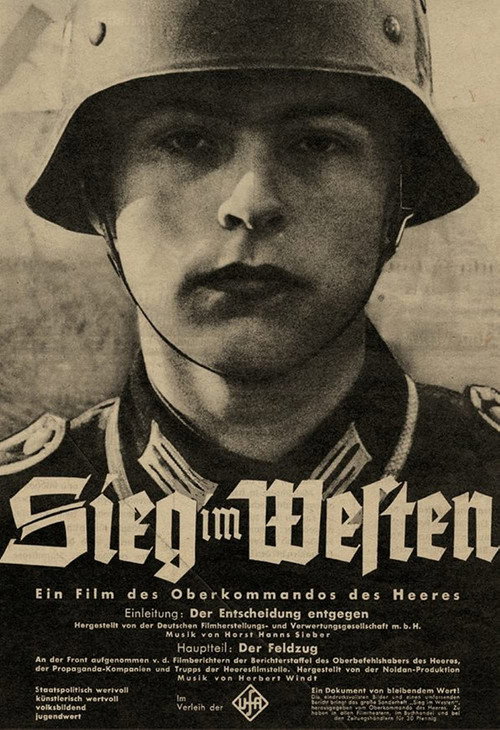 Sieg im Westen (1941)
 At War with the World's Enemy (1939)
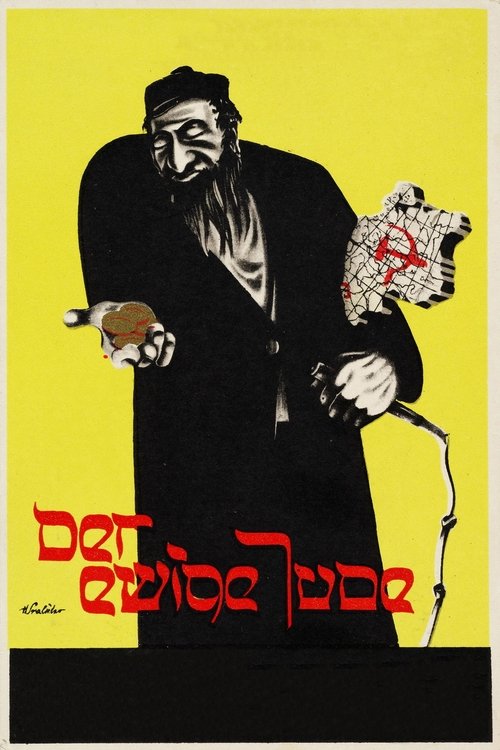 The Eternal Jew (1940)
 Danzig. Land an Meer und Strom (1939)
 Hitler, Beast of Berlin (1939)
 D III 88 (1939)
 Baptism of Fire (1940 film) (1940)
- More like this film, on a shelf you can walk up to.It's the lit case on the top shelf.