Jud Süß (1940)
- Directed by
- Veit Harlan
- Genre
- drama film, propaganda film
- Country
- Nazi Germany, Germany
- Runtime
- 1h 38m
- Rating
- 4.4 of 10 from 46 voters
- Elsewhere
- IMDb

The catalogue in 3D
The film shelves have a room of their own that you can walk around in. The cat behind the counter is the AI Catbot, and they pick real films from the same catalogue when you tell them what you feel like watching. Nothing is for sale, here or in there. Go in from here and this film is already out on the counter, with more like it waiting on the shelf next to it.
How it feels
In 18th century Germany, a Jewish financier rises to power and exploits his position for personal gain. The film follows his corrupt influence and the eventual downfall it brings to the ruler and the people, framed as a cautionary tale.
hatefulmanipulativedarkominousdidacticsuspensefulrelentlesshistorical
What happens
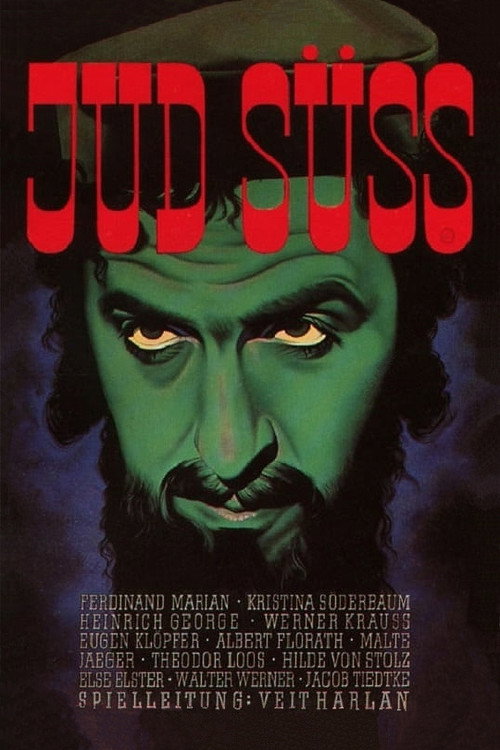
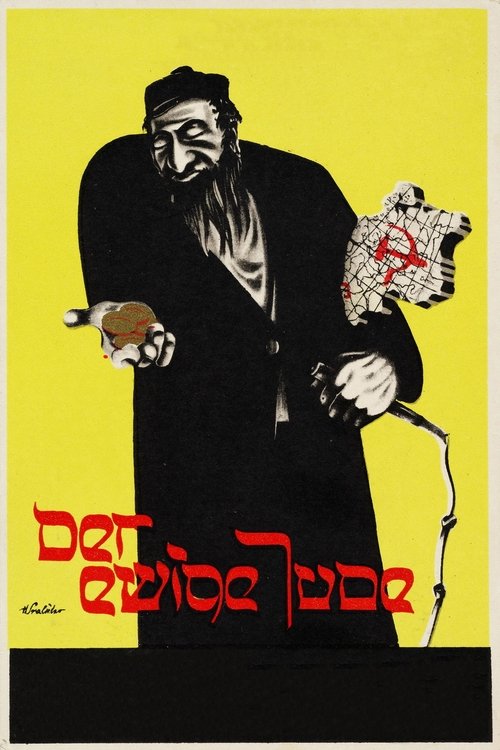
Jud Süß (pronounced [juːt zyːs], 'Jew Süss') is a 1940 Nazi German historical drama/propaganda film produced by Terra Film at the behest of Joseph Goebbels. Considered one of the most antisemitic films of all time, the film was directed by Veit Harlan, who co-wrote the screenplay with Eberhard Wolfgang Möller and Ludwig Metzger. It stars Ferdinand Marian and Kristina Söderbaum with Werner Krauss and Heinrich George in key supporting roles. The film has been characterized as "one of the most notorious and successful pieces of antisemitic film propaganda produced in Nazi Germany." It was a great success in Germany, and was seen by 20 million people. Although its budget of 2 million Reichsmarks was considered high for films of that era, the box office receipts of 6.5 million Reichsmarks made it a financial success. Heinrich Himmler urged members of the SS and police to see it. After the war, some of the leading cast members were brought to trial as part of the denazification process. They generally defended their participation in the film on the grounds that they had only done so under duress. Susan Tegel, author of Nazis and the Cinema, characterizes their postwar attempts to distance themselves from the film as "crass and self-serving"; she argues that their motives for accepting the roles seem to have been more driven by opportunistic ambition than by antisemitism. Harlan was the only major movie director of the Third Reich to stand trial for crimes against humanity. After three trials, he was given a light sentence because he convinced the courts that the antisemitic content of the film had been dictated by Goebbels and that Harlan had worked to moderate the antisemitism. Eventually, Harlan was reinstated as a citizen of the Federal Republic of Germany and made nine more films. He remained a controversial figure and the target of protests. Together with Die Rothschilds and Der ewige Jude, both released in 1940, the film remains one of the most frequently discussed examples of the use of film to further the Nazi antisemitic agenda. In the 2000s, two documentary films and a drama were released that explore the history and impact of the film. (from Wikipedia, CC BY-SA)
More like this
 The Mortal Storm (1940)
 Enemies (1940)
 Linen from Ireland (1939)
 The Rothschilds (1940)
 The Eternal Jew (1940)
 The Fox of Glenarvon (1940)
 The Man I Married (1940)
 Counterfeiters (1940)
- More like this film, on a shelf you can walk up to.It's the lit case on the top shelf.