Citizen Kane (1941)

- Directed by
- Orson Welles
- Written by
- Orson Welles, John Houseman, Herman J. Mankiewicz
- Cast
- Orson Welles, Joseph Cotten, Ruth Warrick, Everett Sloane, William Alland, Paul Stewart, George Coulouris, Dorothy Comingore
- Genre
- drama film, biographical film, fiction film, mystery film, flashback film
- Country
- United States
- Runtime
- 1h 59m
- Rated
- NR
- Rating
- 8.0 of 10 from 6,110 voters
- Elsewhere
- IMDb
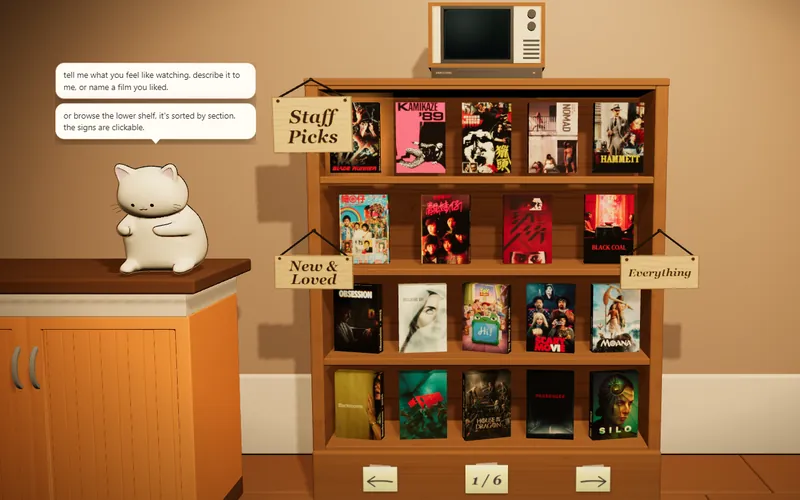
The catalogue in 3D
The film shelves have a room of their own that you can walk around in. The cat behind the counter is the AI Catbot, and they pick real films from the same catalogue when you tell them what you feel like watching. Nothing is for sale, here or in there. Go in from here and this film is already out on the counter, with more like it waiting on the shelf next to it.
How it feels
A reporter tries to understand the life of a powerful newspaper magnate by interviewing people who knew him. The story is told through flashbacks that reveal different sides of the man.
investigativemelancholicreflectivefragmentedambitioussomberenigmaticbrisk-pacednostalgic
What happens
Citizen Kane is a 1941 American drama film directed, produced by, and starring Orson Welles and co-written by Welles and Herman J. Mankiewicz, and was Welles's first feature film. The quasi-biographical film examines the life and legacy of Charles Foster Kane, played by Welles, a composite character based on American media barons William Randolph Hearst and Joseph Pulitzer, and Chicago tycoons Samuel Insull and Harold McCormick, as well as aspects of the screenwriters' own lives. After the Broadway success of Welles's Mercury Theatre and the controversial 1938 radio broadcast "The War of the Worlds" on The Mercury Theatre on the Air, Welles was courted by Hollywood. He signed a contract with RKO Pictures in 1939. Although it was unusual for an untried director, he was given freedom to develop his own story, to use his own cast and crew, and to have final cut privilege. Following two abortive attempts to get a project off the ground, he wrote the screenplay for Citizen Kane with Herman J. Mankiewicz. Principal photography took place in 1940, the same year that its innovative trailer was shown, and the film was released in 1941. Upon its release, Hearst prohibited any mention of the film in his newspapers. Although it was a critical success, Citizen Kane failed to recoup its costs at the box office. The film faded from view after its release, but returned to public attention when it was praised by French critics such as André Bazin and re-released in 1956. In 1958, the film was voted number nine on the prestigious Brussels 12 list at the 1958 World Expo. Citizen Kane is frequently cited as the greatest film ever made. For 40 years (five decennial polls: 1962, 1972, 1982, 1992 and 2002), it stood at number one in the British Film Institute's Sight and Sound decennial poll, and it topped the American Film Institute's 100 Years ... 100 Movies list in 1998, as well as its 2007 update. The Library of Congress selected Citizen Kane as an inductee of the 1989 inaugural group of 25 films for preservation in the United States National Film Registry for being "culturally, historically, or aesthetically significant". The film was nominated for Academy Awards in nine categories and it won for Best Writing (Original Screenplay) by Mankiewicz and Welles. Citizen Kane is praised for Gregg Toland's cinematography, Robert Wise's editing, Bernard Herrmann's score and its narrative structure, all of which have been considered innovative and precedent-setting. (from Wikipedia, CC BY-SA)
More like this
 Unholy Partners (1941)
 A Shot in the Dark (1941)
 Sunset Boulevard (1950)
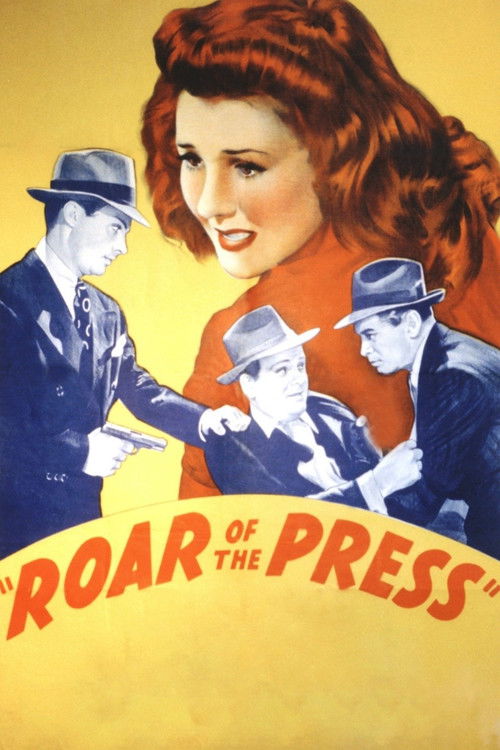 Roar of the Press (1941)
 Nine Lives Are Not Enough (1941)
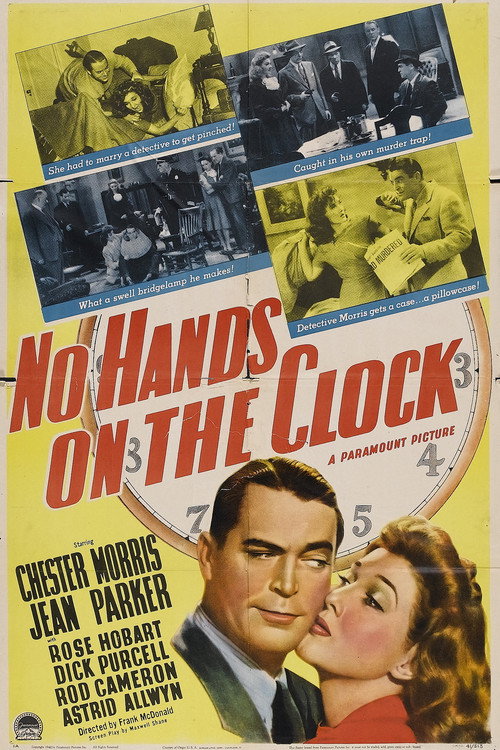 No Hands on the Clock (1941)
 Intrigue (1941)
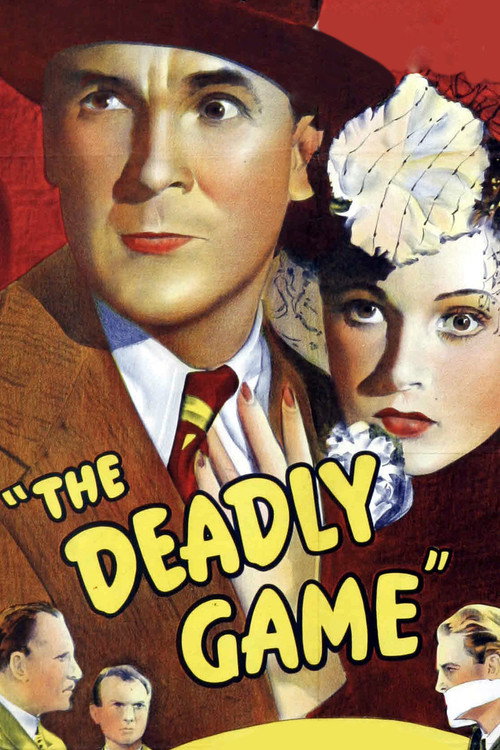 The Deadly Game (1941)
- More like this film, on a shelf you can walk up to.It's the lit case on the top shelf.