La Symphonie fantastique (1942)

- Directed by
- Christian-Jaque
- Genre
- drama film, biographical film
- Country
- France
- Runtime
- 1h 35m
- Rating
- 6.4 of 10 from 11 voters
- Elsewhere
- IMDb
The catalogue in 3D
The film shelves have a room of their own that you can walk around in. The cat behind the counter is the AI Catbot, and they pick real films from the same catalogue when you tell them what you feel like watching. Nothing is for sale, here or in there. Go in from here and this film is already out on the counter, with more like it waiting on the shelf next to it.
How it feels
The film tells the story of French composer Hector Berlioz and his life. It focuses on his career and the creation of his famous symphony.
dramatichistoricalpassionatebiographicalsombernostalgicartisticreflective
What happens
La Symphonie fantastique is a 1942 French drama film by Christian-Jaque and produced by the German-controlled French film production company Continental Films. The film is based upon the life of the French composer Hector Berlioz. The title is taken from the five-movement programmatic Symphonie fantastique of 1830. The film lasts around 90 minutes and was first shown at the 'Normandie' cinema in Paris on 1 April 1942. The posters at the premiere contained the sub-title 'La Vie passionnée et glorieuse d'un génie' (which links with the quote from Hugo at the very end of the film). The French Bibliothèque du film (BiFi) contains an earlier draft plan for the film which envisaged a less realistic, more fantastic treatment of the story, entitled La Symphonie du rêve, with Pierre Fresnay in the central role. The cast included several members of the Comédie-Française (Barrault, Saint-Cyr, Seigner, Berthau, Delamare, Fonteney). Barrault took part in a BBC2 programme in 1969 on the centenary of the composer's death, as Berlioz again, and in the autobiographical Lélio, sequel to the symphony. Shortly after the film was released, Goebbels, having learnt of it, was displeased, considering it too patriotic and determined to summon the German producer Alfred Greven to Berlin to remind him that the French should only have light and superficial new films – and not cultivate French nationalism. (from Wikipedia, CC BY-SA)
More like this
 Mélodie pour toi (1942)
 Rossini (1942)
 Moi, Hector Berlioz (2003)
 The Blue Veil (1942)
 Forbidden Music (1942)
 Whom the Gods Love (1942)
 Private Life (1942)
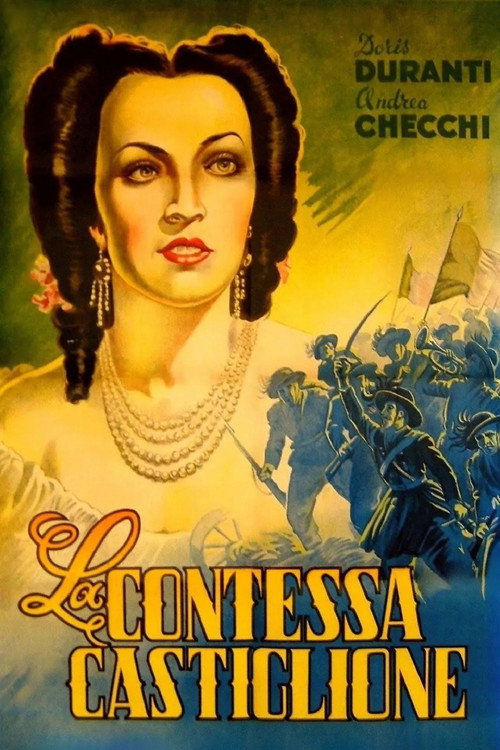 La contessa Castiglione (1942)
- More like this film, on a shelf you can walk up to.It's the lit case on the top shelf.