Champagne Charlie (1944)

- Directed by
- Alberto Cavalcanti
- Genre
- drama film, comedy drama, musical film
- Country
- United Kingdom
- Runtime
- 1h 45m
- Rated
- NR
- Rating
- 5.9 of 10 from 11 voters
- Elsewhere
- IMDb
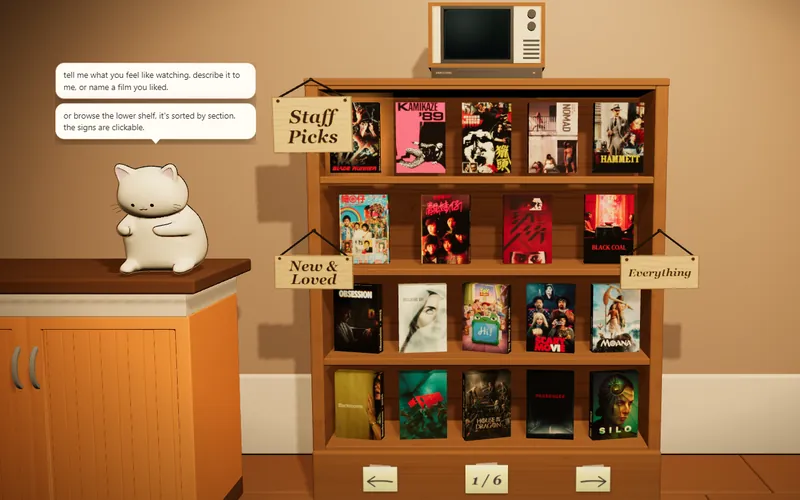
The catalogue in 3D
The film shelves have a room of their own that you can walk around in. The cat behind the counter is the AI Catbot, and they pick real films from the same catalogue when you tell them what you feel like watching. Nothing is for sale, here or in there. Go in from here and this film is already out on the counter, with more like it waiting on the shelf next to it.
How it feels
In 1860s London, two music hall performers compete for fame and popularity. They sing and perform at rival venues while their fans and theater owners watch.
nostalgiclivelyupbeathistoricalplayfultheatricalwarmhumorous
What happens
Champagne Charlie is a 1944 British musical film directed by Alberto Cavalcanti and loosely based on the rivalry between the popular music hall performers George Leybourne (born Joe Saunders), who was called "Champagne Charlie" because he was the first artist to perform the song of that title, and Alfred Vance, who was known as "The Great Vance". Leybourne and Vance, portrayed by Tommy Trinder and Stanley Holloway, were London's big music hall stars of the 1860s and 1870s, of the kind called lions comiques. In the film, they are "top of the bill" at their respective music halls. The film's female leads are a music hall owner and her daughter, portrayed by Betty Warren and Jean Kent. Champagne Charlie opens with a sing-along in a pub, and follows the rise of Leybourne as a music hall singer. The highlight of the film is a singing competition between the two protagonists. Leybourne sings "Ale Old Ale" and Vance replies with "Gin, Gin, Gin"; the competition continues, with the scene finally ending with the song of the title. The film is notable for its realistic approach to showing details of the audiences, venues and staff, with copious quantities of food and drink providing a vicarious delight for wartime audiences. In 1944, Champagne Charlie was typical of feature films designed to raise morale and generate goodwill. (from Wikipedia, CC BY-SA)
More like this
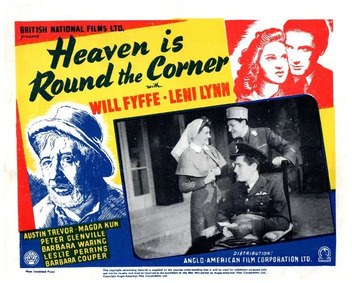 Heaven Is Round the Corner (1944)
 Sensations of 1945 (1944)
 The Merry Monahans (1944)
 Give Us the Moon (1944)
 One Exciting Night (1944)
 This Is the Life (1944)
 Fanny by Gaslight (1944)
 Step Lively (1944)
- More like this film, on a shelf you can walk up to.It's the lit case on the top shelf.