Das dumme Gänslein (1944)

- Directed by
- Hans Fischerkoesen
- Genre
- animation
- Country
- German Reich
- Runtime
- 14 min
- Rating
- 7.1 of 10 from 7 voters
- Elsewhere
- IMDb

The catalogue in 3D
The film shelves have a room of their own that you can walk around in. The cat behind the counter is the AI Catbot, and they pick real films from the same catalogue when you tell them what you feel like watching. Nothing is for sale, here or in there. Go in from here and this film is already out on the counter, with more like it waiting on the shelf next to it.
How it feels
The cartoon tells the story of a young goose who dreams of an exciting city life instead of staying on her farm. She gets into trouble with a clever fox, and her family and friends must rescue her. The film pushes the idea that adventure and independence are wrong, and that obeying traditional family roles is the only safe way to live.
whimsicalmoralisticdidacticpropagandisticdarkly cautionarydatedmanipulativesimplistic
What happens
Das dumme Gänslein (The Silly Goose) is one in a trio of German animated short films produced in 1944 by Hans Fischerkoesen, who was the chief animator and author. It is a tale of a female goose consumed by adventure and urban glamour in her countryside life, who has to be saved from a cunning fox by her friends and family. The overt moral of the cartoon is to avoid an extravagant and adventurous life due to its possible unexpected consequences, but rather to lead a 'normal' (German) family life. Though this "There's no place like home" theme was a commonplace of 1930s and '40s animation, in this cartoon there is special emphasis, typical of Nazi propaganda, on the Völkisch ideology of conformity and conventionality, portraying individualism and sexual freedom (seeking pleasure rather than to be the mother of 'true' German children) as inherently both alien and dangerous. The cartoon suggests that divergence from traditional German life could be dire, even possibly lethal, in line with National Socialist characterizations of opponents of the regime as asocial, disloyal, and self-destructive. The film also hints at antisemitism through the character of the cunning fox. (from Wikipedia, CC BY-SA)
More like this
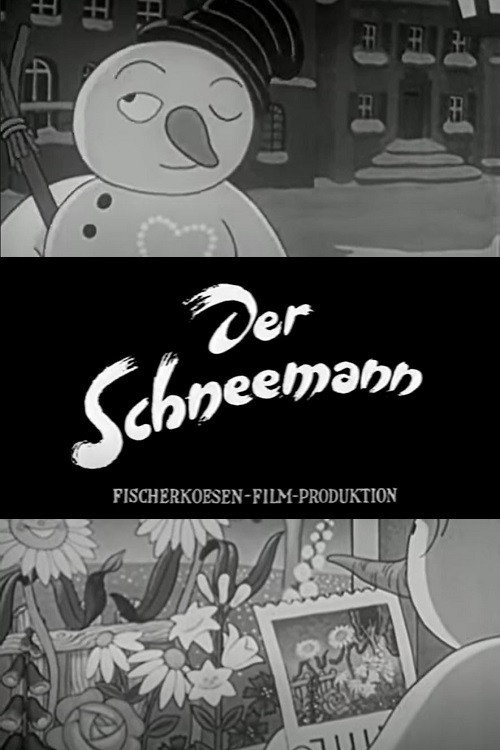 Der Schneemann (1944)
 The Adventures of Prince Achmed (1926)
 Poor Hansi (1943)
 Cilly Goose (1944)
 Russian Rhapsody (1944)
 Purzelbaum ins Leben (1946)
 My Boy Johnny (1944)
 Die goldene Gans (1964)
- More like this film, on a shelf you can walk up to.It's the lit case on the top shelf.