Rome, Open City (1945)

- Original title
- Roma città aperta
- Directed by
- Roberto Rossellini
- Genre
- drama film, art film
- Country
- Kingdom of Italy
- Runtime
- 1h 40m
- Rated
- +16
- Rating
- 8.0 of 10 from 981 voters
- Elsewhere
- IMDb
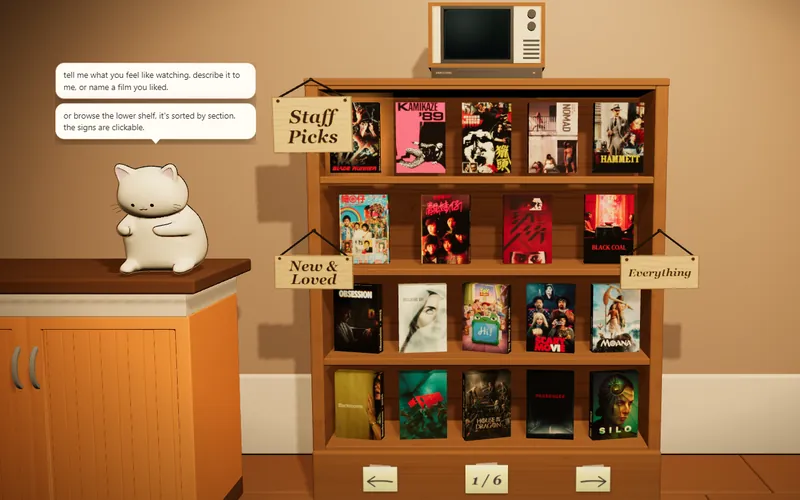
The catalogue in 3D
The film shelves have a room of their own that you can walk around in. The cat behind the counter is the AI Catbot, and they pick real films from the same catalogue when you tell them what you feel like watching. Nothing is for sale, here or in there. Go in from here and this film is already out on the counter, with more like it waiting on the shelf next to it.
How it feels
In 1944 Rome, a group of citizens struggle under Nazi occupation. A Resistance fighter tries to escape the city with help from a Catholic priest.
grittyurgentsuspensefulsomberhumanistdocu-stylerawemotional intensity
What happens
Rome, Open City (Italian: Roma città aperta), also released as Open City, is a 1945 Italian neorealist war drama film directed by Roberto Rossellini and co-written by Sergio Amidei, Celeste Negarville and Federico Fellini. Set in Rome in 1944, the film follows a diverse group of characters coping under the Nazi occupation, and centers on a Resistance fighter trying to escape the city with the help of a Catholic priest. The title refers to the status of Rome as an open city following its declaration as such on 14 August 1943. The film is the first in Rosselini's "Neorealist Trilogy", followed by Paisan (1946) and Germany, Year Zero (1948). Open City is considered one of the most important and representative works of Italian neorealism, and an important stepping stone for Italian filmmaking as a whole. It was one of the first post-war Italian pictures to gain major acclaim and accolades internationally, winning the prestigious Palme d'Or at the 1946 Cannes Film Festival and being nominated for Best Adapted Screenplay Oscar at the 19th Academy Awards. It launched director Rosselini, screenwriter Fellini, and actress Anna Magnani into the international spotlight. In 2008, the film was included on the Italian Ministry of Cultural Heritage’s 100 Italian films to be saved, a list of 100 films that "have changed the collective memory of the country between 1942 and 1978". (from Wikipedia, CC BY-SA)
More like this
 Casello n. 3 (1945)
 Posto di blocco (1945)
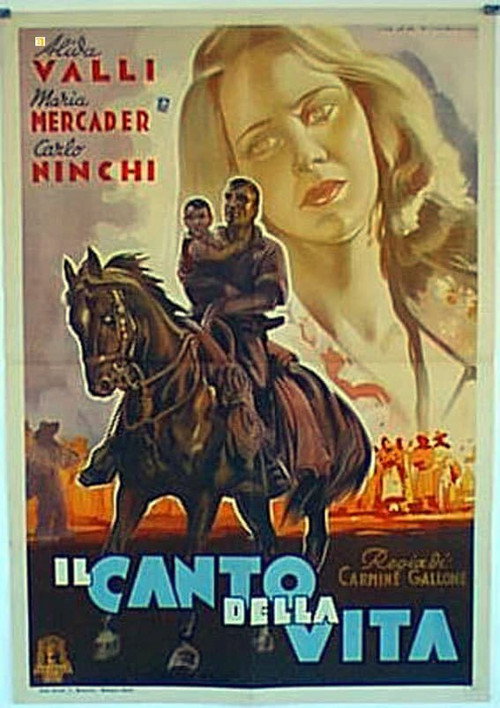 The Song of Life (1945)
 The Man with a Cross (1943)
 A Pilot Returns (1942)
 La porta del cielo (1945)
 Fiorenza mia! (1915)
 Tresa (1915)
- More like this film, on a shelf you can walk up to.It's the lit case on the top shelf.