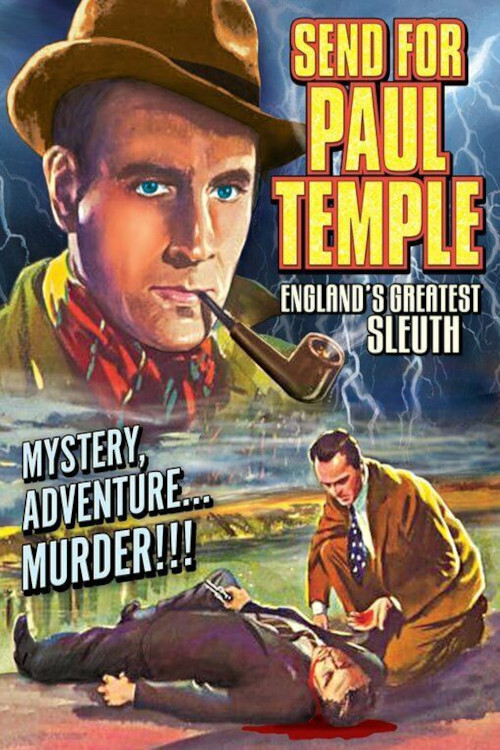
Send for Paul Temple (1946)
- Directed by
- John Argyle
- Genre
- crime film
- Country
- United Kingdom
- Runtime
- 1h 21m
- Rating
- 5.3 of 10 from 9 voters
- Elsewhere
- IMDb
The catalogue in 3D
The film shelves have a room of their own that you can walk around in. The cat behind the counter is the AI Catbot, and they pick real films from the same catalogue when you tell them what you feel like watching. Nothing is for sale, here or in there. Go in from here and this film is already out on the counter, with more like it waiting on the shelf next to it.
How it feels
A famous detective is called in by Scotland Yard to investigate a diamond theft. The story is stripped down from a longer radio serial and focuses on the detective's sleuthing.
noir-ishmysterioussteady-pacedclassicdetective-stylelow-keyretroplot-driven
What happens
Send for Paul Temple is a 1946 British crime film directed by John Argyle and starring Anthony Hulme, Joy Shelton and Tamara Desni. Paul Temple is called in by Scotland Yard after a major diamond theft. It was the first of four film adaptations of the BBC's Paul Temple radio serials, with John Bentley taking over the lead role in future installments. The film is an abridged version of the first ever Paul Temple radio serial, originally broadcast in April and May 1938 over eight episodes, also entitled Send for Paul Temple. The radio script was by Francis Durbridge, who immediately collaborated with a co-author, John Thewes, on a novelisation, published in June 1938. ('John Thewes' is thought to be a pseudonym of Charles Hatton, who collaborated with Durbridge on four subsequent novelisations of radio scripts up until 1948). The original radio script was used again in 1940 for a remade radio production using a Canadian cast, starring Bernard Braden. Much of the 200 minute nominal duration of the radio production was discarded in abridging the story to fit the film's much shorter 83 minute running time, with the plot heavily truncated and considerably simplified. In his adaption, the director John Argyle reused the names of characters and places from the novel and radio script, and recycles some plot ideas and situations, and the basic storyline; but a comparison with the extant 1940 Canadian radio production reveals (unsurprisingly, since five of the eight radio episodes have been omitted) that little of Durbridge's original dialogue, characterisation or detailed plotting survives. Durbridge's trademark ability to construct his radio dramas around the seven cliffhanger endings in his multipart serials is entirely lost. (from Wikipedia, CC BY-SA)
More like this
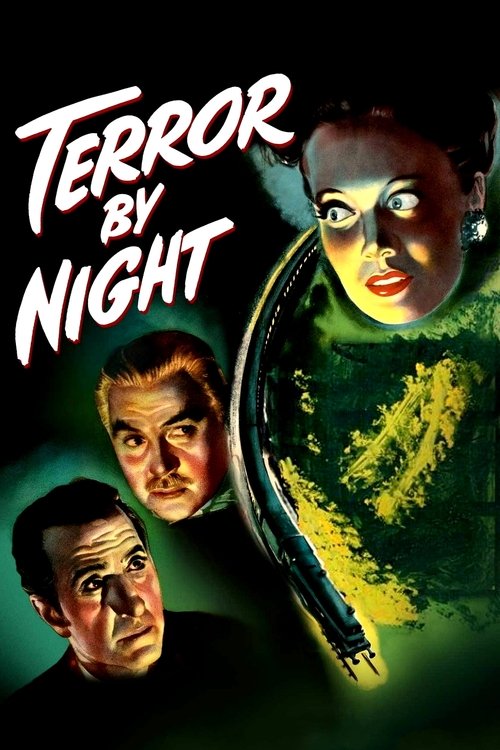 Terror by Night (1946)
 The Diamond (1954)
 The Adventure of the Western Star (1990)
 The Big Sleep (1946)
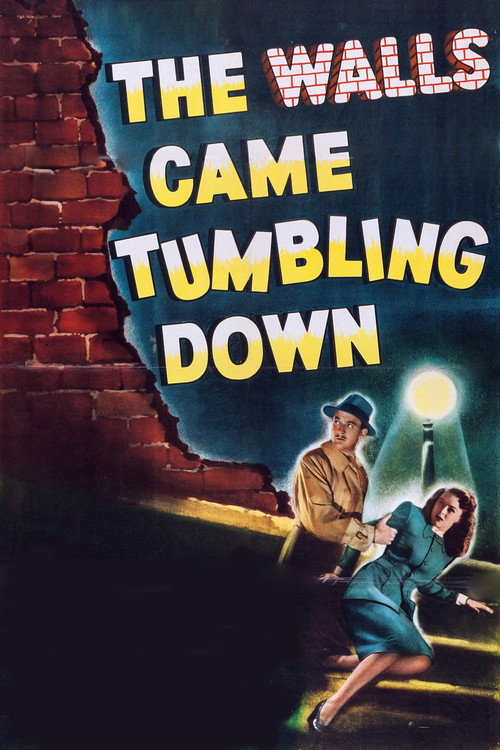 The Walls Came Tumbling Down (1946)
 Girl on the Spot (1946)
 Lady Chaser (1946)
 The Verdict (1946)
- More like this film, on a shelf you can walk up to.It's the lit case on the top shelf.