Bicycle Thieves (1948)

- Original title
- Ladri di biciclette
- Directed by
- Vittorio De Sica
- Genre
- drama film, art film
- Country
- Italy
- Runtime
- 1h 30m
- Rated
- NR
- Rating
- 8.2 of 10 from 2,688 voters
- Elsewhere
- IMDb

The catalogue in 3D
The film shelves have a room of their own that you can walk around in. The cat behind the counter is the AI Catbot, and they pick real films from the same catalogue when you tell them what you feel like watching. Nothing is for sale, here or in there. Go in from here and this film is already out on the counter, with more like it waiting on the shelf next to it.
How it feels
A poor father in postwar Rome desperately searches for his stolen bicycle. Without it he will lose his job and the hope it gave his family.
melancholictensebleakgrittyslow-burnemotionalvisceralheartbreaking
What happens
Bicycle Thieves (Italian: Ladri di biciclette), also known as The Bicycle Thief, is a 1948 Italian neorealist drama film directed by Vittorio De Sica. It follows the story of a poor father searching in post-World War II Rome for his stolen bicycle, without which he will lose the job which was to be the salvation of his young family. Adapted for the screen by Cesare Zavattini from the 1946 novel by Luigi Bartolini, and starring Lamberto Maggiorani as the desperate father and Enzo Staiola as his plucky young son, Bicycle Thieves received an Academy Honorary Award (most outstanding foreign language film) in 1950, and in 1952 was deemed the greatest film of all time by Sight & Sound magazine's poll of filmmakers and critics; fifty years later another poll organized by the same magazine ranked it sixth among the greatest-ever films. In the 2012 version of the list the film ranked 33rd among critics and 10th among directors. The film was also cited by Turner Classic Movies as one of the most influential films in cinema history, and it is considered part of the canon of classic cinema. The film was voted number 3 on the prestigious Brussels 12 list at the 1958 World Expo, and number 4 in Empire magazine's "The 100 Best Films of World Cinema" in 2010. It was also included on the Italian Ministry of Cultural Heritage’s 100 Italian films to be saved, a list of 100 films that "have changed the collective memory of the country between 1942 and 1978." (from Wikipedia, CC BY-SA)
More like this
 Escape to France (1948)
 Under the Sun of Rome (1948)
 Difficult Years (1948)
 Letter at Dawn (1948)
 Monaca santa (1948)
 The Earth Cries Out (1948)
 La Terra Trema (1948)
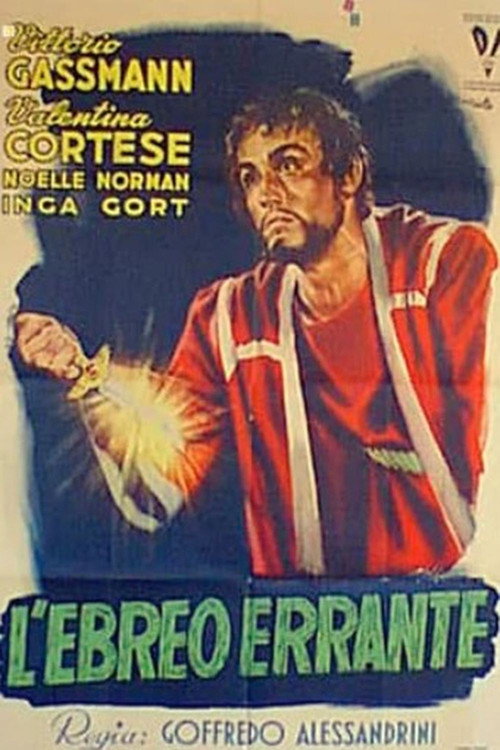 L'ebreo errante (1948)
- More like this film, on a shelf you can walk up to.It's the lit case on the top shelf.