Bill and Coo (1948)

- Directed by
- Dean Riesner
- Genre
- fantasy film
- Country
- United States
- Runtime
- 1h 01m
- Rating
- 6.7 of 10 from 12 voters
- Elsewhere
- IMDb
The catalogue in 3D
The film shelves have a room of their own that you can walk around in. The cat behind the counter is the AI Catbot, and they pick real films from the same catalogue when you tell them what you feel like watching. Nothing is for sale, here or in there. Go in from here and this film is already out on the counter, with more like it waiting on the shelf next to it.
How it feels
Trained birds and other small animals act out a story in a miniature village built on a tabletop. A short live-action introduction shows the bird trainer and producer before the all-animal cast takes over.
whimsicallightheartednovelplayfulgentlecharmingold-fashionedcurious
What happens
Bill and Coo is a 1948 film directed by Dean Riesner, filmed in Trucolor, and conceived to showcase George Burton's trained birds (Burton's Birds). The 61-minute live-action film stars many types of birds, including budgies (commonly known in the US as parakeets) and lovebirds. The film also features other trained animals, including cats, dogs and a crow. Except for three humans (producer Ken Murray, bird trainer George Burton, and Elizabeth Walters) in a short set-up segment before the opening credits, the film features an all-animal cast. The film was shot on the world's second smallest film set, a miniature village built onto a 15 by 30 ft (4.6 by 9.1 m) tabletop. The film received an Honorary Academy Award from the Academy of Motion Picture Arts and Sciences "In which artistry and patience blended in a novel and entertaining use of the medium of motion pictures." It is also one of the first films to be released to cinemas on slow-burning cellulose acetate safety film instead of the dangerously flammable nitrate stock used up until then. Initially, projectionists reported film damage due to the acetate base being less 'slippery' than that of nitrate (celluloid) based film. Before long it was found that a thin coating of wax applied along the film edges solved this problem. The copyright on the film lapsed and is in the public domain. (from Wikipedia, CC BY-SA)
More like this
 A Piece of Cake (1948)
 The Bored Cuckoo (1948)
 Snow Foolin' (1949)
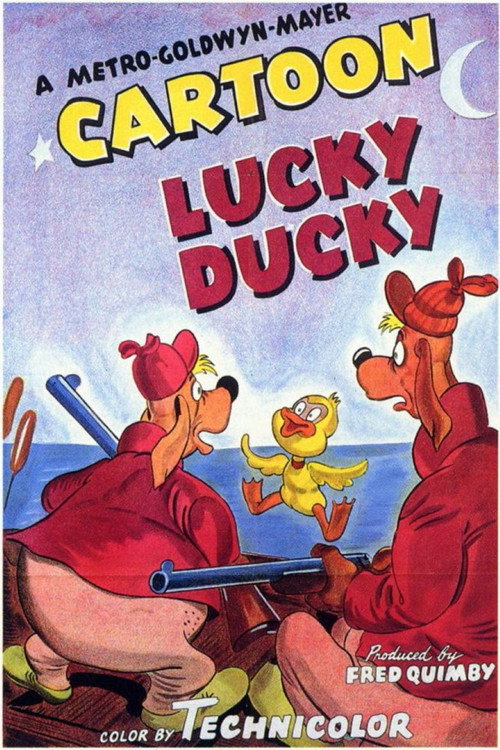 Lucky Ducky (1948)
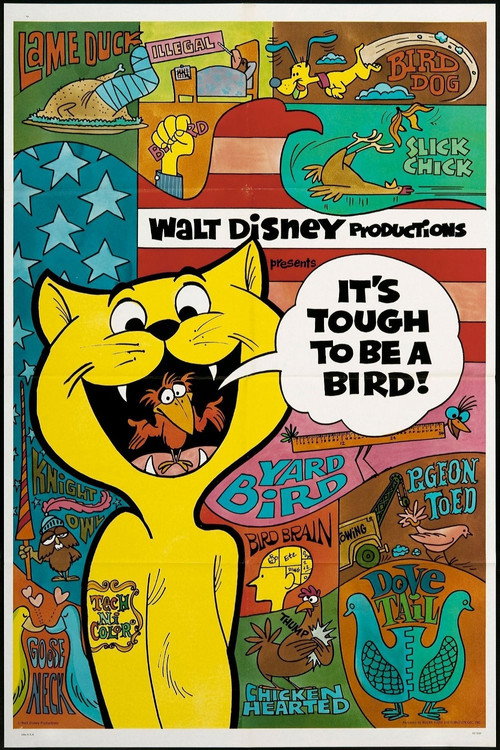 It's Tough to Be a Bird (1969)
 Colonel Bogey (1948)
 Ahiru no Ko (1932)
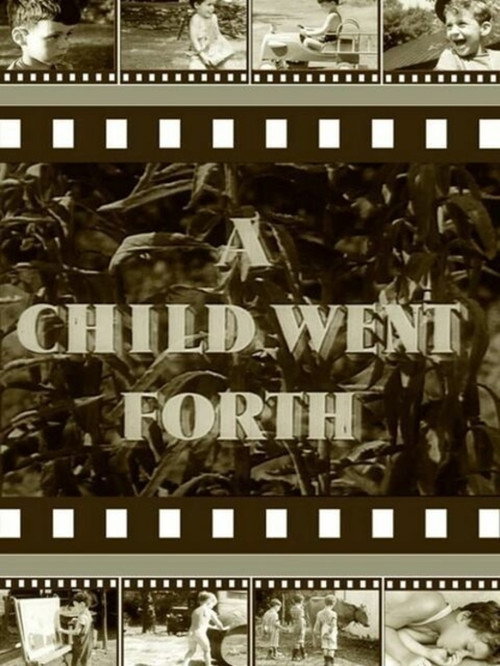 A Child Went Forth (1948)
- More like this film, on a shelf you can walk up to.It's the lit case on the top shelf.