Late Spring (1949)

- Original title
- 晩春
- Directed by
- Yasujirō Ozu
- Genre
- drama film
- Country
- Japan
- Runtime
- 1h 48m
- Rated
- TP
- Rating
- 8.0 of 10 from 480 voters
- Elsewhere
- IMDb
The catalogue in 3D
The film shelves have a room of their own that you can walk around in. The cat behind the counter is the AI Catbot, and they pick real films from the same catalogue when you tell them what you feel like watching. Nothing is for sale, here or in there. Go in from here and this film is already out on the counter, with more like it waiting on the shelf next to it.
How it feels
A widowed father and his adult daughter live together in postwar Japan. Their quiet routine is disrupted when family and friends pressure the daughter to marry, forcing her to choose between caring for her father and starting a life of her own.
meditativepoignantgentlebittersweetslow-pacedcontemplativeintimaterestrained
What happens
Late Spring (晩春, Banshun) is a 1949 Japanese drama film directed by Yasujirō Ozu and written by Ozu and Kogo Noda, based on the short novel Father and Daughter (Chichi to musume) by the 20th-century novelist and critic Kazuo Hirotsu. The film was written and shot during the Allied Powers' Occupation of Japan and was subject to the Occupation's official censorship requirements. Starring Chishū Ryū, who was featured in almost all of the director's films, and Setsuko Hara, marking her first of six appearances in Ozu's work, it is the first installment of Ozu's so-called "Noriko trilogy", succeeded by Early Summer (Bakushu, 1951) and Tokyo Story (Tokyo Monogatari, 1953); in each of which Hara portrays a young woman named Noriko, though the three Norikos are distinct, unrelated characters, linked primarily by their status as single women in postwar Japan. Late Spring belongs to the type of Japanese cinema known as shomin-geki, a genre that deals with the ordinary daily lives of working class and middle class people of modern times. The film is frequently regarded as the first in the director's final creative period, "the major prototype of the [director's] 1950s and 1960s work". These films are characterized by, among other traits, an exclusive focus on stories about families during Japan's immediate postwar era, a tendency towards very simple plots and the use of a generally static camera. Late Spring was released on September 19, 1949, to critical acclaim in the Japanese press. In the following year, it was awarded the prestigious Kinema Junpo critics' award as the best Japanese production released in 1949. In 1972, the film was commercially released in the United States, again to very positive reviews. Late Spring has been referred to as the director's "most perfect" work, as "the definitive film of Ozu's master filmmaking approach and language" and has been called "one of the most perfect, most complete, and most successful studies of character ever achieved in Japanese cinema". In the 2012 version of Sight & Sound's decennial poll of "The Greatest Films of All Time", published by the British Film Institute (BFI), Late Spring appears as the second highest-ranking Japanese-language film on the list at number 15, behind Ozu's own Tokyo Story at number 3. (from Wikipedia, CC BY-SA)
More like this
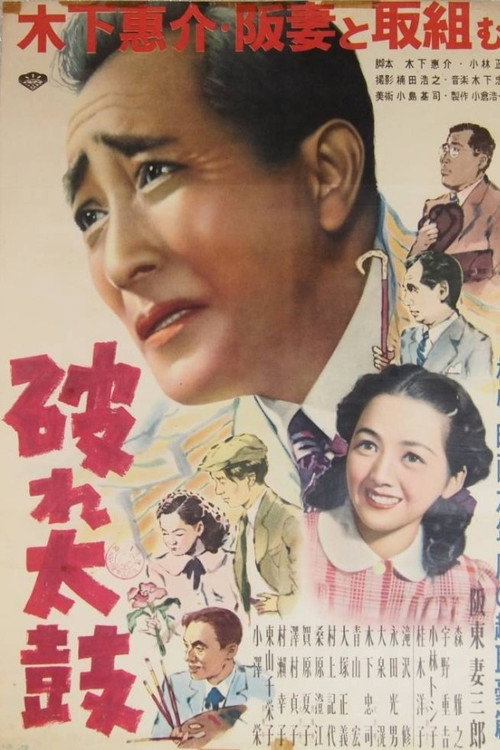 Broken Drum (1949)
 The Sad Whistle (1949)
 An Autumn Afternoon (1962)
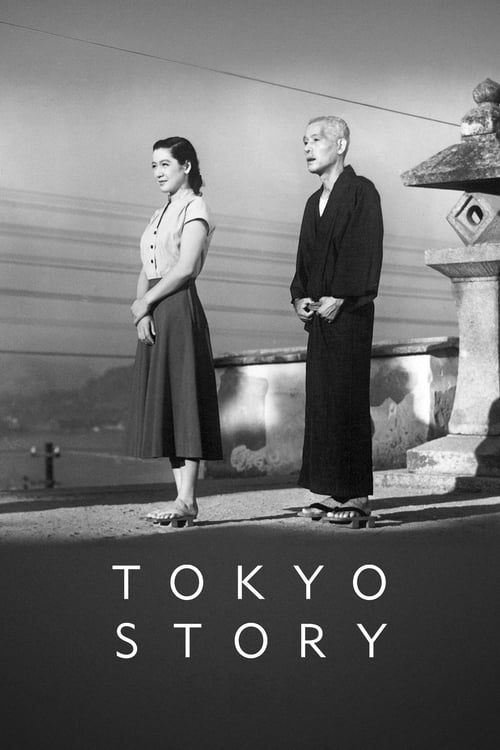 Tokyo Story (1953)
 Konna onna ni dare ga shita (1949)
 Wakare no Tango (1949)
 Ikiru (1952)
 Mr. Shosuke Ohara (1949)
- More like this film, on a shelf you can walk up to.It's the lit case on the top shelf.