Darah dan Doa (1950)

- Original title
- Darah dan Do'a
- Directed by
- Usmar Ismail
- Genre
- drama film, war film
- Country
- Indonesia
- Runtime
- 2h 07m
- Rating
- 8.0 of 10 from 1 voters
- Elsewhere
- IMDb

The catalogue in 3D
The film shelves have a room of their own that you can walk around in. The cat behind the counter is the AI Catbot, and they pick real films from the same catalogue when you tell them what you feel like watching. Nothing is for sale, here or in there. Go in from here and this film is already out on the counter, with more like it waiting on the shelf next to it.
How it feels
A military division marches across Java under their leader Captain Sudarto. The film follows their journey and the struggles they face.
groundedearnestserioussomberpatrioticstatelyemotional
What happens
Darah dan Doa ([daˈrah ˈdan doˈa]; Indonesian for Blood and Prayer, released internationally as The Long March) is a 1950 Indonesian war film directed and produced by Usmar Ismail, telling the story of the Siliwangi Division and its leader Captain Sudarto on a march to West Java. Following Ismail's Dutch-produced Tjitra (1949), Darah dan Doa is often cited as the first 'Indonesian' film, and the film's first day of shooting – 30 March – is celebrated in Indonesia as National Film Day. Produced on a budget of 350,000 rupiah and intended to be screened at the Cannes Film Festival, financial difficulties led production of Darah dan Doa to almost stop before the director received financial backing. After raising controversy for its subject material, the film underwent censorship and was finally released to commercial failure. Retrospective analysis has, however, been more positive, and Ismail has been dubbed the "father of Indonesian film". (from Wikipedia, CC BY-SA)
More like this
 Djembatan Merah (1950)
 Djiwa Pemuda (1951)
 Inspektur Rachman (1950)
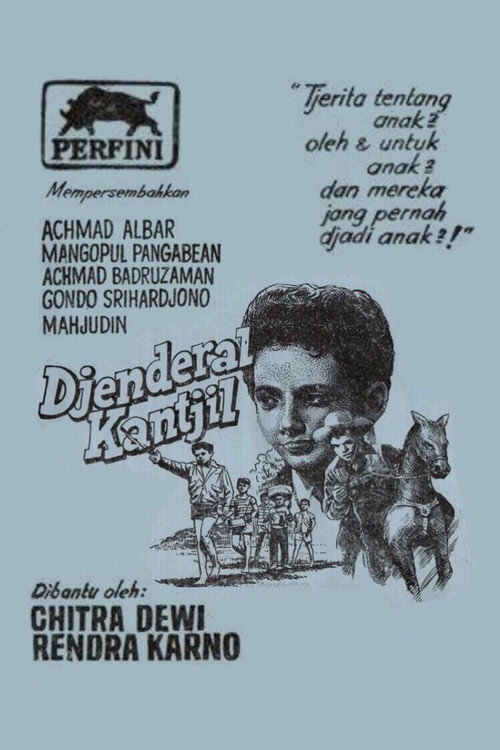 Djendral Kantjil (1958)
 Enam Djam di Jogja (1951)
 Selamat Berdjuang, Masku! (1951)
 Mereka Kembali (1975)
 Dibalik 98 (2015)
- More like this film, on a shelf you can walk up to.It's the lit case on the top shelf.