Story of a Love Affair (1950)
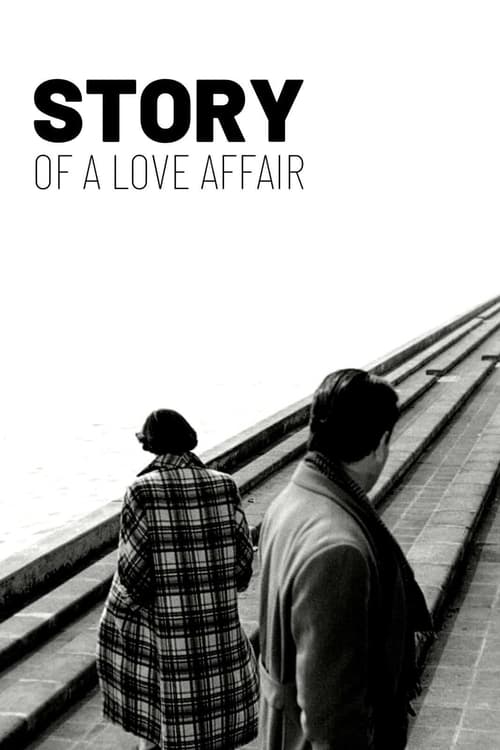
- Original title
- Cronaca di un amore
- Directed by
- Michelangelo Antonioni
- Genre
- drama film
- Country
- Italy
- Runtime
- 1h 38m
- Rated
- TP
- Rating
- 6.7 of 10 from 111 voters
- Elsewhere
- IMDb

The catalogue in 3D
The film shelves have a room of their own that you can walk around in. The cat behind the counter is the AI Catbot, and they pick real films from the same catalogue when you tell them what you feel like watching. Nothing is for sale, here or in there. Go in from here and this film is already out on the counter, with more like it waiting on the shelf next to it.
How it feels
A wealthy married woman and her former lover reunite after years apart. Their rekindled relationship stirs up old secrets and a past tragedy that threatens their present.
melancholicslow-burntensecerebralbleaknoir-ishatmospheric
What happens
Story of a Love Affair (Italian: Cronaca di un amore), released in the United Kingdom as Chronicle of a Love, is a 1950 Italian drama film directed by Michelangelo Antonioni in his feature-length directorial debut. The film stars Massimo Girotti and Lucia Bosè in lead roles. Despite some neorealist background, the film was not fully compliant with the contemporary Italian neorealist style both in its story and image, featuring upper-class characters portrayed by professional actors. Ferdinando Sarmi was, however, a fashion designer rather than a professional actor. Its story was inspired by the James M. Cain novel The Postman Always Rings Twice. In the film, the camera pans the same street corner in Ferrara, the director's native city, that appears in his film Beyond the Clouds forty-five years later. In 1951, the film won the Nastro d'Argento Award for Best Original Score (Giovanni Fusco) and the Special Nastro d'Argento (Michelangelo Antonioni) for "human and stylistic values". In 2008, the film was included on the Italian Ministry of Cultural Heritage's 100 Italian films to be saved, a list of 100 films that "have changed the collective memory of the country between 1942 and 1978." (from Wikipedia, CC BY-SA)
More like this
 Il Nido di falasco (1950)
 Volcano (1950)
 Strano appuntamento (1950)
 Torment (1950)
 La Valle dell'odio (1950)
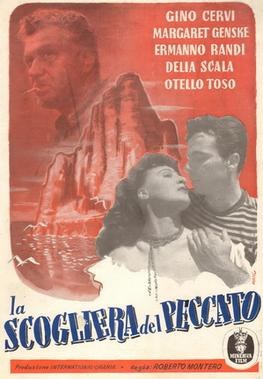 The Cliff of Sin (1950)
 Guarany (1950)
 Chains (1950)
- More like this film, on a shelf you can walk up to.It's the lit case on the top shelf.