The Blue Lamp (1950)

- Directed by
- Basil Dearden
- Genre
- crime film
- Country
- United Kingdom
- Runtime
- 1h 24m
- Rated
- PG
- Rating
- 6.6 of 10 from 63 voters
- Elsewhere
- IMDb

The catalogue in 3D
The film shelves have a room of their own that you can walk around in. The cat behind the counter is the AI Catbot, and they pick real films from the same catalogue when you tell them what you feel like watching. Nothing is for sale, here or in there. Go in from here and this film is already out on the counter, with more like it waiting on the shelf next to it.
How it feels
A veteran police constable mentors a new officer while a young criminal gets pulled into a life of crime. The story shows a day in the life of the police and the underworld in post-war London.
grittytenseearneststarksombergroundednoir-ishmethodical
What happens
The Blue Lamp is a 1950 British police procedural film directed by Basil Dearden and starring Jack Warner as PC Dixon, Jimmy Hanley as newcomer PC Mitchell and Dirk Bogarde as criminal Tom Riley. The title refers to the blue lamps that traditionally hang outside British police stations. The film became the inspiration for the 1955–1976 TV series Dixon of Dock Green, in which Warner continued to play PC Dixon until he was 80 years old (even though Dixon is murdered in the original film). The screenplay was written by Ealing regular T. E. B. Clarke, who had been a war reserve constable. The film is an early example of the social realism films that emerged later in the 1950s and 1960s, sometimes using a partial documentary-style approach. There are also cinematic influences of the film noir genre, particularly in underworld scenes featuring Bogarde, such as the pool rooms and in and around the theatre, making deliberate use of genre trademarks such as slow-moving low camera angles and stark lighting. (from Wikipedia, CC BY-SA)
More like this
 Night and the City (1950)
 Dark Interval (1950)
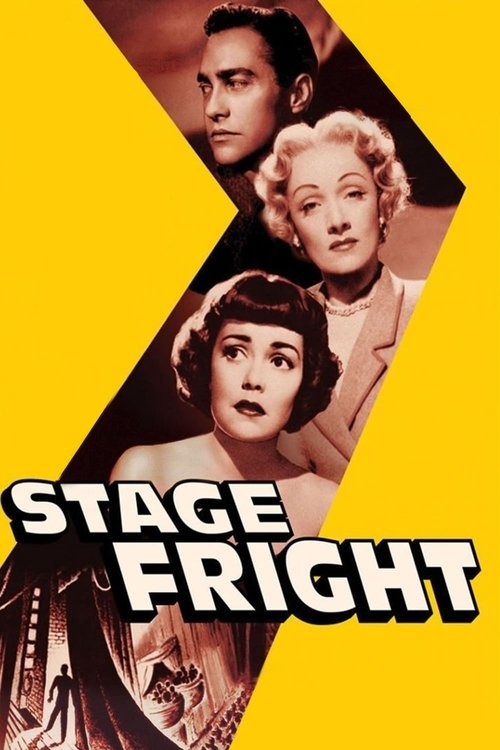 Stage Fright (1950)
 Torment (1950)
 Cairo Road (1950)
 Once a Thief (1950)
 No Trace (1950)
 The Dark Man (1951)
- More like this film, on a shelf you can walk up to.It's the lit case on the top shelf.