Un día de vida (1950)

- Directed by
- Emilio Fernández
- Genre
- drama film, war film, romance film
- Country
- Mexico
- Runtime
- 1h 35m
- Rating
- 6.2 of 10 from 8 voters
- Elsewhere
- IMDb

The catalogue in 3D
The film shelves have a room of their own that you can walk around in. The cat behind the counter is the AI Catbot, and they pick real films from the same catalogue when you tell them what you feel like watching. Nothing is for sale, here or in there. Go in from here and this film is already out on the counter, with more like it waiting on the shelf next to it.
How it feels
A Cuban journalist meets a Mexican colonel who has been sentenced to death during the Mexican Revolution. Their brief encounter turns into a romance as the execution approaches.
melodramaticromanticpatriotictragicsentimentalslow-paceddated
What happens
Un día de vida (transl. One Day of Life) is a 1950 Mexican melodrama film directed by Emilio Fernández. Set during the Mexican Revolution, it stars Columba Domínguez as Belén Martí, a Cuban journalist, and Roberto Cañedo as Colonel Lucio Reyes, a Mexican military officer sentenced to death. Fernández reunited many of the actors and much of the production team that had helped his films earn international success in the preceding years. Nevertheless, its domestic reception in Mexico, as well as elsewhere in Latin America, was poor. The film was nominated for only one Premio Ariel, the last any Fernández film would receive until 1975. It is considered a marginal work within the context of Mexican film history. Circumstances resulting from the Tito–Stalin split, however, led to its late 1952 release in Yugoslavia as Jedan dan života (Serbo-Croatian Cyrillic: Један дан живота, transl. One Day of Life), where it became one of the most successful films of the era. By 1953, it was estimated that half of Belgrade's citizens had seen the film. According to Politika Ekspres, it was "the most watched film in Yugoslavia in the last fifty years". Its success led to the rise of Yu-Mex and it later became identified with the Yugo-nostalgia that resulted from the breakup of Yugoslavia in 1992. (from Wikipedia, CC BY-SA)
More like this
 Primero soy mexicano (1950)
 Love for Love (1950)
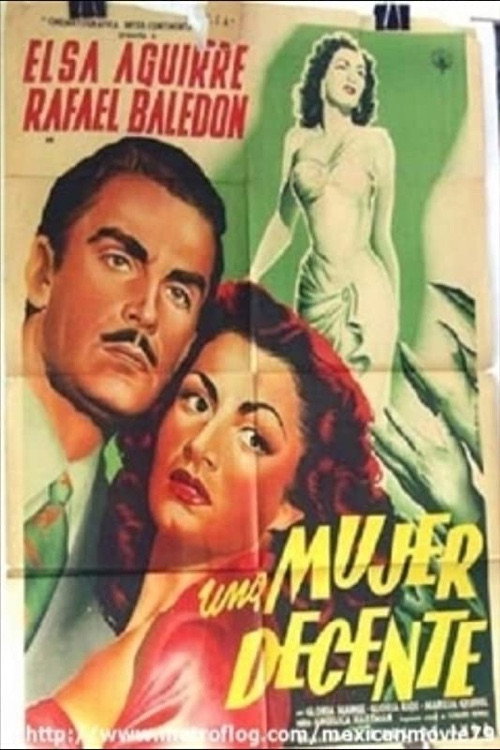 A Decent Woman (1950)
 Immaculate (1950)
 Wife or Lover (1950)
 Piña madura (1950)
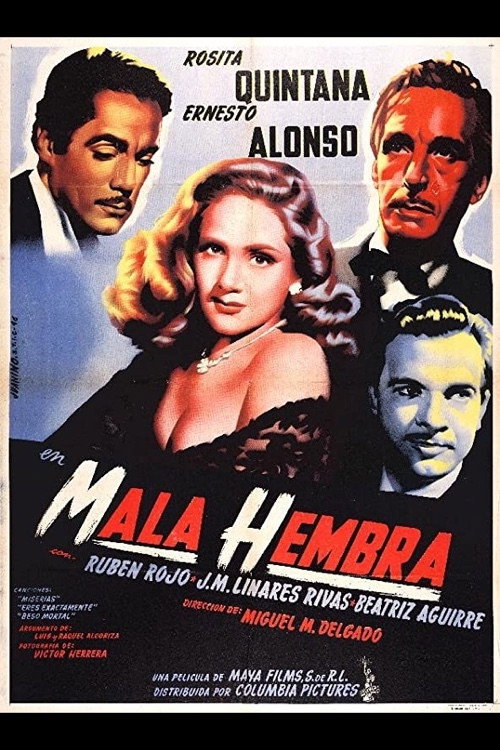 Mala hembra (1950)
 Por la puerta falsa (1950)
- More like this film, on a shelf you can walk up to.It's the lit case on the top shelf.