Viva Zapata! (1952)

- Directed by
- Elia Kazan
- Genre
- drama film, Western film, war film, biographical film
- Country
- United States
- Runtime
- 1h 53m
- Rated
- 12
- Rating
- 6.9 of 10 from 240 voters
- Elsewhere
- IMDb

The catalogue in 3D
The film shelves have a room of their own that you can walk around in. The cat behind the counter is the AI Catbot, and they pick real films from the same catalogue when you tell them what you feel like watching. Nothing is for sale, here or in there. Go in from here and this film is already out on the counter, with more like it waiting on the shelf next to it.
How it feels
A biographical film about the life of Mexican revolutionary Emiliano Zapata. It follows his journey from a peasant farmer to a leader fighting for land rights against a dictatorship.
epicpoliticalpassionategrittyvisually strikingearnestslow-burndramatic
What happens
Viva Zapata! is a 1952 American biographical Western film directed by Elia Kazan, dramatizing the life of Mexican revolutionary Emiliano Zapata from his peasant upbringing through his rise to power in the early 1900s and his death in 1919. It stars Marlon Brando as the title character, and features Jean Peters as his wife Josefa and Anthony Quinn as his brother Eufemio. The screenplay was written by John Steinbeck, using Edgcumb Pinchon's 1941 book Zapata the Unconquerable as a guide. To make the film as authentic as possible, Kazan and producer Darryl F. Zanuck studied the numerous photographs that were taken during the revolutionary years, the period between 1909 and 1919, when Zapata led the fight to restore land taken from common people during the dictatorship of Porfirio Díaz. Kazan was especially impressed with the Agustín Casasola collection of photographs, and he attempted to duplicate their visual style in the film. Kazan also acknowledged the influence of Roberto Rossellini's Paisan (1946). The film was released by 20th Century Fox on February 13, 1952. It received generally positive reviews from critics and was nominated for five Academy Awards, with Anthony Quinn winning for Best Supporting Actor. (from Wikipedia, CC BY-SA)
More like this
 Emiliano Zapata (1970)
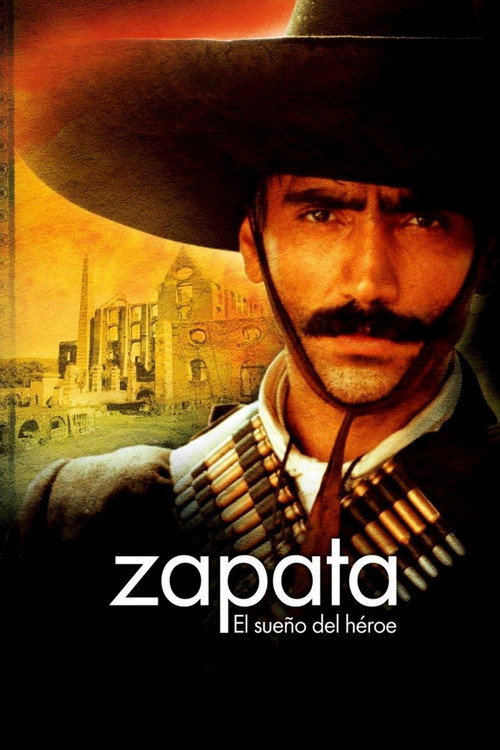 Zapata: El sueño de un héroe (2004)
 A Place Near Heaven (1952)
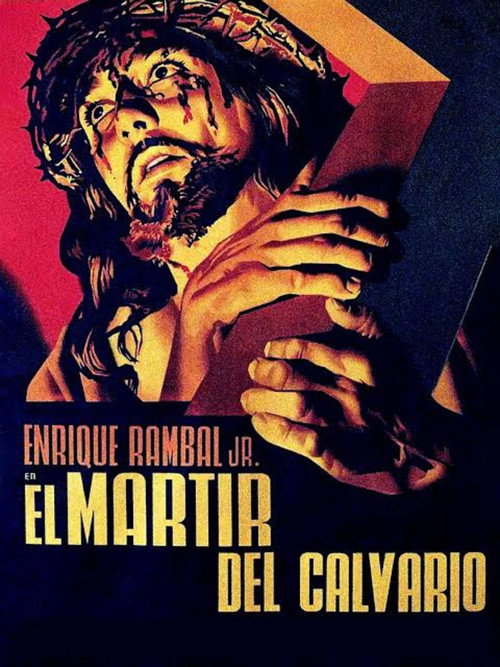 The Martyr of Calvary (1952)
 Viva Villa! (1934)
 Zapata: Amor en rebeldía
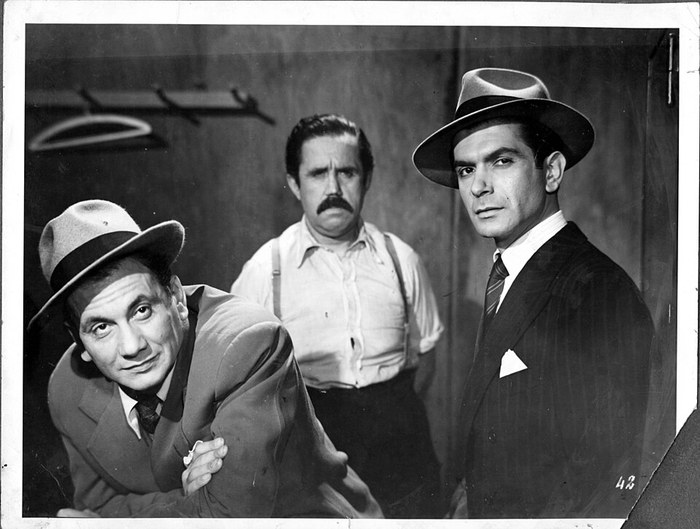 Nace un campeón (1952)
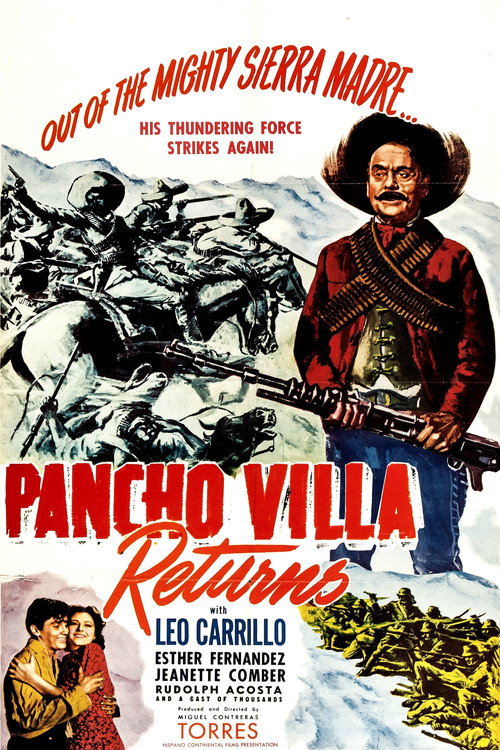 Pancho Villa Returns (1950)
- More like this film, on a shelf you can walk up to.It's the lit case on the top shelf.