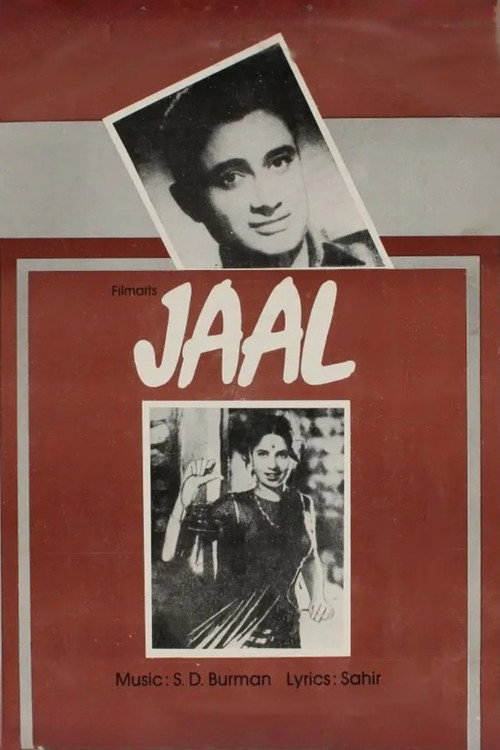
Jaal (1952)
- Original title
- जाल
- Directed by
- Guru Dutt
- Genre
- musical film
- Country
- India
- Runtime
- 2h 45m
- Rated
- U
- Rating
- 7.5 of 10 from 2 voters
- Elsewhere
- IMDb

The catalogue in 3D
The film shelves have a room of their own that you can walk around in. The cat behind the counter is the AI Catbot, and they pick real films from the same catalogue when you tell them what you feel like watching. Nothing is for sale, here or in there. Go in from here and this film is already out on the counter, with more like it waiting on the shelf next to it.
How it feels
A gold smuggler in Goa woos a local fisherwoman while hiding his criminal activities. The film follows his manipulative romance and the tension between his illegal life and their relationship.
moodytenseromanticmelancholicslow-burnatmosphericmorally complexnoir-ishearthy
What happens
Jaal (lit. 'The Trap') is a 1952 Indian Hindi-language crime noir film directed by Guru Dutt. The film stars Dev Anand and Geeta Bali in lead roles. Set in Goa, it follows gold smuggler Tony Fernandes (Anand), wooing a local fisherwoman Maria (Bali) against the backdrop of smuggling. It was filmed on location in the coastal fishing villages of Goa by V. K. Murthy in black-and-white and marked the beginning of a longtime professional partnership between Dutt and Murthy. Its soundtrack by S. D. Burman, which incorporates Goan folk music, became popular, especially the songs "Yeh Raat Yeh Chandni" sung by Hemant Kumar and "Chandni Raaten" sung by Lata Mangeshkar. It was one of the first films to be made in India which portrayed a morally ambiguous anti-hero in the lead role and established the idea of heroic characters with "no qualms about bending moral codes" in Hindi cinema, a smuggler who manipulates others without remorse, which served as a departure from the era's conventional romantic leads. Dutt explores the themes of crime, redemption, and love in this social melodrama. The film was successful at box office and was the third-highest-grossing film of the year in India, behind Aan and Baiju Bawra. In his autobiography Romancing with Life, Anand said that Jaal was inspired by the 1949 Italian film Bitter Rice. (from Wikipedia, CC BY-SA)
More like this
 Mr. Sampat (1952)
 Andhaman Kaidhi (1952)
 Velaikaran (1952)
 Chinna Durai (1952)
 Rani (1952)
 Lokaneethi (1952)
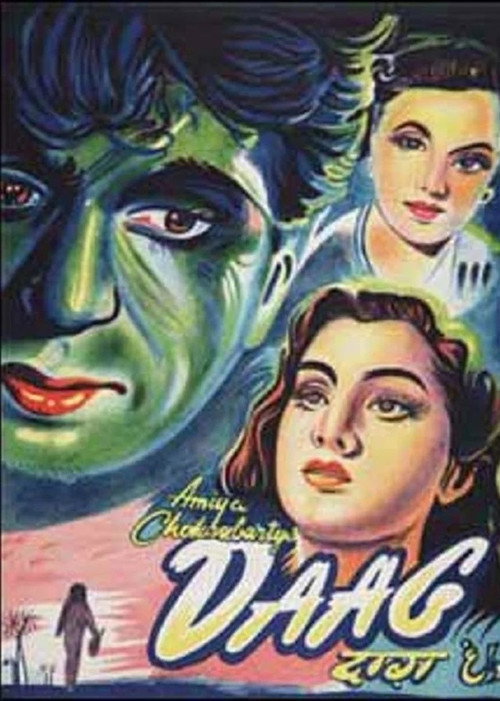 Daag (1952)
 Amber (1952)
- More like this film, on a shelf you can walk up to.It's the lit case on the top shelf.