Parasakthi (1952)

- Original title
- பராசக்தி
- Directed by
- S. Panju, R. Krishnan
- Genre
- drama film
- Country
- India
- Runtime
- 3h 08m
- Rated
- U
- Rating
- 6.3 of 10 from 9 voters
- Elsewhere
- IMDb
The catalogue in 3D
The film shelves have a room of their own that you can walk around in. The cat behind the counter is the AI Catbot, and they pick real films from the same catalogue when you tell them what you feel like watching. Nothing is for sale, here or in there. Go in from here and this film is already out on the counter, with more like it waiting on the shelf next to it.
How it feels
A Tamil family faces a series of misfortunes during World War II. The film follows their struggles and critiques social and religious customs in India.
satiricaldramaticemotionalprovocativegrittymelancholicthought-provokingfamily-centered
What happens
Parasakthi ( transl. The Supreme Goddess) is a 1952 Indian Tamil-language satirical drama film directed by Krishnan–Panju and written by M. Karunanidhi. The film stars Sivaji Ganesan, S. V. Sahasranamam, S. S. Rajendran, Sriranjani Jr., and Pandari Bai. It is the cinematic acting debut of Ganesan and Rajendran. Based on Pavalar Balasundaram's play of the same name, Parasakthi narrates the misfortunes that befall the members of a Tamil family during World War II. Central Studios initially planned on creating a film based on the Parasakthi play and T. S. Natarajan's play En Thangai; however, the idea was dropped after Natarajan objected. The film rights of Parasakthi were later bought by P. A. Perumal of National Pictures, with the patronage of A. V. Meiyappan. The soundtrack was composed by R. Sudarsanam, cinematography was handled by S. Maruti Rao, and Panju edited the film under the alias "Panjabi". Filming began in mid-1950, but took over two years to complete. Parasakthi was released on 17 October 1952, during the festive occasion of Diwali, and faced controversies because of its portrayal of Brahmins and Hindu customs and practices in a negative light. The elitarian society including the then ruling State government even demanded that the film be banned. Despite these protests, the film was praised for its dialogues and the actors' performances, and became a commercial success with a theatrical run of over 175 days. Parasakthi acquired cult status in Tamil cinema and became a trendsetter for dialogues and acting for later Tamil films. (from Wikipedia, CC BY-SA)
More like this
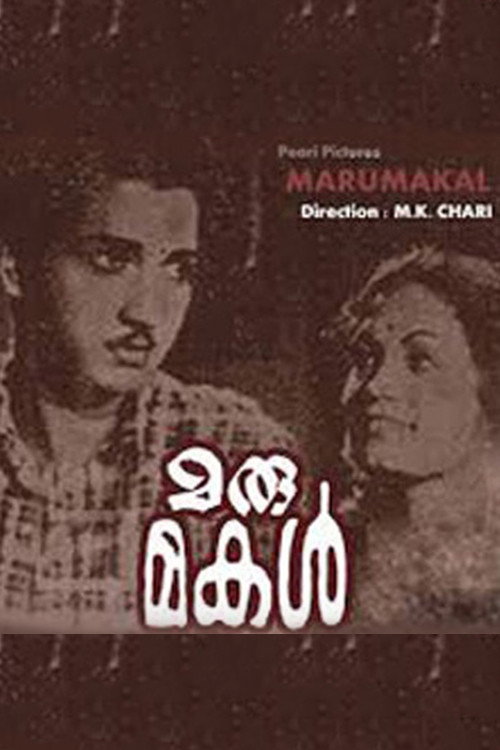 Marumakal (1952)
 Moondru Pillaigal (1952)
 Thai Ullam (1952)
 Maa (1952)
 Panam (1952)
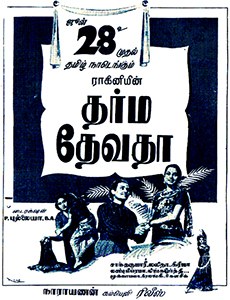 Dharma Devatha (1952)
 Amma (1952)
 Kaliyugam (1952)
- More like this film, on a shelf you can walk up to.It's the lit case on the top shelf.