A Japanese Tragedy (1953)

- Original title
- 日本の悲劇
- Directed by
- Keisuke Kinoshita
- Genre
- drama film
- Country
- Japan
- Runtime
- 1h 56m
- Rating
- 5.8 of 10 from 16 voters
- Elsewhere
- IMDb

The catalogue in 3D
The film shelves have a room of their own that you can walk around in. The cat behind the counter is the AI Catbot, and they pick real films from the same catalogue when you tell them what you feel like watching. Nothing is for sale, here or in there. Go in from here and this film is already out on the counter, with more like it waiting on the shelf next to it.
How it feels
A widowed mother turns to prostitution to support her two children during and after World War II. Her children eventually reject her out of shame. The film uses flashbacks and newsreel footage to connect their personal story to Japan's post-war struggles.
bleakmelancholicemotionally heavysocially consciousexperimentalreflectivedownbeatrealisticpost-war trauma
What happens
A Japanese Tragedy (日本の悲劇, Nihon no higeki), also known as Tragedy of Japan, is a 1953 Japanese drama film written and directed by Keisuke Kinoshita. The film tells the story of a widowed mother who turns to prostitution to raise two children during and after World War II, but her children, ashamed of her, reject her. It was ranked as the 6th best film of the year in 1953 by Kinema Junpo. The film was experimental for its time, with a complex use of flashbacks that creates continuity between the war and post-war periods. Kinoshita also interspersed newsreel footage and newspaper pages within the film in an attempt to relate the story of the film to the wider context of Japan's post-war difficulties. It is a social problem film, with the director having written that: "No matter what kind of social structure, no matter what form of government, I think humans must not be left in a state of misery;” Kinoshita sought to make the film's narrative more realistic than previous hahamonos (Japanese films about mothers). (from Wikipedia, CC BY-SA)
More like this
 An Inlet of Muddy Water (1953)
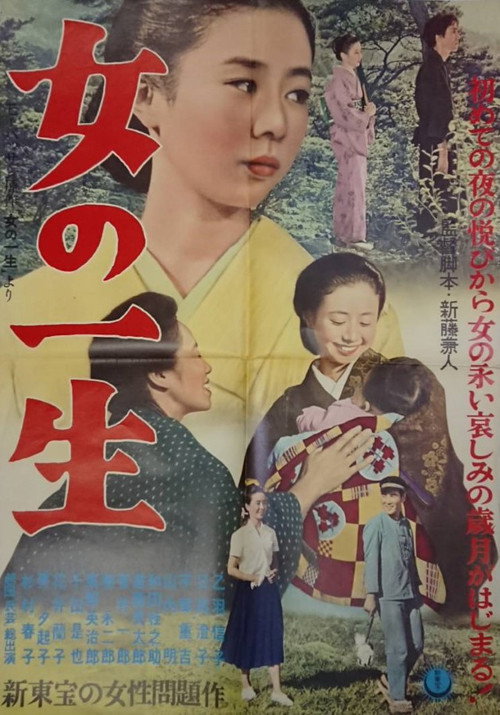 Life of a Woman (1953)
 Hibari no kanashiki hitomi (1953)
 Wife (1953)
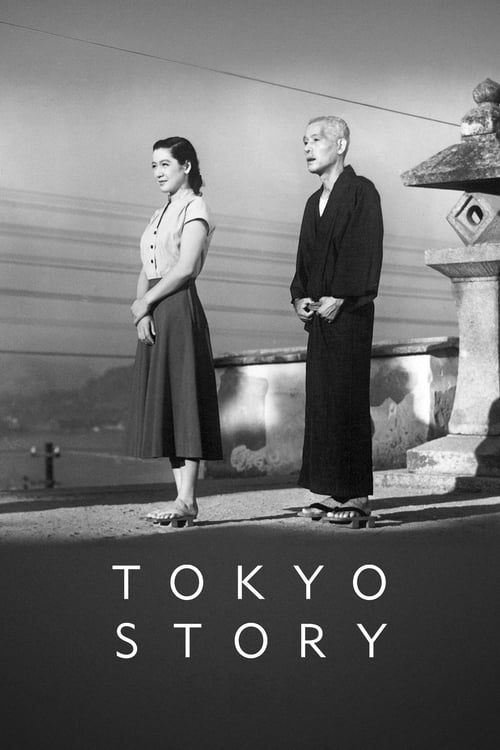 Tokyo Story (1953)
 Ugetsu (1953)
 Love Letter (1953)
 Anatahan (1953)
- More like this film, on a shelf you can walk up to.It's the lit case on the top shelf.