Do Bigha Zamin (1953)

- Original title
- दो बीघा ज़मीन
- Directed by
- Bimal Roy
- Genre
- drama film
- Country
- India
- Runtime
- 2h 22m
- Rated
- U
- Rating
- 8.0 of 10 from 22 voters
- Elsewhere
- IMDb

The catalogue in 3D
The film shelves have a room of their own that you can walk around in. The cat behind the counter is the AI Catbot, and they pick real films from the same catalogue when you tell them what you feel like watching. Nothing is for sale, here or in there. Go in from here and this film is already out on the counter, with more like it waiting on the shelf next to it.
How it feels
A poor farmer fights to keep his small piece of land after a wealthy landlord pressures him to sell. He moves to the city and drives a rickshaw to earn money but faces harsh struggles.
poignantgroundedsocially consciousemotionalearnestslow-burnmelancholicvisually stark
What happens
Do Bigha Zamin ( transl. Two bighas of land) is a 1953 Indian Hindi-language drama film directed by Bimal Roy. Based on Rabindranath Tagore's Bengali poem "Dui Bigha Jomi" and Rickshawalla, a short story written by composer Salil Chowdhury, the film stars Balraj Sahni and Nirupa Roy in lead roles. Known for its socialist theme, Do Bigha Zamin is considered an important film in the early parallel cinema of India, and a trend setter. Inspired by Italian neo-realistic cinema, Bimal Roy made Do Bigha Zamin after watching Vittorio De Sica's Bicycle Thieves (1948). Like most of Bimal Roy's movies, art and commercial cinema merged to create a movie that is still viewed as a benchmark. It paved the way for future cinema makers in the Indian neo-realist movement and the Indian New Wave, which began in the 1950s. A moderate commercial success, it was awarded the All India Certificate of Merit for Best Feature Film, it became the first film to win the Filmfare Best Movie Award and the first Indian film to win the International Prize at the Cannes Film Festival, after Neecha Nagar (1946), which won the Palme d'Or (Grand Prize). It was also winner of the Social Progress Award at the Karlovy Vary International Film Festival. In 2005, Indiatimes Movies ranked the movie amongst the Top 25 Must See Bollywood Films. The film was also released in China and in USSR. The film also marks Meena Kumari's maiden guest appearance in her 33-year-long career. The lullaby, "Aa Jaa Ri Aa" is picturised on her. (from Wikipedia, CC BY-SA)
More like this
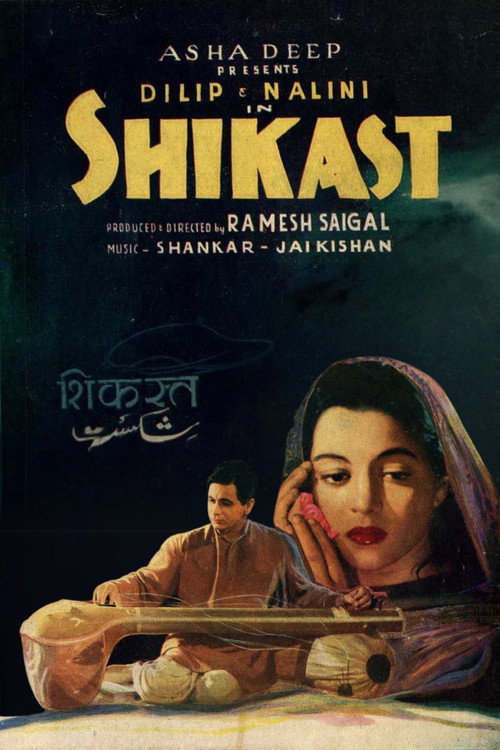 Shikast (1953)
 Bou Thakuranir Haat (1953)
 Ezhai Uzhavan (1952)
 Kaude Shah (1953)
 Bratuku Theruvu (1953)
 Manithan (1953)
 Gumastha (1953)
 Ulagam (1953)
- More like this film, on a shelf you can walk up to.It's the lit case on the top shelf.