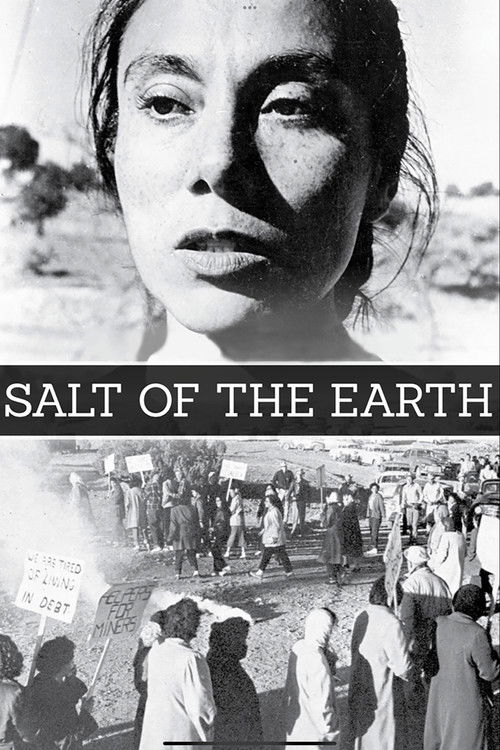
Salt of the Earth (1954)
- Directed by
- Herbert Biberman
- Genre
- drama film
- Country
- United States
- Runtime
- 1h 34m
- Rated
- AL
- Rating
- 7.0 of 10 from 101 voters
- Elsewhere
- IMDb

The catalogue in 3D
The film shelves have a room of their own that you can walk around in. The cat behind the counter is the AI Catbot, and they pick real films from the same catalogue when you tell them what you feel like watching. Nothing is for sale, here or in there. Go in from here and this film is already out on the counter, with more like it waiting on the shelf next to it.
How it feels
A group of miners go on a long and difficult strike against a zinc company in New Mexico. The film shows how the miners, the company, and the police react. It also focuses on the role the miners' wives play in the conflict.
groundeddeliberateearnestatmospherictensepoliticalresoluteintimate
What happens
Salt of the Earth is a 1954 American independent drama film written by Michael Wilson, directed by Herbert J. Biberman, and produced by Paul Jarrico. Because all three men were blacklisted by the Hollywood establishment due to their alleged involvement in communist politics, Salt of the Earth was one of the first fully independent films made outside of the Hollywood studio system. It was also one of the first motion pictures to advance the feminist social and political point of view. Its plot centers on a long and difficult strike, based on the 1951 strike against the Empire Zinc Company in Grant County, New Mexico. The company is identified as "Delaware Zinc", and the setting is "Zinc Town, New Mexico". The film shows how the miners, the company, and the police react during the strike. Shot in a style influenced by Italian neorealism, and making atmospheric use of New Mexico's landscapes, Salt of the Earth employed mostly local miners and their families as actors. The name of the film is an allusion to the phrase "salt of the earth", used by Jesus in the Sermon on the Mount. The film was initially mired in Red Scare controversy and was suppressed. Eventually though, it was seen by more and more people until it came to be recognized as an important cultural, political and aesthetic work. In 1992, it was selected to the Library of Congress's National Film Registry of significant U.S. films. (from Wikipedia, CC BY-SA)
More like this
 La Soupe à la grimace (1954)
 Garden of Evil (1954)
 Black Fury (1935)
 The Caine Mutiny (1954)
 The Strike at the Mines (1911)
 Matewan (1987)
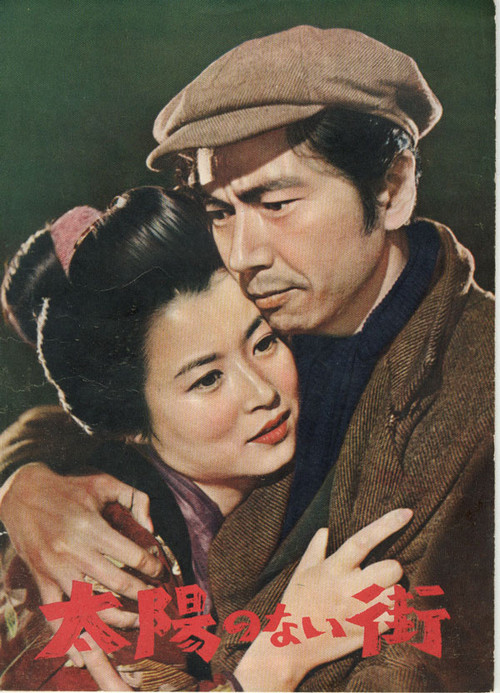 Taiyō no nai Machi (1954)
 Surang (1952)
- More like this film, on a shelf you can walk up to.It's the lit case on the top shelf.