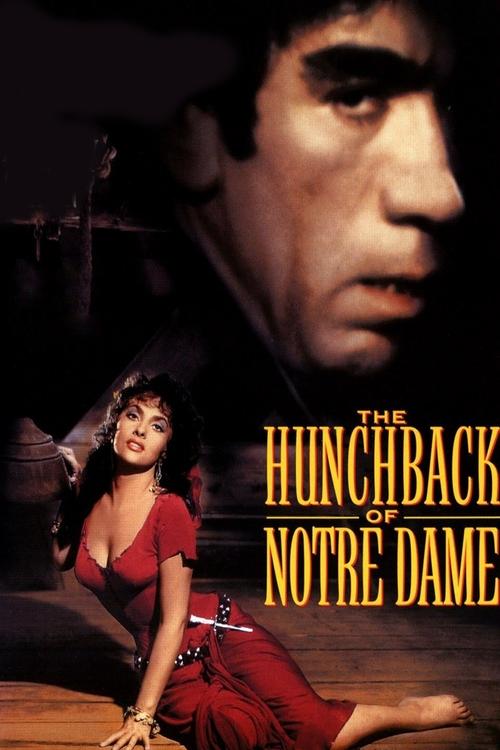
The Hunchback of Notre Dame (1956)
- Original title
- Notre-Dame de Paris
- Directed by
- Jean Delannoy
- Genre
- drama film, horror film
- Country
- France, Italy
- Runtime
- 1h 55m
- Rated
- PG
- Rating
- 6.7 of 10 from 119 voters
- Elsewhere
- IMDb
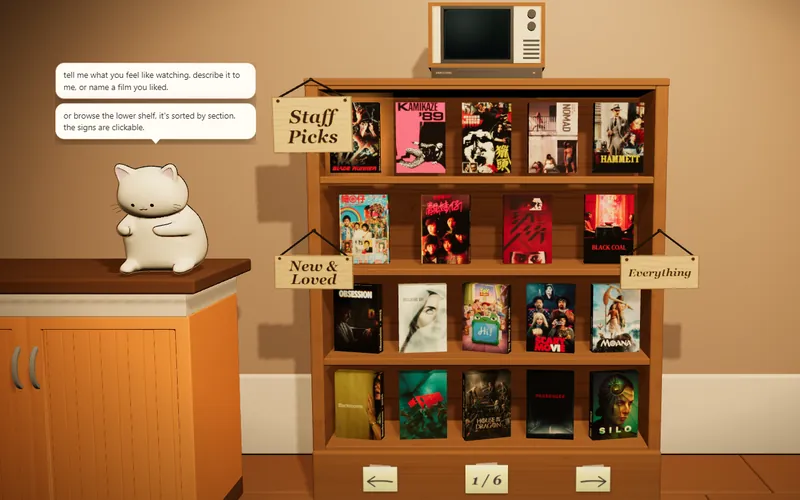
The catalogue in 3D
The film shelves have a room of their own that you can walk around in. The cat behind the counter is the AI Catbot, and they pick real films from the same catalogue when you tell them what you feel like watching. Nothing is for sale, here or in there. Go in from here and this film is already out on the counter, with more like it waiting on the shelf next to it.
How it feels
Set in medieval Paris, a disfigured bell ringer named Quasimodo secretly loves a kind Romani woman named Esmeralda. She faces persecution from a jealous archdeacon and the law. The story follows their intertwined fates.
ornatemelodramaticsprawlingbroodingtragicsentimentaldated
What happens
The Hunchback of Notre Dame (in French Notre-Dame de Paris) is a 1956 CinemaScope drama horror film version of Victor Hugo's 1831 novel, directed by Jean Delannoy and produced by Raymond Hakim and Robert Hakim. It stars American actor Anthony Quinn and Italian actress Gina Lollobrigida. The film is the first version of the novel to be made in color. In the tradition of many sword and sandal spectacles, Quinn and Lollobrigida are the only two actors in the film who actually speak in English; the rest of the cast is made up of French actors who have had their voices dubbed into English. In the French version both Quinn and Lollobrigida speak French. Anthony Quinn's portrayal of the hunchback Quasimodo is less disfigured than most other portrayals. Instead of having a huge hump and a hideously deformed face, he only has a small curve in his spine and a slightly deformed face. The film is one of the few adaptations to use Victor Hugo's original ending; although Esmeralda is killed by a stray arrow rather than hanged. Esmeralda's last words were: "Life is wonderful" ("C'est beau, la vie"). A voiceover narration tells us at the end that several years afterward, an excavation group finds the skeletons of Quasimodo and Esmeralda intertwined in an embrace. (from Wikipedia, CC BY-SA)
More like this
 The Hunchback (1997)
 The Hunchback of Notre-Dame (1982)
 The Hunchback of Notre Dame (1996)
 The Hunchback of Notre Dame (1977)
 The Hunchback of Notre Dame
 Nights of Cabiria (1957)
 La Notte (1961)
 Eclipse (1962)
- More like this film, on a shelf you can walk up to.It's the lit case on the top shelf.