Spartacus (1960)

- Directed by
- Stanley Kubrick
- Genre
- drama film, action film, war film, biographical film, romance film, sword-and-sandal film
- Country
- United States
- Runtime
- 3h 18m
- Rated
- PG-13
- Rating
- 7.5 of 10 from 2,407 voters
- Elsewhere
- IMDb
The catalogue in 3D
The film shelves have a room of their own that you can walk around in. The cat behind the counter is the AI Catbot, and they pick real films from the same catalogue when you tell them what you feel like watching. Nothing is for sale, here or in there. Go in from here and this film is already out on the counter, with more like it waiting on the shelf next to it.
How it feels
A slave and gladiator named Spartacus leads a rebellion against the Roman Republic. He fights alongside his wife and fellow escaped slaves to win their freedom from the powerful general Crassus.
epicsweepingdramaticintenseseriousrousinggrand-scaleearnest
What happens
Spartacus is a 1960 American epic historical drama film directed by Stanley Kubrick and starring Kirk Douglas in the title role, a slave and gladiator who leads a rebellion against Rome during the events of the Third Servile War. Adapted by Dalton Trumbo from Howard Fast's 1951 novel of the same title, the film also stars Laurence Olivier as Roman general and politician Marcus Licinius Crassus, Charles Laughton as rival senator Sempronius Gracchus, Peter Ustinov as gladiatorial school owner Lentulus Batiatus, and John Gavin as Julius Caesar. Jean Simmons played Spartacus' wife Varinia, a fictional character, and Tony Curtis played the fictional slave Antoninus. Douglas, whose company Bryna Productions was producing the film, removed original director Anthony Mann after three weeks of shooting. Kubrick, with whom Douglas had made Paths of Glory (1957), took over as director. It was the only film directed by Kubrick where he did not have complete artistic control. Screenwriter Dalton Trumbo was blacklisted at the time as one of the Hollywood Ten. Douglas publicly announced that Trumbo was the screenwriter of Spartacus, and President John F. Kennedy crossed American Legion picket lines to view the film, helping to end blacklisting; Howard Fast's book had also been blacklisted and he had to self-publish the original edition. The film won four Academy Awards (Best Supporting Actor for Ustinov, Best Cinematography, Best Art Direction and Best Costume Design) from six nominations. It also received six nominations at the Golden Globes, including Woody Strode’s only career Golden Globe nomination (for Best Supporting Actor), ultimately winning one (Best Motion Picture – Drama). At the time of the film’s release, it was the highest grossing film in Universal Studios' history, which it remained until it was surpassed by Airport (1970). In 2017, it was selected for preservation in the United States National Film Registry by the Library of Congress as being "culturally, historically, or aesthetically significant." (from Wikipedia, CC BY-SA)
More like this
 Gladiator (2000)
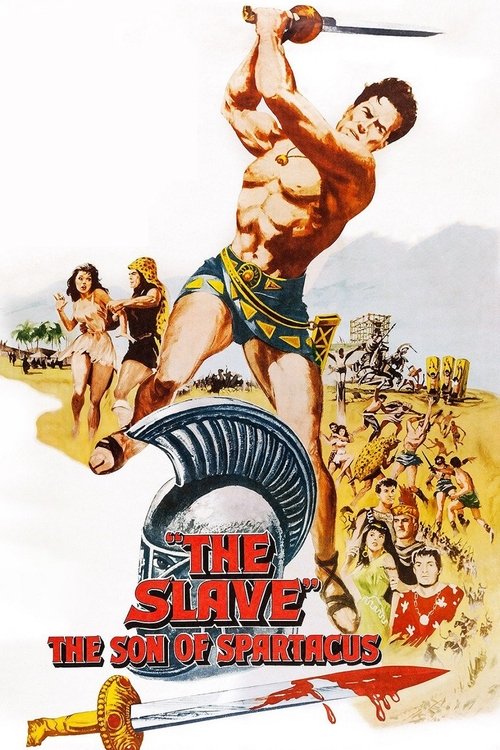 The Slave (1962)
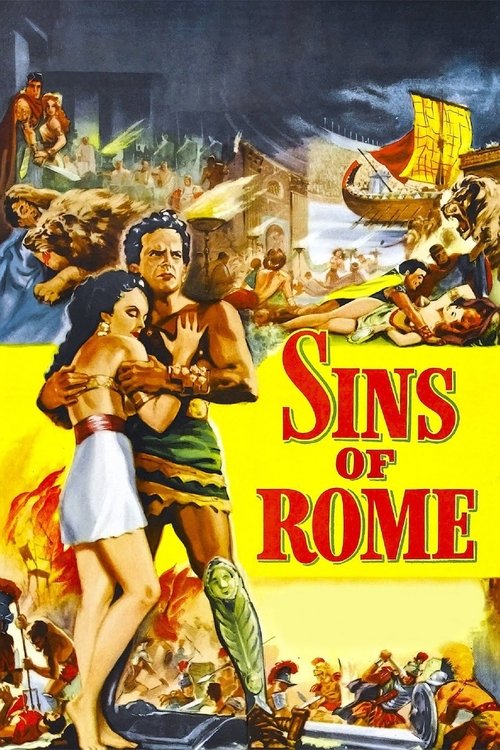 Sins of Rome (1953)
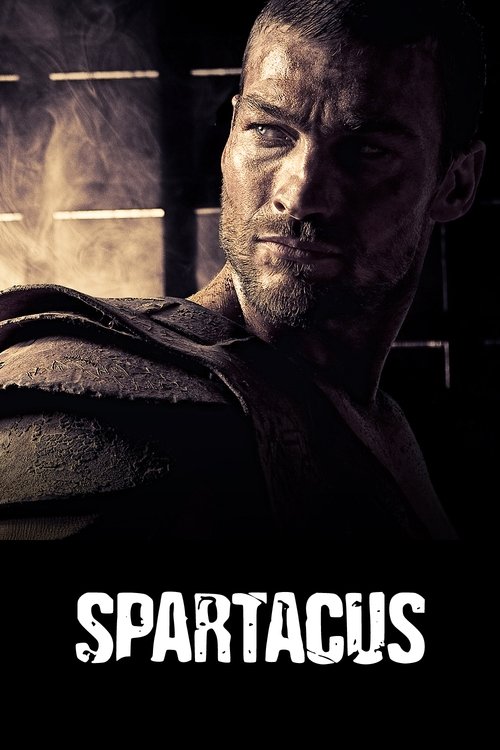 Spartacus (2010)
 Spartacus (1909)
 Demetrius and the Gladiators (1954)
 300 (2006)
 The Rebel Gladiators (1962)
- More like this film, on a shelf you can walk up to.It's the lit case on the top shelf.