Pava Mannippu (1961)

- Original title
- பாவ மன்னிப்பு
- Directed by
- A. Bhimsingh
- Genre
- drama film
- Country
- India
- Runtime
- 3h 16m
- Rating
- 9.0 of 10 from 2 voters
- Elsewhere
- IMDb
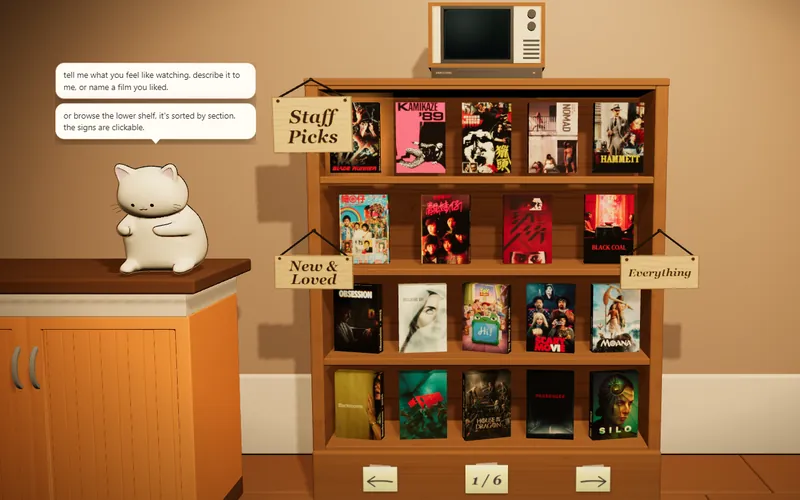
The catalogue in 3D
The film shelves have a room of their own that you can walk around in. The cat behind the counter is the AI Catbot, and they pick real films from the same catalogue when you tell them what you feel like watching. Nothing is for sale, here or in there. Go in from here and this film is already out on the counter, with more like it waiting on the shelf next to it.
How it feels
Four children are separated from their parents and raised by foster parents from different religious backgrounds. The story focuses on their lives and the eventual reunification of the family.
melodramaticsentimentalemotionally chargedfamily-centricthoughtfulheartfeltmoralistic
What happens
Paava Mannippu (transl. Forgiveness of sins) is a 1961 Indian Tamil-language drama film directed and edited by A. Bhimsingh, who co-produced it under his banner Buddha Pictures, with AVM Productions. The film features an ensemble cast of Sivaji Ganesan, Gemini Ganesan, Savitri, Devika and M. R. Radha. M. V. Rajamma, V. Nagayya, S. V. Subbaiah and T. S. Balaiah play supporting roles. It revolves around four children who are separated from their parents in childhood, then found and raised by foster parents of different religious backgrounds. Bhimsingh initially began work on a film titled Abdullah, starring J. P. Chandrababu who narrated the story to him. Though some scenes were filmed, Bhimsingh was unconvinced with the results; after AVM volunteered to co-produce the film, Bhimsingh redeveloped the script as Paava Mannippu, with Chandrababu replaced by Sivaji Ganesan. The soundtrack and score were composed by Viswanathan–Ramamoorthy while Kannadasan was the lyricist. Paava Mannippu was released on 16 March 1961. The film became a commercial success and a silver jubilee film. It received the National Film Award for Second Best Feature Film, becoming the first South Indian film to do so. The film achieved cult status in Tamil cinema and was remade in Telugu as Oke Kutumbham (1970) by Bhimsingh. (from Wikipedia, CC BY-SA)
More like this
 Gharana (1961)
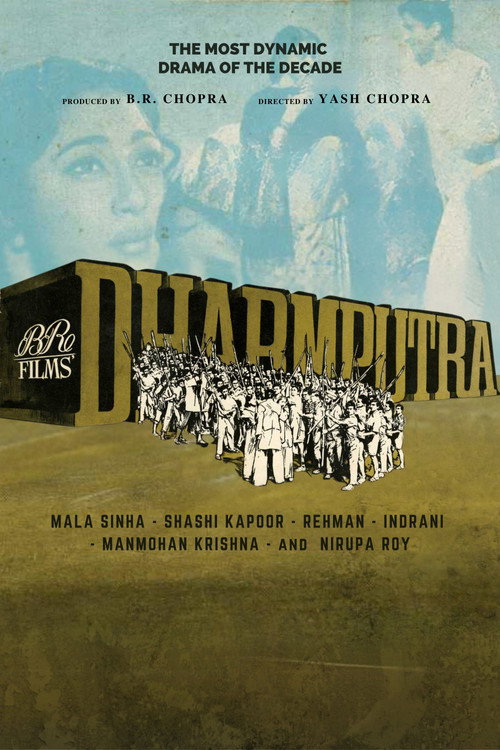 Dharmputra (1961)
 Manapanthal (1961)
 Anbu Magan (1961)
 Bharya Bharthalu (1961)
 Kumudham (1961)
 Chhaya (1961)
 Santha (1961)
- More like this film, on a shelf you can walk up to.It's the lit case on the top shelf.