The Manchurian Candidate (1962)

- Directed by
- John Frankenheimer
- Genre
- drama film, film noir, war film, spy film, thriller film, political thriller film
- Country
- United States
- Runtime
- 2h 06m
- Rated
- PG-13
- Rating
- 7.5 of 10 from 816 voters
- Elsewhere
- IMDb

The catalogue in 3D
The film shelves have a room of their own that you can walk around in. The cat behind the counter is the AI Catbot, and they pick real films from the same catalogue when you tell them what you feel like watching. Nothing is for sale, here or in there. Go in from here and this film is already out on the counter, with more like it waiting on the shelf next to it.
How it feels
A Korean War veteran returns home to a prominent political family. He was brainwashed by communists after his platoon was captured. An unwitting assassin is now part of a plot to overthrow the U.S. government.
tenseparanoidbleakcerebralslow-burnunsettlingdarkly comicsuspenseful
What happens
The Manchurian Candidate is a 1962 American neo-noir political thriller film directed and produced by John Frankenheimer. The screenplay is by George Axelrod, based on the 1959 Richard Condon novel The Manchurian Candidate. The film's leading actors are Frank Sinatra, Laurence Harvey, and Janet Leigh, with co-stars Angela Lansbury, Henry Silva, and James Gregory. The plot centers on Korean War veteran Raymond Shaw, part of a prominent political family. Shaw is brainwashed by communists after his Army platoon is captured. He returns to civilian life in the United States, where he becomes an unwitting assassin in an international communist conspiracy. The group, which includes representatives of the People’s Republic of China and the Soviet Union, plans to assassinate the presidential nominee of an American political party, with the death leading to the overthrow of the U.S. government. The film was released in the United States on October 24, 1962, at the height of U.S.–Soviet hostility during the Cuban Missile Crisis. It was widely acclaimed by Western critics and was nominated for two Academy Awards: Best Supporting Actress (Angela Lansbury) and Best Editing. Lansbury also won the Golden Globe Award for Best Supporting Actress. It was selected in 1994 for preservation in the United States National Film Registry by the Library of Congress as being "culturally, historically, or aesthetically significant". (from Wikipedia, CC BY-SA)
More like this
 Man-Trap (1961)
 War Hunt (1962)
 Cape Fear (1962)
 13 West Street (1962)
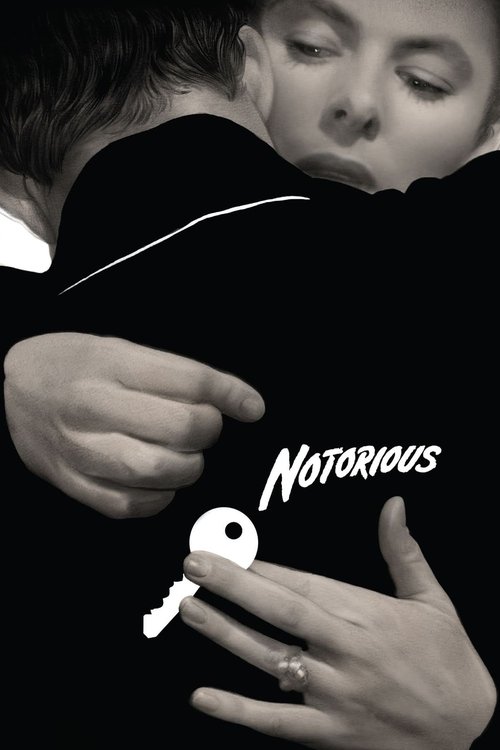 Notorious (1946)
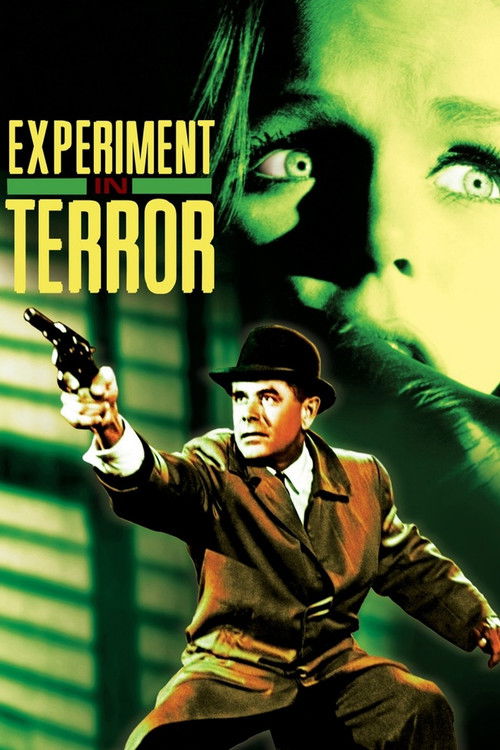 Experiment in Terror (1962)
 Fail-Safe (1964)
 The Parallax View (1974)
- More like this film, on a shelf you can walk up to.It's the lit case on the top shelf.