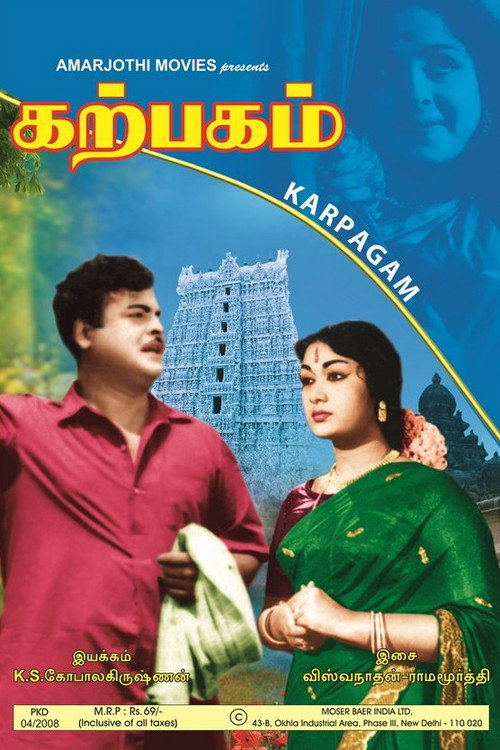
Karpagam (1963)
- Directed by
- K. S. Gopalakrishnan
- Genre
- drama film
- Country
- India
- Runtime
- 2h 42m
- Rated
- U
- Rating
- 10.0 of 10 from 1 voters
- Elsewhere
- IMDb
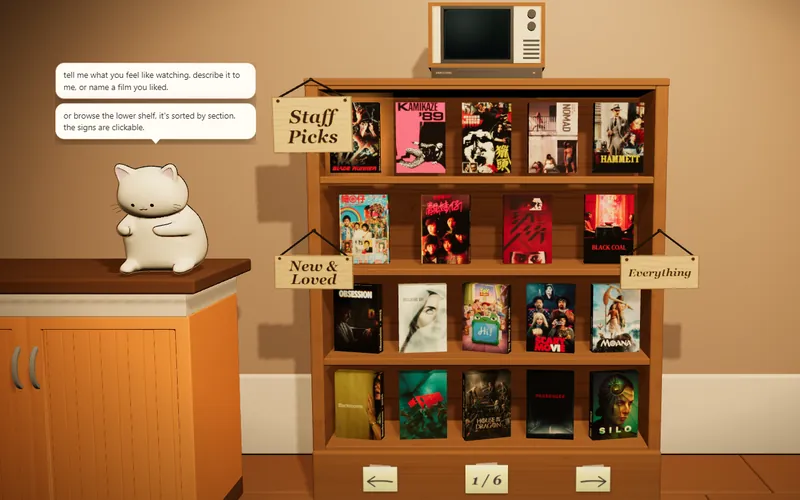
The catalogue in 3D
The film shelves have a room of their own that you can walk around in. The cat behind the counter is the AI Catbot, and they pick real films from the same catalogue when you tell them what you feel like watching. Nothing is for sale, here or in there. Go in from here and this film is already out on the counter, with more like it waiting on the shelf next to it.
How it feels
A rich farmer brings his newly married daughter and her husband to live with him so they can manage his business. Trouble comes when his estranged son returns and starts wasting the family money.
familialtenseemotionalclassicdramaticearnestdomesticsoapy
What happens
Karpagam is a 1963 Indian Tamil-language drama film written and directed by K. S. Gopalakrishnan. The film features an ensemble cast including Gemini Ganesan, Savitri, S. V. Ranga Rao, M. R. Radha, R. Muthuraman, V. K. Ramasamy, V. Nagayya, Karikol Raju, Sheeladevi, K. R. Vijaya and Baby Shakila. In Karpagam, a rich farmer (Ranga Rao) makes his newly married daughter (Vijaya) and her husband (Ganesan) live in his house to take care of his business. Problems arise when his estranged son (Muthuraman) starts to squander his money. Karpagam is the debut film for Vijaya who plays the title character. It was released on 15 November 1963, Diwali day, and won the National Film Award for Best Feature Film in Tamil – Certificate of Merit for the Second Best Feature Film, while Ganesan won the Chennai Film Fans' Association for Best Actor. The film was also a commercial success, running for over 100 days in theatres; from the profits earned, Gopalakrishnan built a studio named after the film. It was remade in Hindi as Rishte Naate (1965), in Telugu as Thodu Needa (1965), in Malayalam as Vishukkani (1977) and in Kannada as Muddina Aliya (1996). (from Wikipedia, CC BY-SA)
More like this
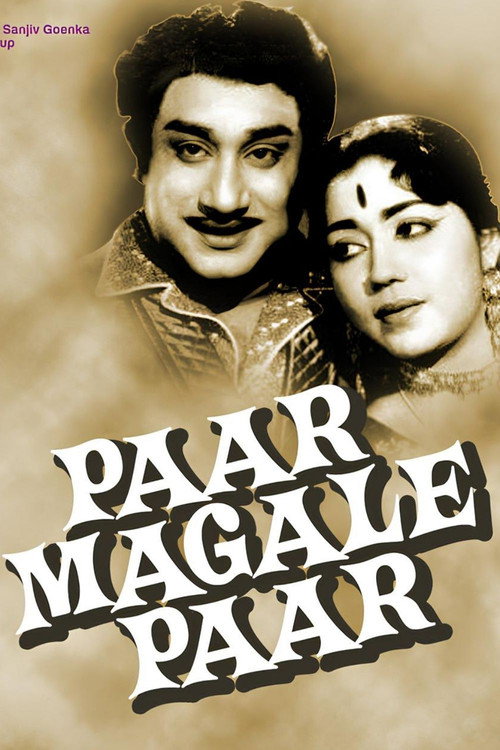 Paar Magale Paar (1963)
 Annai Illam (1963)
 Saat Paake Bandha (1963) (1963)
 Jenu Goodu (1963)
 Matir Swarga (1963)
 Kalitharu Henne (1963)
 Ghar Basake Dekho (1963)
 Pempudu Koothuru (1963)
- More like this film, on a shelf you can walk up to.It's the lit case on the top shelf.