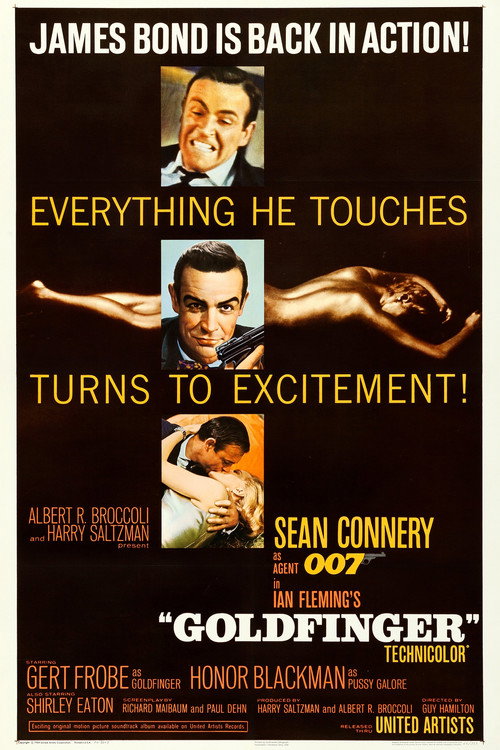
Goldfinger (1964)
- Directed by
- Guy Hamilton
- Genre
- action film, spy film
- Country
- United Kingdom, United States
- Runtime
- 1h 49m
- Rated
- PG
- Rating
- 7.4 of 10 from 4,012 voters
- Elsewhere
- IMDb
The catalogue in 3D
The film shelves have a room of their own that you can walk around in. The cat behind the counter is the AI Catbot, and they pick real films from the same catalogue when you tell them what you feel like watching. Nothing is for sale, here or in there. Go in from here and this film is already out on the counter, with more like it waiting on the shelf next to it.
How it feels
James Bond investigates a wealthy gold smuggler who plots to contaminate the US gold reserve. Bond travels between glamorous locations and uses gadgets and wit to stop the scheme.
slickconfidentplayfulfast-pacedstylishglamoroustongue-in-cheek
What happens
Goldfinger is a 1964 spy film and the third instalment in the James Bond series produced by Eon Productions, starring Sean Connery as the fictional MI6 agent James Bond. It is based on the 1959 novel by Ian Fleming. The film also stars Honor Blackman, Gert Fröbe and Shirley Eaton. Goldfinger was produced by Albert R. Broccoli and Harry Saltzman. The film was the first of four Bond films directed by Guy Hamilton. The plot has Bond investigating the gold magnate Auric Goldfinger, who plans to irradiate the United States Bullion Depository at Fort Knox with a dirty bomb. Goldfinger was the first Bond film to take over $100 million, with a budget equal to that of the two preceding films combined. Principal photography took place from January to July 1964 in the United Kingdom, Switzerland and the United States. Goldfinger was heralded as the film in the franchise where James Bond "comes into focus". Many elements introduced in it appeared in many of the later Bond films, such as the extensive use of technology and gadgets by Bond, an extensive pre-credits sequence that stood largely alone from the main plot, multiple foreign locales and tongue-in-cheek humour. The film's release led to a number of promotional licensed tie-in items, including a toy Aston Martin DB5 car from Corgi Toys, which became the biggest-selling toy of 1964, and an image of the gold-painted Eaton on the cover of Life. Goldfinger was the first Bond film to win an Academy Award (for Best Sound Editing) and opened to largely favourable critical reception. The film was a financial success, recouping its budget in two weeks and grossing over $120 million worldwide. In 1999, it was ranked 70th on the BFI Top 100 British films list. Goldfinger was followed by Thunderball in 1965. (from Wikipedia, CC BY-SA)
More like this
 The Man with the Golden Gun (1974)
 From Russia with Love (1963)
 Skyfall (2012)
 You Only Live Twice (1967)
 Thunderball (1965)
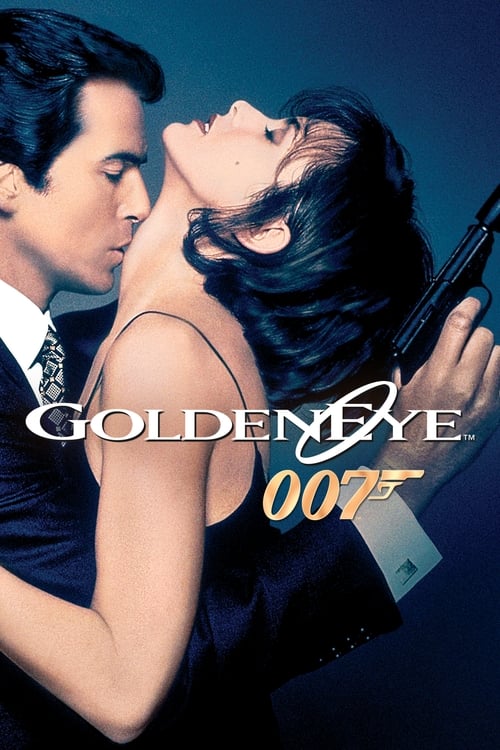 GoldenEye (1995)
 To Trap a Spy (1964)
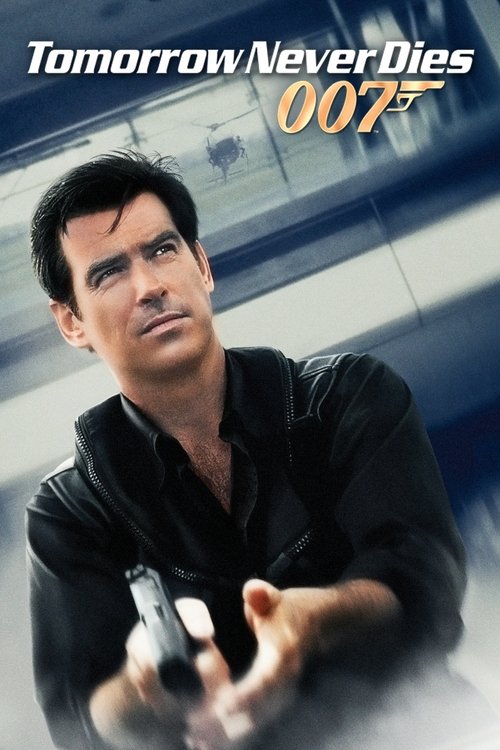 Tomorrow Never Dies (1997)
- More like this film, on a shelf you can walk up to.It's the lit case on the top shelf.