The Woman in the Dunes (1964)

- Original title
- 砂の女
- Directed by
- Hiroshi Teshigahara
- Genre
- drama film
- Country
- Japan
- Runtime
- 2h 03m
- Rated
- NR
- Rating
- 8.2 of 10 from 522 voters
- Elsewhere
- IMDb

The catalogue in 3D
The film shelves have a room of their own that you can walk around in. The cat behind the counter is the AI Catbot, and they pick real films from the same catalogue when you tell them what you feel like watching. Nothing is for sale, here or in there. Go in from here and this film is already out on the counter, with more like it waiting on the shelf next to it.
How it feels
An amateur entomologist is tricked into staying at a house at the bottom of a sand dune, where a lonely widow lives. The villagers prevent him from leaving and force him to work shoveling sand.
claustrophobicatmosphericslow-burnunsettlingmeditativebleakhypnoticexistential
What happens
Woman in the Dunes or Woman of the Dunes (Japanese: 砂の女, Hepburn: Suna No Onna; "Sand Woman") is a 1964 Japanese drama film directed by Hiroshi Teshigahara and starring Eiji Okada, Kyōko Kishida, and Kōji Mitsui. Associated with the Japanese New Wave, it received widespread critical acclaim and was nominated for two Academy Awards. The screenplay for the film was adapted by Kōbō Abe from his 1962 novel of the same name. The film follows an amateur entomologist (Okada) who is led to settle in the house of a lonely widow (Kishida) at the bottom of a sand dune in a rural coastal village. He soon realizes that the villagers have trapped him there and expect him to work for them. Woman in the Dunes was an independent, joint production of Teshigahara Productions and the Japanese Art Theater Guild, a group of young filmmakers involved in an attempt to create political–aesthetical films in opposition to the dominant studio productions of the 1960s, which they viewed as commercial, unartistic, and uninteresting. The film is considered to be Teshigahara's masterpiece and one of the best movies of Japanese cinema, the 1960s and the 20th century, and is now widely regarded as one of the greatest films of all time. It is also seen as one of the most ambiguous, cryptic and enigmatic movies ever made. (from Wikipedia, CC BY-SA)
More like this
 Onibaba (1964)
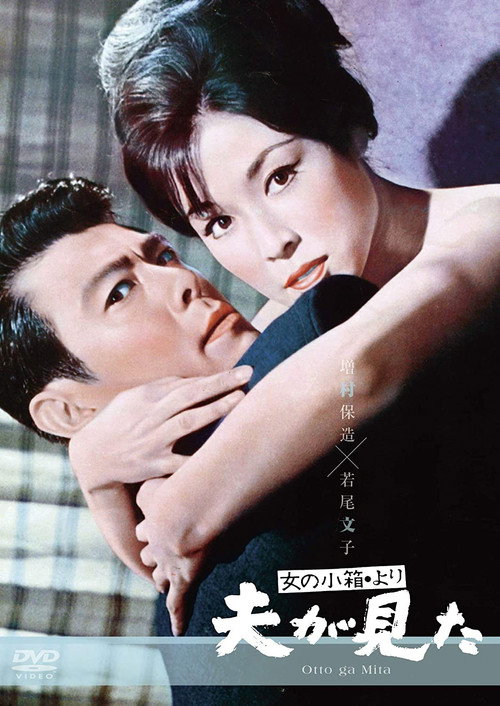 Otto ga mita 'Onna no kobako' yori (1964)
 Unholy Desire (1964)
 Roadside Stone (1964)
 Kwaidan (1964)
 The Stranger Within a Woman (1966)
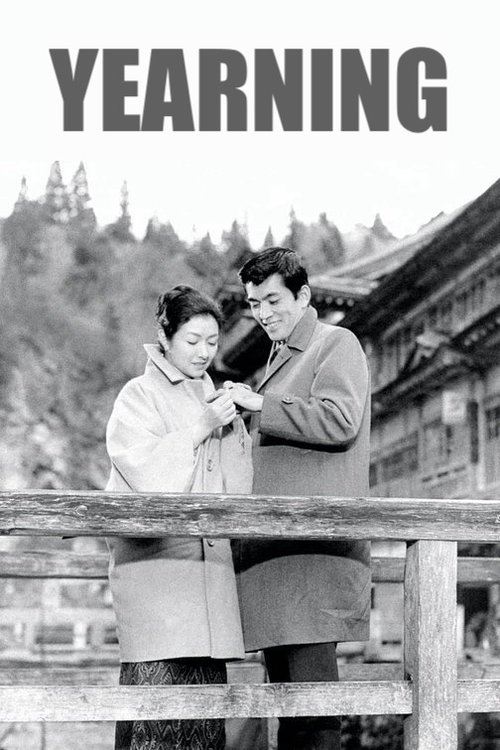 Yearning (1964)
 Sweet Sweat (1964)
- More like this film, on a shelf you can walk up to.It's the lit case on the top shelf.