Kuzhandaiyum Deivamum (1965)

- Directed by
- S. Panju, R. Krishnan
- Genre
- drama film, musical film, comedy drama, family film
- Country
- India
- Runtime
- 2h 47m
- Rated
- U
- Rating
- 10.0 of 10 from 1 voters
- Elsewhere
- IMDb
The catalogue in 3D
The film shelves have a room of their own that you can walk around in. The cat behind the counter is the AI Catbot, and they pick real films from the same catalogue when you tell them what you feel like watching. Nothing is for sale, here or in there. Go in from here and this film is already out on the counter, with more like it waiting on the shelf next to it.
How it feels
The film is about twin daughters who scheme to reunite their separated parents. It is a family story centered on the children's efforts to bring their mother and father back together.
feel-goodheartwarminglightheartedfamily-friendlywhimsicalsentimentalhopefulplayful
What happens
Kuzhandaiyum Deivamum (transl. Child and God) is a 1965 Indian Tamil-language children's drama film directed by Krishnan–Panju and written by Javar Seetharaman. It is based on the American film The Parent Trap (1961) which in turn was based on Erich Kästner's 1949 German novel Lisa and Lottie (German: Das doppelte Lottchen). The film stars Jaishankar and Jamuna, with Nagesh, Sundarrajan, G. Varalakshmi, Santha, Kutty Padmini, M. S. S. Bhagayam and V. R. Thilagam in supporting roles. It revolves around a couple who separate, and the efforts of their twin daughters to reunite them. Kuzhandaiyum Deivamum was produced by A. V. Meiyappan via AVM Productions, photographed by S. Maruti Rao and G. Vittal Rao, edited by Panju and features music by M. S. Viswanathan. The film was released on 19 November 1965, became a commercial success, and won the National Film Award for Best Feature Film in Tamil. Krishnan–Panju remade the film twice; in Telugu as Leta Manasulu (1966) and in Hindi as Do Kaliyan (1967). It was also remade in Malayalam as Sethubandhanam (1974) and in Kannada as Makkala Bhagya (1976). (from Wikipedia, CC BY-SA)
More like this
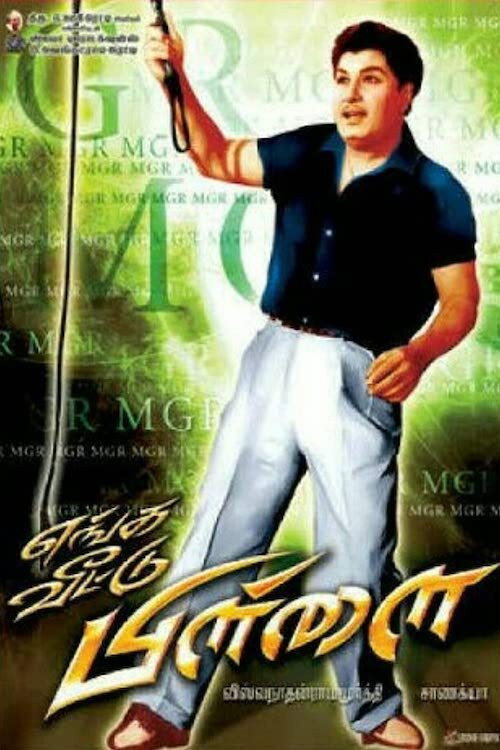 Enga Veettu Pillai (1965)
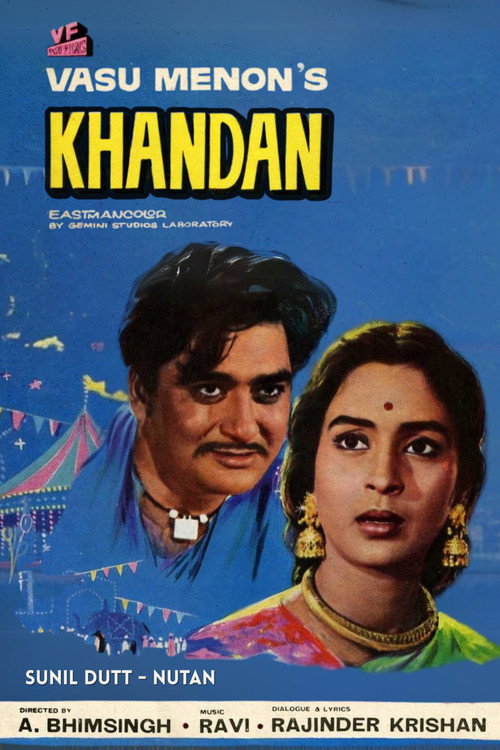 Khandan (1965)
 Vathsalya (1965)
 Rishte Naate (1965)
 Sumangali (1965)
 Devatha (1965)
 Panchavarna Kili (1965)
 Enga Veetu Penn (1965)
- More like this film, on a shelf you can walk up to.It's the lit case on the top shelf.