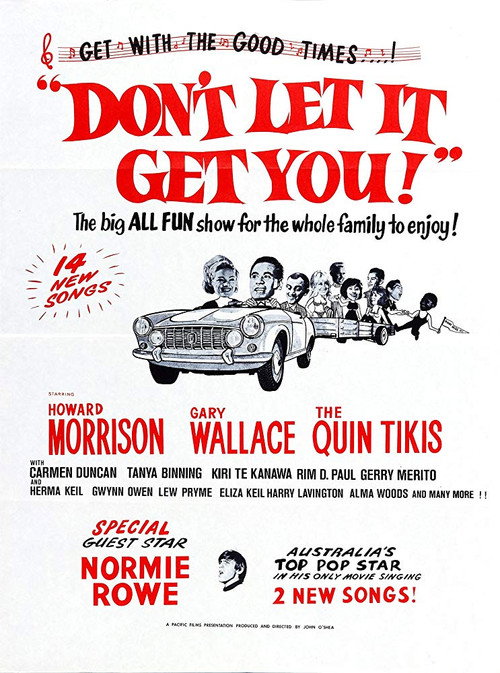
Don't Let It Get You (1966)
- Directed by
- John O'Shea
- Genre
- musical film
- Country
- Australia
- Runtime
- 1h 20m
- Rating
- 10.0 of 10 from 1 voters
- Elsewhere
- IMDb
The catalogue in 3D
The film shelves have a room of their own that you can walk around in. The cat behind the counter is the AI Catbot, and they pick real films from the same catalogue when you tell them what you feel like watching. Nothing is for sale, here or in there. Go in from here and this film is already out on the counter, with more like it waiting on the shelf next to it.
How it feels
This 1966 Australian-New Zealand film is a musical comedy that showcases popular musicians from the era. It follows a loose romantic plot filled with slapstick gags and odd dialogue that capture the youthful spirit of the time.
energeticnostalgicupbeatwhimsicallightheartedoffbeatplayfulcomic
What happens
Don't Let It Get You is a film made in New Zealand and Sydney, Australia in 1966. It is notable for the period it was made in as well as the popular musical acts that featured in it. Sir Howard Morrison, Eddie Low, Dame Kiri Te Kanawa and Herma and Eliza Keil of the Keil Isles featured in the film. It also had an appearance by Australian hit maker Normie Rowe. Directed by John O'Shea and written by Joseph Musaphia, the film captures the exuberance and energy of one of New Zealand's finest hours in pop/rock musical history. Fashioned in the style of Richard Lester's A Hard Day's Night (1964) and Help! (1965), it is a showcase for the talents of the period, including Kiri te Kanawa ("Sing for us now, Kiri"). The songs are mostly written by Patrick Flynn in collaboration with either O'Shea or Musaphia. However, the film is also a knockabout romantic comedy: the dialogue non-sequiturs, pratfall gags and bizarre juxtapositions display an offbeat sense of irony and blase manner not unlike that of television in the late Eighties (Terry and the Gunrunners and The Billy T. James Show, for example). As a nostalgia piece, the film comes as close to capturing the hopes and aspirations of the period as the Weekly Reviews do for the Forties and the Tangata Whenua series does for the Seventies. (from Wikipedia, CC BY-SA)
More like this
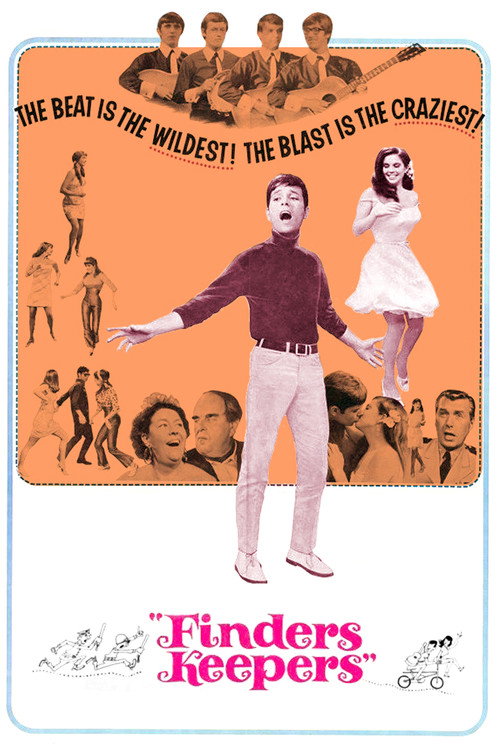 Finders Keepers (1966)
 The Ghost Goes Gear (1966)
 Per un pugno di canzoni (1966)
 Disk-O-Tek Holiday (1966)
 The Twentieth (1966)
 Ritmo, amor y juventud (1966)
 Muchachos impacientes (1966)
 ¡Cómo te extraño...! (1966)
- More like this film, on a shelf you can walk up to.It's the lit case on the top shelf.