Helga – Vom Werden des menschlichen Lebens (1967)

- Original title
- Helga - Vom Werden des menschlichen Lebens
- Directed by
- Erich F. Bender
- Genre
- documentary film
- Country
- Germany
- Runtime
- 1h 17m
- Rating
- 7.0 of 10 from 2 voters
- Elsewhere
- IMDb

The catalogue in 3D
The film shelves have a room of their own that you can walk around in. The cat behind the counter is the AI Catbot, and they pick real films from the same catalogue when you tell them what you feel like watching. Nothing is for sale, here or in there. Go in from here and this film is already out on the counter, with more like it waiting on the shelf next to it.
How it feels
A 1960s West German sex education documentary. It follows a young woman named Helga and shows scenes of childbirth. The film was widely seen across Europe and became a huge box office success.
educationalclinicalmatter-of-factpioneeringinformativeearnestfactualcalmstraightforward
What happens
Helga – Vom Werden des menschlichen Lebens (English: "Helga – On the Origins of Human Life", lit. "On the development of human life") is a 1967 West German sex education documentary and the first film of the Helga trilogy, starring Ruth Gassmann as Helga. Its release in West Germany was followed by international releases to many European countries, the British Commonwealth and the United States. It became one of the greatest box-office successes of West German cinema, viewed by forty million people in West Germany and internationally. In the first months of its showing in West Germany the audience had reached four million people. The film featured scenes of childbirth which were the first to be shown publicly in Germany. Helga was the first in a series of educational films which were considered "relatively permissive" at the time. The film was considered a part of an "enlightenment wave" which was undertaken by the West German Federal government at the time. In 1968, in France, the film was viewed by five million people. In Grenoble alone it is reported that 60,000 viewers had seen it in the first days of its screening, out of a population of 150,000. In Tours, the film played to full-houses for three consecutive weeks. The film used animation, stock footage and microphotography to depict the stages of life from conception to childbirth. (from Wikipedia, CC BY-SA)
More like this
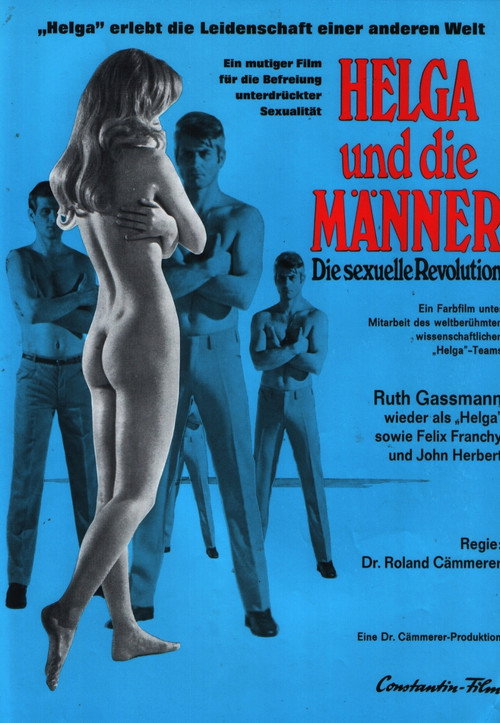 Helga und die Männer - Die sexuelle Revolution (1969)
 Der Preis einer Nacht (1967)
 Michael and Helga (1968)
 The Miracle of Love (1968)
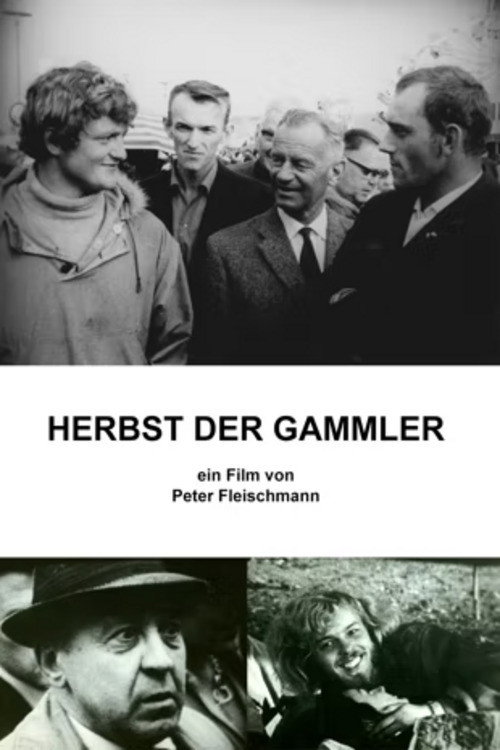 Herbst der Gammler (1967)
 Female Sexuality (1969)
 Every Night of the Week (1969)
 Sexual Partnership (1968)
- More like this film, on a shelf you can walk up to.It's the lit case on the top shelf.