Pinocchio (1967)
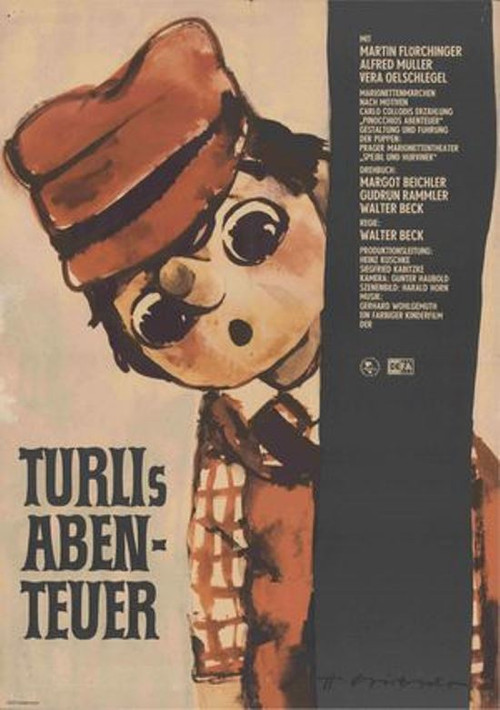
- Original title
- Turlis Abenteuer
- Directed by
- Walter Beck
- Genre
- children's film
- Country
- German Democratic Republic
- Runtime
- 1h 12m
- Rated
- 6
- Rating
- 6.5 of 10 from 2 voters
- Elsewhere
- IMDb
The catalogue in 3D
The film shelves have a room of their own that you can walk around in. The cat behind the counter is the AI Catbot, and they pick real films from the same catalogue when you tell them what you feel like watching. Nothing is for sale, here or in there. Go in from here and this film is already out on the counter, with more like it waiting on the shelf next to it.
How it feels
A puppet boy comes to life and goes on adventures with animal friends and foes. He visits a land of toys where children get transformed into donkeys and must rescue them.
whimsicalearthystorybooklive-actionplayfulvintagemusicallight-hearted
What happens
Pinocchio (German: Turlis Abenteuer) is a color East German film produced by studio DEFA (Deutsche Film-Aktiengesellschaft) and directed by Walter Beck. It was released on November 3, 1967, with an English version released in the US in February 1969. The film was based on the 1883 Italian novel The Adventures Of Pinocchio, by Carlo Collodi and closely reflects the original book. Except for the talking cricket who did not appear in the film, and this was the first adaptation where Pinocchio went back to the land of toys to free the children from the land of toys and rebell against it to prevent it from turning them into donkeys. The film is mainly live action but features Pinocchio played by a marionette with strings and the fox and cat or the children who are transformed into donkeys are dressed in costumes and with sets as if they are on stage. The American version maintains most of the original DEFA film, but changes out the songs for new English-language ones. This was the first DEFA film to feature a mix of both real actors and marionettes. The film's puppets were designed and played by the Spejbl and Hurvínek Marionette Theatre from Prague. The film's songs were sung by Roswitha Trexler and Manfred Krug, who also each voiced a character in the film. (from Wikipedia, CC BY-SA)
More like this
 Der tapfere Schulschwänzer (1967)
 Aktive Erholung (1964)
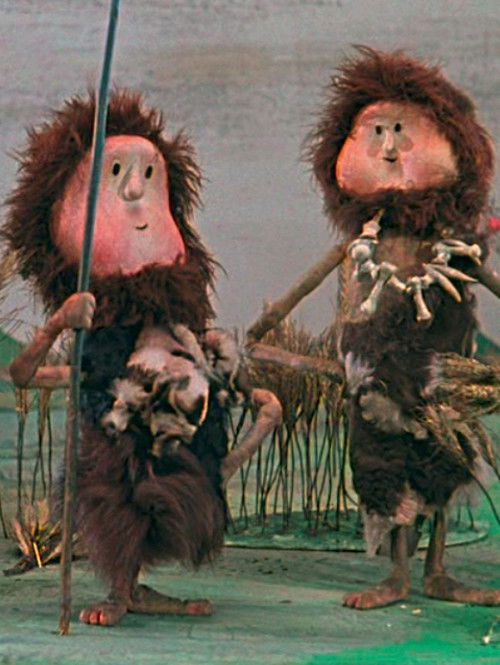 Nörgel & Söhne oder was vor 9742 Jahren vormittags neun Uhr begann, Teil 1 (1967)
 The Heathens of Kummerow (1967)
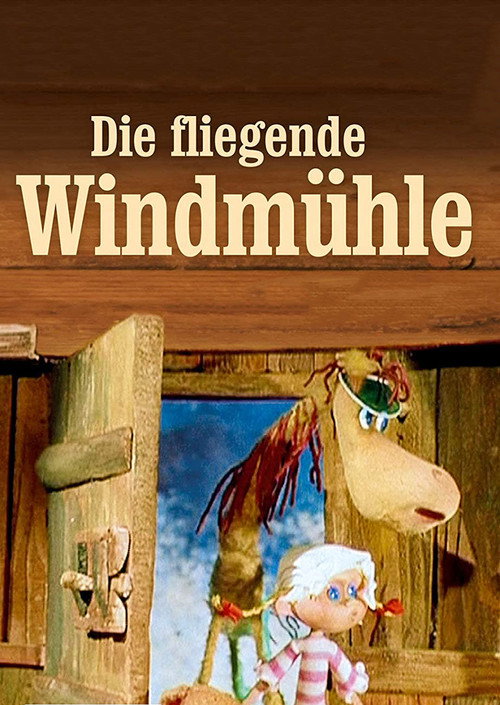 The Flying Windmill (1982)
 Vom mutigen Hans (1959)
 Wie heiratet man einen König? (1969)
 Sechse kommen durch die Welt (1972)
- More like this film, on a shelf you can walk up to.It's the lit case on the top shelf.