Sing a Song of Sex (1967)

- Original title
- 日本春歌考
- Directed by
- Nagisa Ōshima
- Genre
- drama film
- Country
- Japan
- Runtime
- 1h 43m
- Rating
- 5.8 of 10 from 28 voters
- Elsewhere
- IMDb

The catalogue in 3D
The film shelves have a room of their own that you can walk around in. The cat behind the counter is the AI Catbot, and they pick real films from the same catalogue when you tell them what you feel like watching. Nothing is for sale, here or in there. Go in from here and this film is already out on the counter, with more like it waiting on the shelf next to it.
How it feels
After taking their university entrance exams, four high school seniors wander around Tokyo, indulging in erotic daydreams and aimless adventures. A night of drinking and singing with a teacher introduces a bawdy song that becomes the film's main musical theme.
freneticplayfuldisjointedcontemplativedreamlikecerebralmusical
What happens
Sing a Song of Sex (日本春歌考, Nihon shunka-kō, literally: A Treatise on Japanese Bawdy Songs) is a 1967 Japanese New Wave musical film directed by Nagisa Ōshima. The Japanese title of the film derives from a book of the same name, a treatise on Japanese erotic songs written in 1966 by Tomomichi Soeda. Though there are four credited writers, much of the film was improvised by the actors. The story follows four high school seniors on their erotic daydreams and peripatetic outings across Tokyo after having taken their university entrance exams. They have one fateful night of drinking and singing with one of their teachers, who sings a bawdy song that becomes the main musical theme of the story. The film, in avant-garde fashion, is more a collage of scenes than a coherent narrative. The director once said that the film is "about the imaginary." It is not pornographic and contains little nudity. It was screened at Harvard in 2008 as part of their "Nagisa Oshima and the Struggle for a Radical Cinema" program. The film appeared in Kinema Junpo's 1999 list of the 120 best Japanese films of all time as voted by film experts. (from Wikipedia, CC BY-SA)
More like this
 Let's go! High School Lemon Girl (1967)
 レッツゴー!若大将 (1967)
 The Young Ace In The South Pacific (1967)
 Double Suicide: Japanese Summer (1967)
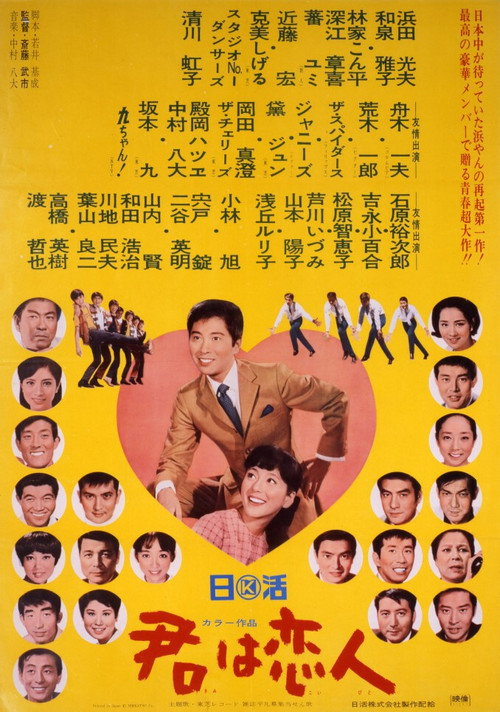 My Sweetheart (1967)
 The Affair (1967)
 The Shroud of Snow (1967)
 Band of Ninja (1967)
- More like this film, on a shelf you can walk up to.It's the lit case on the top shelf.