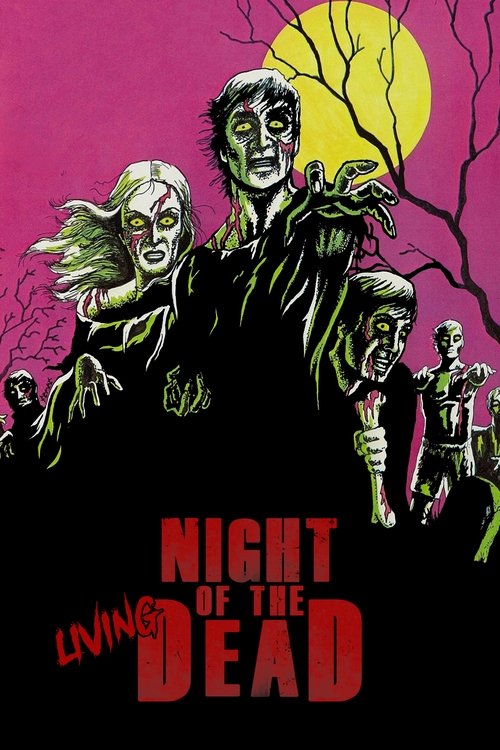
Night of the Living Dead (1968)
- Directed by
- George A. Romero
- Genre
- drama film, horror film, independent film, science fiction film, splatter film, zombie film
- Country
- United States
- Runtime
- 1h 36m
- Rated
- NR
- Rating
- 7.6 of 10 from 2,765 voters
- Elsewhere
- IMDb
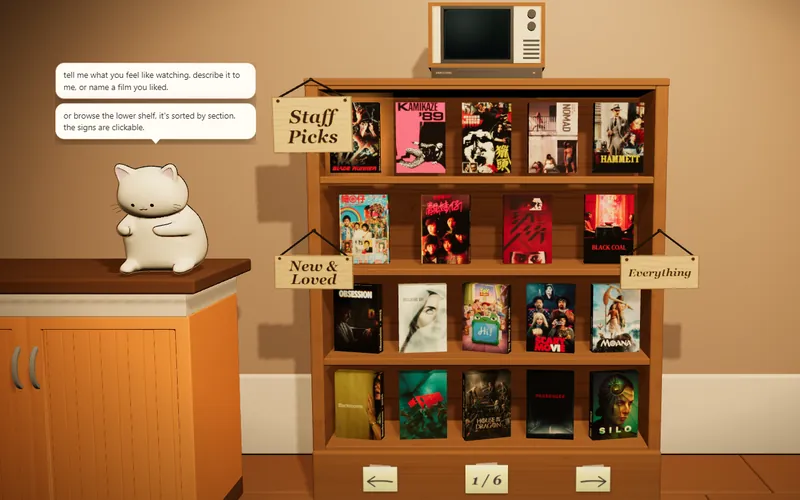
The catalogue in 3D
The film shelves have a room of their own that you can walk around in. The cat behind the counter is the AI Catbot, and they pick real films from the same catalogue when you tell them what you feel like watching. Nothing is for sale, here or in there. Go in from here and this film is already out on the counter, with more like it waiting on the shelf next to it.
How it feels
A group of strangers take shelter in a farmhouse while the dead rise from their graves and attack the living. They must fight to survive the night against the flesh-eating creatures outside and the rising tensions within.
tensebleakclaustrophobicgrimunnervingrawrelentlessvisceralnightmarish
What happens
Night of the Living Dead is a 1968 American independent zombie horror film directed, photographed, and edited by George A. Romero, written by Romero and John Russo, and produced by Russell W. Streiner and Karl Hardman. The film's ensemble cast—which includes Duane Jones, Judith O'Dea, Marilyn Eastman, Karl Hardman, Judith Ridley, and Keith Wayne—star as a group of people trapped in a farmhouse in rural Pennsylvania, under assault by flesh-eating reanimated corpses. Although the monsters that appear in the film are referred to as "ghouls", they are credited with popularizing the modern portrayal of zombies in popular culture. Having gained experience creating television commercials, industrial films, and Mister Rogers' Neighborhood segments through their production company The Latent Image, Romero, Russo, and Streiner decided to make a horror film to capitalize on interest in the genre. Their script primarily drew inspiration from Richard Matheson's 1954 novel I Am Legend. Principal photography took place between July 1967 and January 1968, mainly on location in Evans City, Pennsylvania, with Romero using guerrilla filmmaking techniques he had honed in his commercial and industrial work to complete the film on a budget of approximately US$100,000. Unable to procure a proper set, the crew rented a condemned farmhouse to destroy during the course of filming. Night of the Living Dead premiered in Pittsburgh on October 1, 1968. It grossed US$12 million domestically and US$18 million internationally, earning more than 250 times its budget and making it one of the most profitable film productions of all time. Released shortly before the adoption of the Motion Picture Association of America rating system, the film's explicit violence and gore were considered groundbreaking, leading to controversy and negative reviews. It eventually garnered a cult following and critical acclaim, and has appeared on lists of the greatest and most influential films ever made by such outlets as Empire, The New York Times and Total Film. Frequently identified as a touchstone in the development of the horror genre, retrospective scholarly analysis has focused on its reflection of the social and cultural changes in the United States during the 1960s, with particular attention towards the casting of Jones, an African-American, in the leading role. In 1999, the film was deemed "culturally, historically, or aesthetically significant" by the Library of Congress and selected for preservation in the National Film Registry. Night of the Living Dead created a successful franchise that includes five sequels released between 1978 and 2009, all directed by Romero. Since the film was mistakenly created without a copyright notice, it entered the public domain upon release, resulting in numerous adaptations, remakes, and a lasting legacy in the horror genre. There is the official remake, written by Romero and directed by Tom Savini, and released in 1990. (from Wikipedia, CC BY-SA)
More like this
 Night of the Living Dead (1990)
 Rosemary's Baby (1968)
 The Texas Chain Saw Massacre (1974)
 Targets (1968)
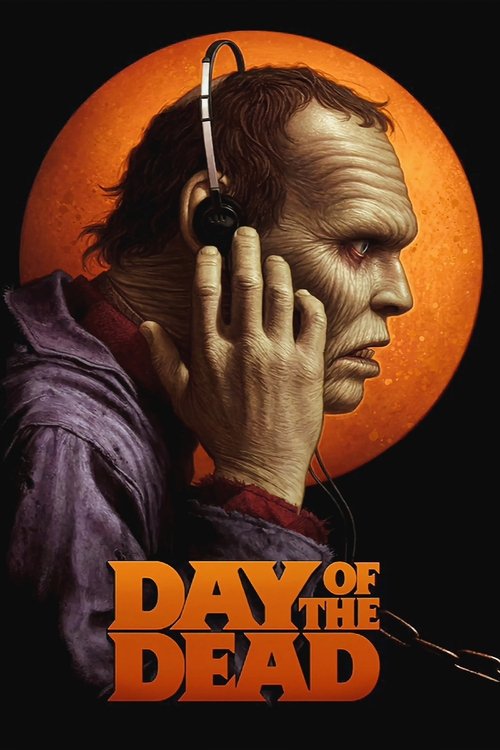 Day of the Dead (1985)
 Invasion of the Body Snatchers (1956)
 The Ghosts of Hanley House (1968)
 Hasta el viento tiene miedo (1968)
- More like this film, on a shelf you can walk up to.It's the lit case on the top shelf.