The Subject Was Roses (1968)

- Directed by
- Ulu Grosbard
- Genre
- drama film
- Country
- United States
- Runtime
- 1h 47m
- Rated
- G
- Rating
- 6.1 of 10 from 22 voters
- Elsewhere
- IMDb
The catalogue in 3D
The film shelves have a room of their own that you can walk around in. The cat behind the counter is the AI Catbot, and they pick real films from the same catalogue when you tell them what you feel like watching. Nothing is for sale, here or in there. Go in from here and this film is already out on the counter, with more like it waiting on the shelf next to it.
How it feels
A World War II veteran returns home to his parents in the Bronx and struggles with their constant arguments and troubled marriage. He tries to reconnect with them but finds their discord hard to bear.
melancholictenseintimateemotionalslow-burnheartfeltsombersincere
What happens
The Subject Was Roses is a 1968 American Metrocolor drama film directed by Ulu Grosbard. The screenplay by Frank D. Gilroy is based on his 1964 Pulitzer Prize-winning play of the same title. The film stars Patricia Neal, Martin Sheen and Jack Albertson, the latter two reprising their roles from the original play. The film follows a World War II veteran (Sheen) who returns home to the Bronx and soon becomes disillusioned to find his parents' (Neal and Albertson) marriage filled with discord, quarreling, and recriminations. The film was released to unanimous praise, remaining one of few films with a 100% rating on Rotten Tomatoes, and various accolades. Neal and Albertson received nominations for Best Actress and Best Supporting Actor at the 41st Academy Awards, with Albertson winning his nomination; Sheen was nominated for Best Supporting Actor at the 26th Golden Globe Awards. It was also selected as one of the National Board of Review's top 10 films of the year. (from Wikipedia, CC BY-SA)
More like this
 Flesh and Blood (1968)
 The Hell with Heroes (1968)
 Warkill (1968)
 The Sea Gull (1968)
 My Father and My Mother (1968)
 Faces (1968)
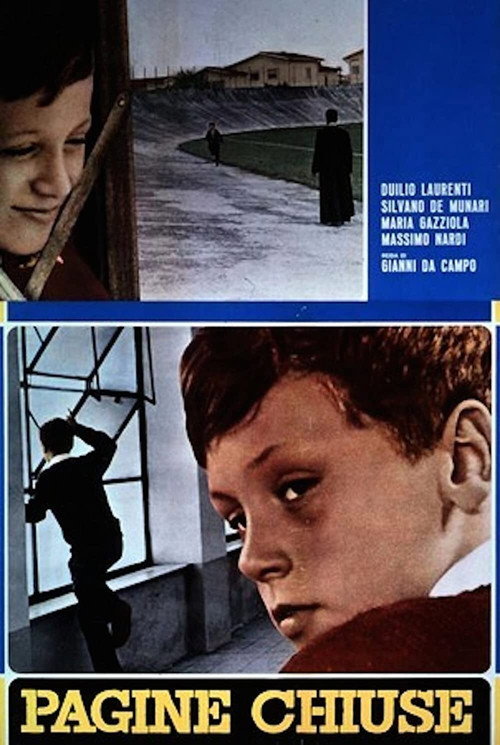 Closed Pages (1968)
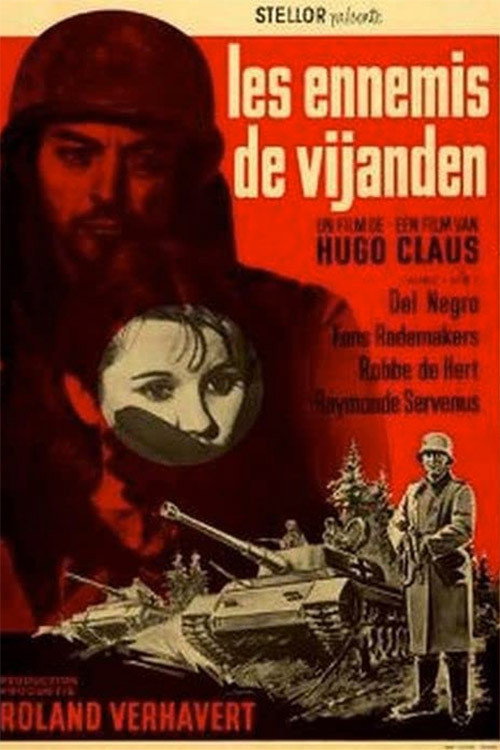 The Enemies (1968)
- More like this film, on a shelf you can walk up to.It's the lit case on the top shelf.