Kes (1969)

- Directed by
- Ken Loach
- Genre
- drama film, comedy drama, coming-of-age film
- Country
- United Kingdom
- Runtime
- 1h 46m
- Rated
- PG-13
- Rating
- 7.4 of 10 from 444 voters
- Elsewhere
- IMDb
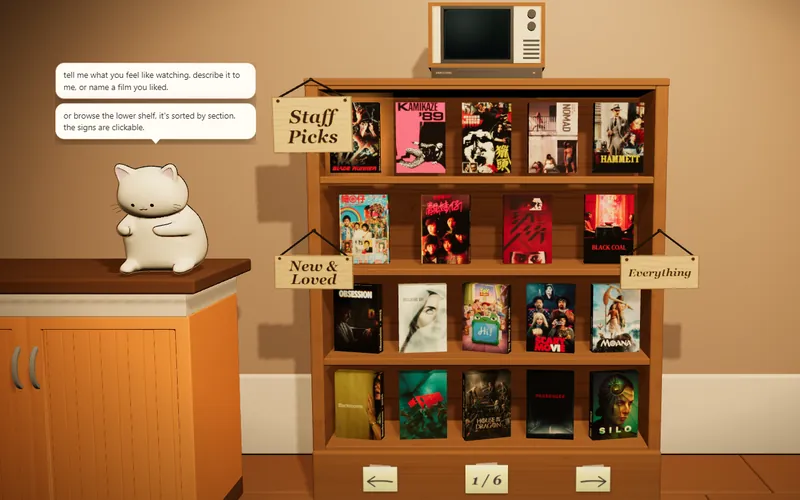
The catalogue in 3D
The film shelves have a room of their own that you can walk around in. The cat behind the counter is the AI Catbot, and they pick real films from the same catalogue when you tell them what you feel like watching. Nothing is for sale, here or in there. Go in from here and this film is already out on the counter, with more like it waiting on the shelf next to it.
How it feels
A working-class boy in Yorkshire finds purpose by training a kestrel. The film follows him through a harsh home life and a dismissive school system.
melancholictenderdourquietly intensegroundedbittersweetsocially awareslow-burn
What happens
Kes () is a 1969 British coming-of-age drama film directed by Ken Loach (credited as Kenneth Loach) and produced by Tony Garnett, based on the 1968 novel A Kestrel for a Knave, written by Barry Hines. Kes follows the story of Billy, who comes from a dysfunctional working-class Yorkshire family and is a no-hoper at school, but discovers his own private means of fulfilment when he adopts a fledgling kestrel and proceeds to train it in the art of falconry. The film has been much praised, especially for the performance of the teenage David Bradley, who had never acted before, in the lead role, and for Loach's compassionate treatment of his working-class subject; it remains a biting indictment of the British educational system of the time as well as of the limited career options then available to lower-class, unskilled workers in regional Britain. It was ranked seventh in the BFI's Top 100 British films. This was Loach's second feature film for cinema release. (from Wikipedia, CC BY-SA)
More like this
 Sinful Davey (1969)
 The Reckoning (1969)
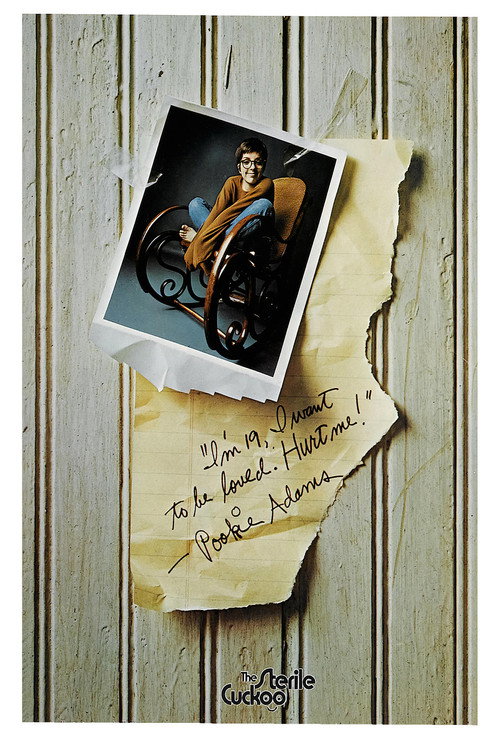 The Sterile Cuckoo (1969)
 A Nice Girl Like Me (1969)
 I Start Counting (1969)
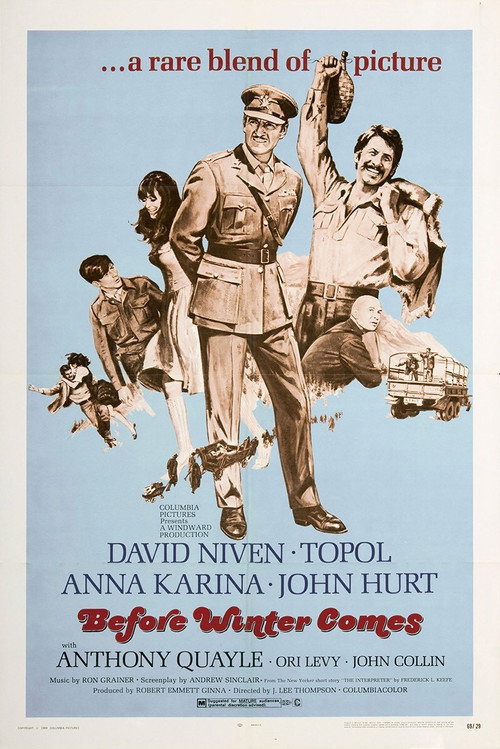 Before Winter Comes (1969)
 Goodbye, Mr. Chips (1969)
 A Touch of Love (1969)
- More like this film, on a shelf you can walk up to.It's the lit case on the top shelf.