Funeral Parade of Roses (1969)

- Original title
- 薔薇の葬列
- Directed by
- Toshio Matsumoto
- Genre
- drama film, LGBTQ-related film
- Country
- Japan
- Runtime
- 1h 45m
- Rated
- K-16
- Rating
- 7.5 of 10 from 239 voters
- Elsewhere
- IMDb
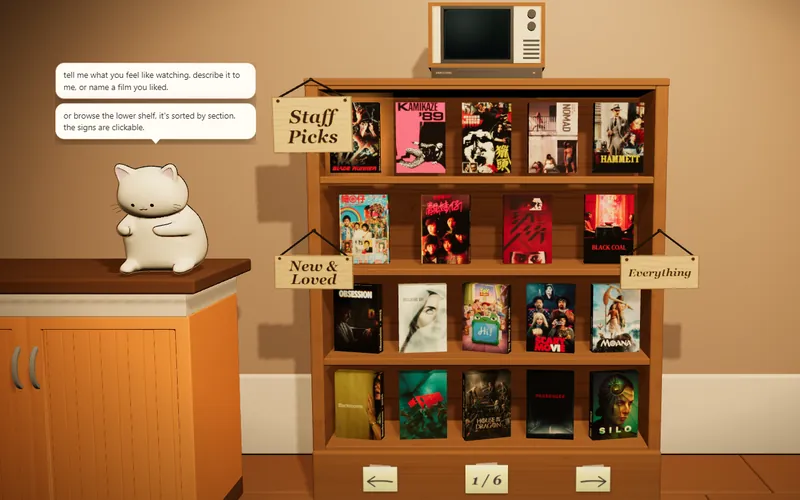
The catalogue in 3D
The film shelves have a room of their own that you can walk around in. The cat behind the counter is the AI Catbot, and they pick real films from the same catalogue when you tell them what you feel like watching. Nothing is for sale, here or in there. Go in from here and this film is already out on the counter, with more like it waiting on the shelf next to it.
How it feels
A young transgender woman who works at a gay bar in Tokyo gets into a sexual relationship with the bar owner. The film mixes documentary-style scenes with surreal touches and retells the story of Oedipus Rex from a new angle.
experimentalstylishdisorientingdefiantmelancholicfragmentedrawprovocativedreamlike
What happens
Funeral Parade of Roses (薔薇の葬列, Bara no Sōretsu) is a 1969 Japanese experimental film written and directed by Toshio Matsumoto. It is a loose adaptation of the Greek tragedy Oedipus Rex, set in the underground gay culture of 1960s Tokyo. Considered part of the Angura film movement, it combines elements of arthouse, documentary, and experimental filmmaking. The film centers 'gay-boy' Eddie, a young transgender woman working at a gay bar in Tokyo played by well-known Japanese gay entertainer Peter. The plot follows Eddie as she engages in a sexual relationship with the bar's owner, who promotes her as the lead girl of the establishment. According to Matsumoto, Funeral Parade of Roses is "in a way a film about filmmaking" and "a film about boundaries". Funeral Parade of Roses originates from the Japanese New Wave film movement, and is considered a monumental work of queer cinema. The film was released by ATG (Art Theatre Guild) on 13 September 1969 in Japan, but it did not receive a United States release until 29 October 1970. In June 2017, it received a 4K restoration and a limited theatrical re-release. (from Wikipedia, CC BY-SA)
More like this
 Satyricon (1969)
 Le salamandre (1969)
 Girl In College (1969)
 That Tender Touch (1969)
 Violence Without a Cause (1969)
 Metti una sera a cena (1969)
 Blind Beast (1969)
 Lesbo (1969)
- More like this film, on a shelf you can walk up to.It's the lit case on the top shelf.